
Most car hire companies will ask for a credit card when you pick up your vehicle. But not all of them require one to book.
That’s an important distinction. Some people get turned away at the counter because they showed up with only a debit card or cash, not knowing the rules had changed.
Thankfully, there are plenty of ways around it. This guide answers the question “Do you need a credit card to hire a car?” in full. You’ll learn:
- Why rental companies prefer credit cards
- What to expect if you’re paying with a debit card
- How security deposits and excess charges work
- What to bring on pickup day
Let’s start with the basics.
Credit Cards and Car Hire: What You Need to Know
As we’ve mentioned, most car hire companies will prefer a credit card at the counter. It’s not always mandatory, but it’s the payment method the whole rental process is built around. Because of that, requirements such as deposit holds, vehicle eligibility, and document checks are often designed with credit card users in mind.
Requirements can also vary depending on where you rent and the type of vehicle you choose. For example, airport locations often have stricter payment policies than city branches.
Some even require debit card users to provide proof of a return flight before they can collect the vehicle. Others restrict premium vehicles, luxury cars, or larger SUVs to customers using a credit card.
Plus, you may need to meet additional conditions when paying with a debit card. Depending on the company, this could include a credit check, proof of return travel, or extra identification.
These conditions exist because rental companies have less certainty about fund availability when a debit card is used. That’s why you should review your rental company’s requirements well in advance.
Why Rental Companies Prefer Credit Cards
Rental companies prefer credit cards for two reasons: they make security deposits easier to hold, and they reduce financial risk if the vehicle gets damaged. We cover both below.
Credit Cards Make Security Deposits Easier to Hold
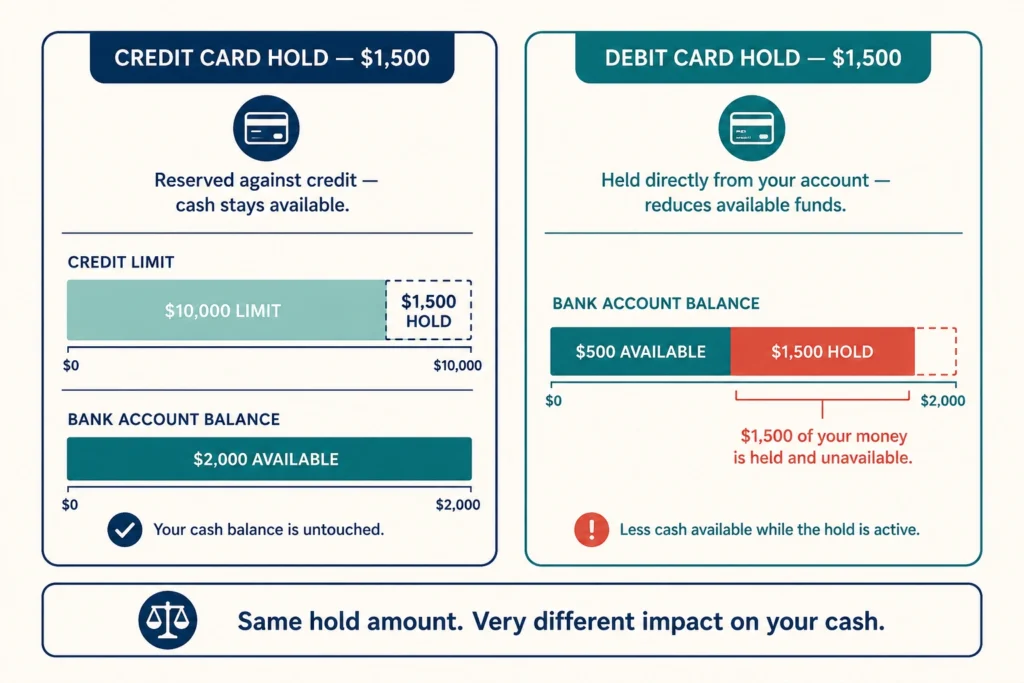
When you pick up a hire car, the rental company places a hold on your card to cover any potential costs. With a credit card, however, the hold sits against your credit limit rather than your bank account balance. As a result, your available cash remains untouched during the rental period.
For example, if the rental company places a $1,500 hold on your credit card, you won’t see $1,500 leave your bank account. Instead, that amount is temporarily reserved against your available credit. Once you return the vehicle without any issues, the hold is released, and your credit limit returns to normal.
Debit Card Payments Can Create Additional Risk
Debit card holds pull funds directly from your bank account as soon as they’re placed. Because those funds remain unavailable until the hold is released, you may have less money to spend during your trip.
However, the financial impact isn’t the only concern. Some rental car companies also run a credit check on debit card users before confirming the booking. Others require a higher deposit amount or additional documentation before releasing the vehicle.
These extra requirements help rental companies reduce the risk associated with debit card payments, which is why many continue to prefer credit cards.
Requirements for Hiring a Car Without a Credit Card
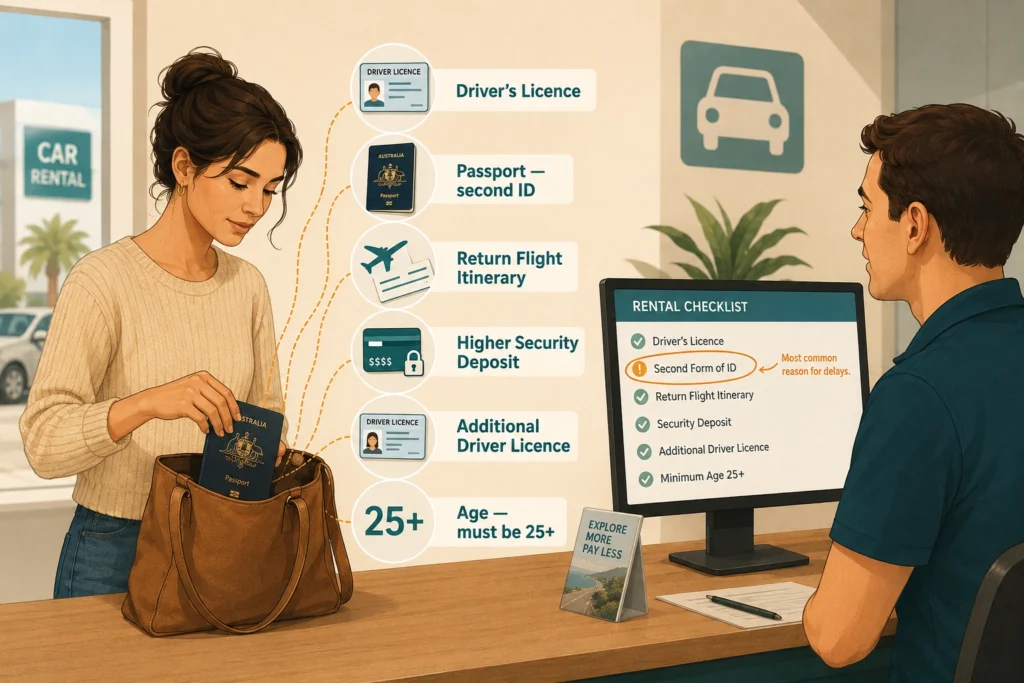
Having a credit card helps, but it’s only part of the process. Most rental companies will still ask for several documents before they hand over the keys. These are the most common ones to have ready:
- Photo ID: Most licensed rental companies require at least two forms of identification. Your driver’s licence covers the first. The second is usually a passport or another government-issued document.
- Proof of Return Travel: At airport locations, many major car hire brands will ask for a confirmed return flight itinerary before handing over the vehicle.
- A Higher Security Deposit: Debit card users are often asked to pay a larger deposit than credit card holders. Many hire companies set this at $500 or more on top of the standard rental cost.
- A Credit Check: Rental companies will sometimes run a credit check on debit card users before confirming the booking. This is more common at airport locations and with premium or luxury cars.
- Additional Driver Documentation: If more than one person will be driving, each additional driver will generally need to present their own valid licence. In most cases, they’ll need to meet the same identification requirements as the primary driver, too.
- Age Requirements: Younger drivers, particularly those under 25, may face stricter conditions when paying with a debit card. Several companies won’t accept debit cards from drivers in this age group at all.
Missing one of these documents can delay your pickup or, in some cases, prevent you from collecting the vehicle altogether.
That’s not just a theoretical risk. Last summer, a customer arrived at our Brisbane depot with everything except a second form of ID. Resolving the issue added more than an hour to the pickup process.
So before you head to the rental counter, take a few minutes to review this checklist. It’s a quick check that can save you a lot of trouble on pickup day.
Security Deposits and Excess Charges Explained
Think of a security deposit as leaving a refundable bond when renting an apartment. The money isn’t gone, but it’s held as a safeguard. An excess charge is different. It’s the portion of repair costs you may have to pay out of your own pocket if the vehicle is damaged or stolen.
In most rental agreements, this is set as a fixed amount known as the default excess. It represents the maximum you’re liable for if something goes wrong. And that figure isn’t small. According to CHOICE’s car hire excess research, standard excess amounts at major Australian rental companies can reach as high as $6,900.
To reduce that amount, many car hire companies offer an excess waiver or excess reduction product at the counter. Paying for this lowers your excess liability, sometimes all the way to zero excess.
That said, these products aren’t technically insurance. They’re a contractual agreement that limits how much you’re required to pay if the rental vehicle is damaged or stolen.
What to Check Before You Book a Rental Car
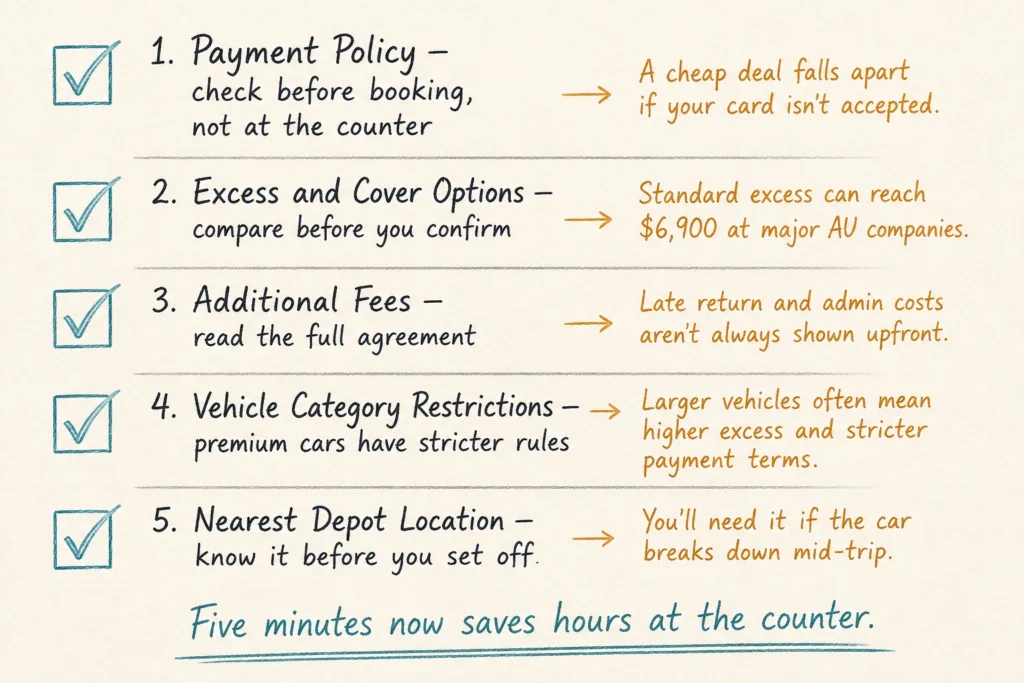
A lot of renters focus on finding the best price and leave the fine print for later. So by the time they’re at the counter, it’s too late to change anything. To avoid issues at pickup, make sure you check the following before confirming your booking:
- Payment Policy: Not all rental agencies accept debit cards at every location. That means a cheap car deal can fall apart at the counter if your payment method doesn’t meet the requirements for that specific branch.
- Excess and Cover Options: You should review the default excess amount in your rental vehicle agreement before you confirm. That way, you can compare standalone car hire excess insurance against the counter product and choose the option that suits you best.
- Additional Fees: Rental agreements often include charges that aren’t always clearly shown upfront, including late return fees and administrative costs. These can increase the total cost of your rental, so read through the full agreement before you sign anything.
- Vehicle Category Restrictions: Some car companies apply different booking conditions depending on the type of vehicle you choose. For example, larger or premium vehicles often come with higher excess amounts and stricter payment requirements than a standard hire car.
- Nearest Depot Location: Find the nearest depot to your destination before you set off. If the car is damaged or breaks down mid-trip, you’ll know exactly where to bring it.
When you confirm these details in advance, pickup day becomes much smoother. You simply arrive with the right documents and collect your vehicle without delays.
Time to Hit the Road
Most people searching for how to hire a car expect a complicated process, but it’s simpler than it looks once you know what to prepare.
Sort your payment method, understand your excess cover, and check the key terms in advance. Doing this early makes pickup day much smoother and helps avoid last-minute surprises.
If you’re not sure about anything specific to your booking or what to bring on the day, the team at GLAPacked can help. Just get in touch before you arrive, and we’ll make sure everything is ready for you.
Frequently Asked Questions
A few questions come up regularly when people start comparing rental options. Here are the most common ones.
Can I use a credit card that belongs to someone else?
Generally, no. Most rental companies require the credit card to be in the name of the primary driver. That’s because the primary driver signs the rental agreement and takes on legal responsibility for the vehicle. If the card and the rental agreement are in different names, the rental company may refuse to release the vehicle altogether.
What should I know about car hire excess insurance before I book?
If someone asks you, “What does car hire excess insurance cover?”, the short answer will be damage and theft excess. That includes tyres, windscreen, and undercarriage, which most standard rental agreements exclude.
And is car hire excess insurance worth it? Usually yes. Standalone policies typically cost less than the counter product and cover your whole trip upfront. Just check your credit card or travel insurance first, because you may already have cover without realising it.
What happens if I damage a rental car?
Tell the rental company immediately and take photos of the damage before moving the vehicle. From there, the claims process depends on whether you have a standalone excess insurance policy or the rental company’s own waiver product. Either way, keep all receipts and contact your insurance provider directly if you need to dispute any repair costs.
Related Posts

Do You Really Need Car Hire Kangaroo Island for Your Trip?
The short answer is yes. Unless you want to spend…
Does Travel Insurance Cover Car Rental Excess? What to Check First
Many comprehensive travel insurance policies cover rental car excess, although…

How Much Is Car Hire Excess Insurance And Is It Worth Paying
The honest answer is that car hire excess insurance pricing…