
Packing for a snow trip is easy to underestimate. You think you’ve got it covered, then you’re standing in freezing temperatures wishing you’d packed an extra layer or a pair of waterproof gloves. And forgetting an essential item on a snow trip can leave you cold, uncomfortable, and paying premium prices to replace it.
A little planning before you leave prevents all of that. With the right clothing, gear, and travel essentials, you can focus on enjoying the trip instead of worrying about what’s missing from your bag.
This snow trip packing list takes the guesswork out of preparing for cold-weather travel. It covers clothing, snow gear, toiletries, and electronics, so you can pack with confidence and arrive ready.
Let’s start with the most important category first: what you wear.
Essential Clothing for Cold Weather
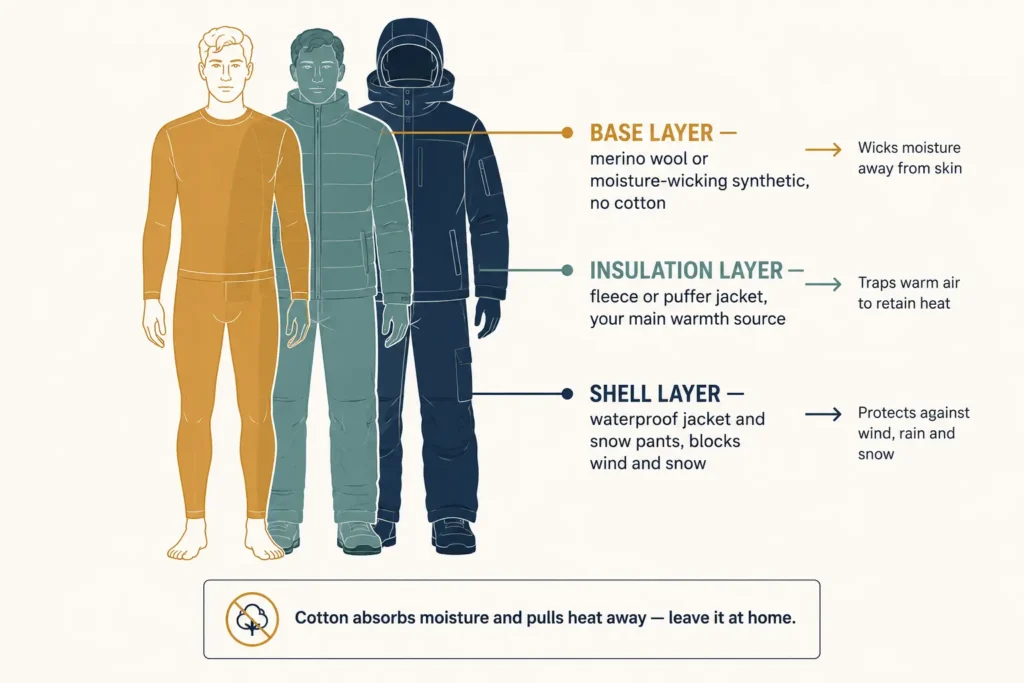
You need two types of clothing for a snow trip: weather-resistant layers for time outdoors and comfortable clothes for relaxing indoors. We cover both in detail below.
Outdoor Clothing
On a typical winter day at Australian snow destinations, temperatures often sit around zero to five degrees Celsius. Wind chill can make it feel even colder, so most travellers should plan around a three-layer clothing system.
The first layer is your base layer. Thermal tops and leggings made from merino wool or moisture-wicking synthetic fabrics help retain warmth while moving sweat away from your skin. Cotton is best avoided because it absorbs moisture and can leave you feeling cold.
The second layer is your insulation layer, usually a fleece or lightweight puffer jacket. This layer provides much of your warmth. It’s also the one most travellers underestimate. Packing one or two mid layers makes it easier to adjust to changing weather conditions throughout the day.
Your outer layer goes on top. A waterproof jacket and snow pants block wind and snow that soaks through regular winter clothing fast. To complete your outdoor kit, pack waterproof gloves or mittens, a neck warmer, and several pairs of wool ski socks.
If you’ll be skiing or snowboarding, leave helmets, goggles, and boots for the snow gear section of your packing list. These items are just as important as your clothing, but they’re usually packed and planned separately.
Indoor and Evening Clothing
Even indoors, snow destinations can feel chilly once the sun goes down. Packing a few comfortable clothes for the evening means you won’t have to stay in your ski gear after a day outside. Warm pants, long-sleeve tops, and a light jumper or jacket are usually enough for dinners, relaxing at the lodge, or exploring the village.
Remember, you’ll need sleepwear as well. At night, temperatures at Australian snow resorts can fall below zero, so a thin set of pyjamas won’t cut it anymore. Pack a warm, comfortable set, and you’ll sleep through the night instead of waking up cold at 2 am.
Snow Gear to Pack Before You Go
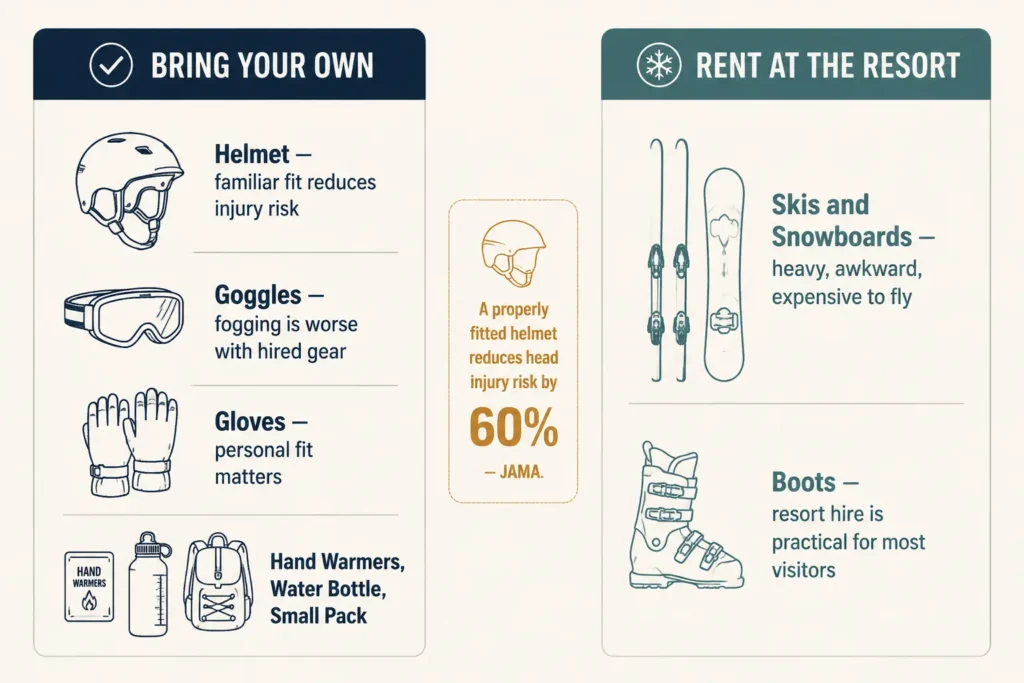
Not every piece of snow gear belongs in your suitcase. Some items are personal enough that renting doesn’t do them justice, and others are simply too bulky to justify bringing along.
Helmets, goggles, and gloves are generally better packed yourself. If you don’t own them yet, most resorts have rentals available. But if you do, bring them. These items need to fit comfortably and feel familiar on the mountain, and hired gear doesn’t always deliver that.
That familiarity isn’t just about comfort. Fogged goggles can ruin a run, but a poorly fitted helmet is more than an inconvenience. Research published in JAMA found that a properly fitted helmet can reduce head injury risk by 60% among skiers and snowboarders.
Skis and snowboards tell a different story. They’re large, heavy, and awkward to transport through airports, so renting at the resort is the more practical option. It also saves you the baggage fees that come with oversized gear.
Beyond your main equipment, a few smaller items deserve a place on your packing list. This includes hand warmers, a reusable water bottle, and a small backpack. They keep you fuelled and comfortable through a full day on the mountain.
Toiletries and Personal Items
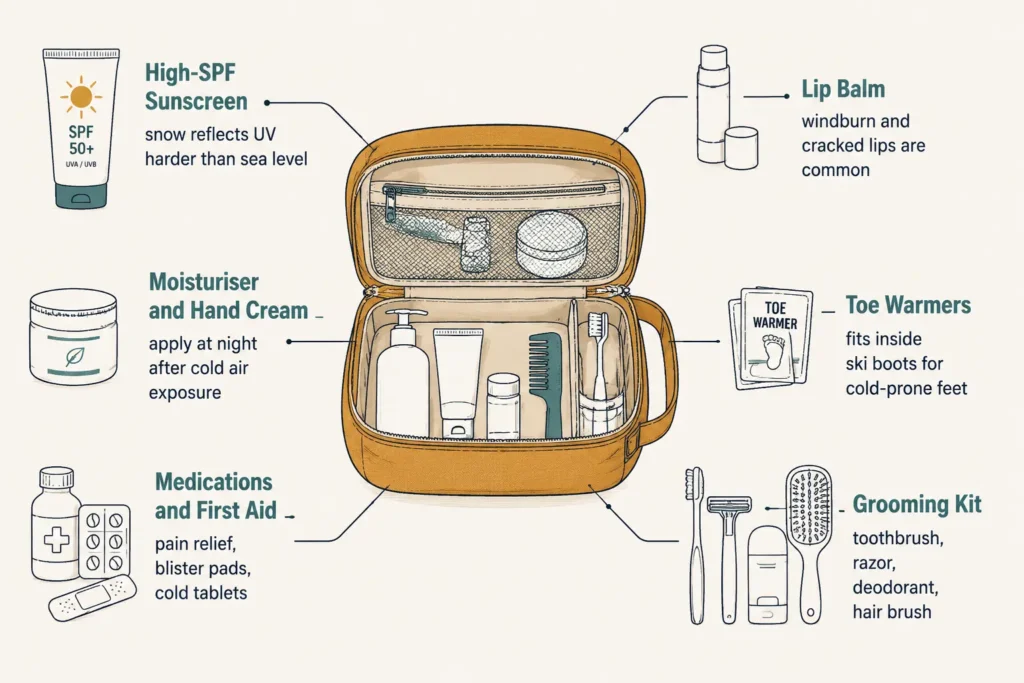
Cold, dry air and strong UV exposure at altitude take a toll on your skin. Sun reflects off the snow and hits harder than it does at sea level, so your toiletry bag needs more than the usual travel staples.
Resort towns do sell what you need, but prices run higher than what you’d pay at home. That’s why packing your own before you leave is the better move.
Here’s what to include:
- Sunscreen and Lip Balm: Snow reflects sunlight, which increases UV exposure during the day. Pack a high-SPF sunscreen and a moisturising lip balm to help prevent sunburn, windburn, and cracked lips.
- Moisturiser and Hand Cream: After a full day outdoors, cold air and indoor heating leave your skin dry and tight. A good moisturiser and hand cream applied at night keep your skin from cracking over a long trip.
- Hair Brush and Personal Grooming Items: A small grooming kit covers the basics without taking up much room in your luggage. Include a toothbrush, toothpaste, deodorant, razor, and hair brush.
- Toe Warmers: If your feet tend to get cold easily, disposable toe warmers are a smart addition to your ski boots. They fit inside most ski boots and can make long days on the snow far more bearable.
- Medications and First Aid Supplies: Bring any prescription medications you need, along with pain relief, blister pads, and cold-and-flu tablets. Having them on hand is far easier than trying to track them down after you arrive.
Most of these items take up very little space, which makes them easy to overlook when packing. Taking a few minutes to check them off your list saves a lot of discomfort once you’re spending full days on the mountain.
Electronics and Travel Essentials
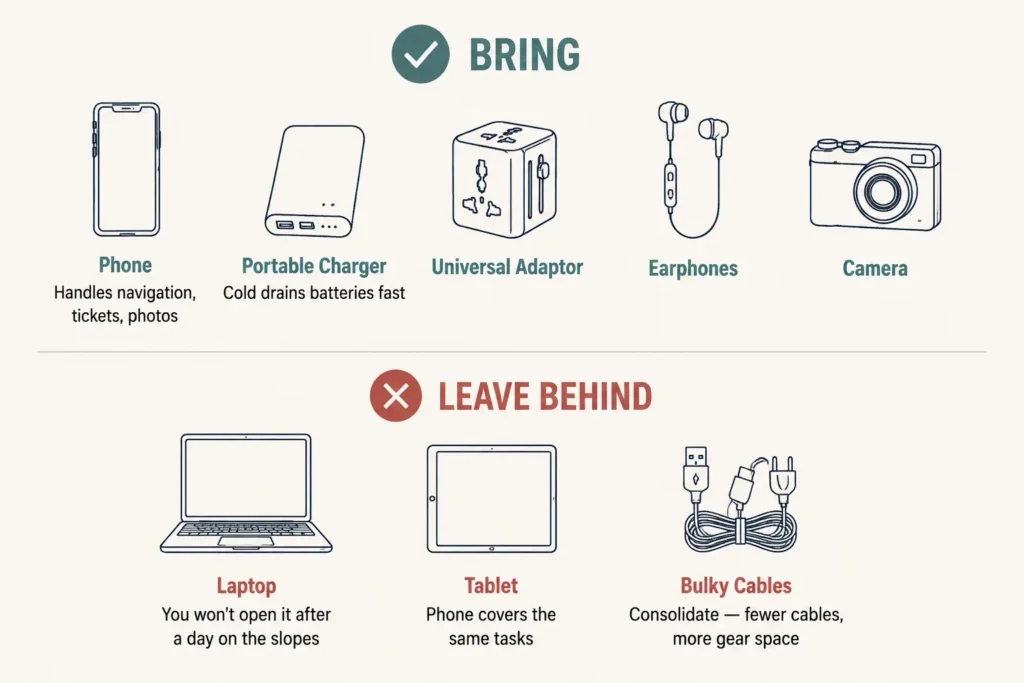
When it comes to electronics, a snow trip packing list is surprisingly short. Unlike a business trip packing list, where you may need multiple devices and accessories, most of your time on a snow holiday is spent outdoors. That means you can focus on a few practical essentials rather than filling your bag with tech.
What to Bring:
- Phone: Your phone handles navigation, communication, mobile tickets, and photos, making it the most useful piece of technology you’ll pack.
- Portable Charger: Cold temperatures drain phone batteries faster than usual. A portable charger helps keep your phone running through a full day on the mountain.
- Universal Adaptor: If you’re travelling overseas, a universal adaptor covers all your charging needs in a single item.
- Earphones: Useful during flights, transfers, and downtime at the lodge. A compact pair takes up almost no room in your luggage.
- Camera: Optional, but a good choice if you want higher-quality photos than your phone can capture.
What to Leave:
- Laptop: Unless you need it for work, you won’t open it once. After a full day on the slopes, the last thing you’ll want is a screen.
- Tablet: A phone can handle most of the same tasks while taking up far less space.
- Bulky Cables and Chargers: Consolidate wherever possible. Fewer accessories mean less clutter and more room for cold-weather essentials.
Compared with a beach trip packing list, snow travel requires far less technology. In fact, the electronics you bring for a one-day trip are often enough for a week in the snow. A phone, a portable charger, and a few charging essentials cover almost everything you’ll need.
How Much to Pack for Different Trip Lengths
The length of your trip determines how much you pack. For a weekend trip, two to three sets of base layers, one mid layer, and a single outer shell are usually enough. One ski jacket and one pair of ski pants will cover the entire trip. And for many travellers, that fits comfortably into a single carry-on bag.
A week-long ski trip calls for a little more clothing. Pack five to six sets of base layers, several pairs of wool socks, and enough casual clothing for evenings and travel days. Mid layers and outerwear can usually be rotated throughout the week. That alone keeps your luggage under control.
For trips longer than a week, focus on reusing clothing rather than packing a fresh outfit for every day. Outerwear, mid layers, and some casual clothing hold up for multiple wears before needing a wash.
If your accommodation has laundry facilities, wash base layers and socks as needed. You’ll end up carrying far less than you packed for a shorter trip.
What Not to Bring on a Snow Trip
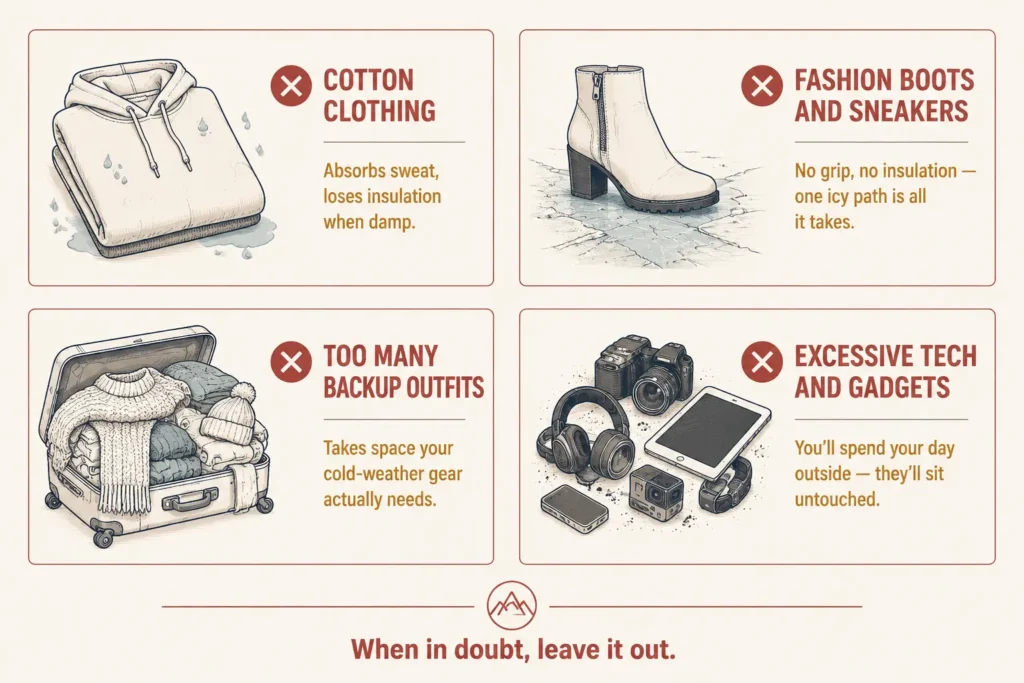
Some items look useful when you’re packing at home, but become dead weight the moment you arrive. Leaving them behind saves space for the gear that earns its place in your bag. These are the ones to leave behind:
- Cotton Clothing: Cotton absorbs moisture and loses its insulating ability when damp. A wet hoodie or pair of jeans pulls heat away from your body, and no amount of layering on top will fix it.
- Fashion Boots and Casual Sneakers: Snow and ice demand grip and insulation. Fashion boots and casual sneakers have neither, and one slippery path between the lodge and the restaurant is all it takes to find that out the hard way.
- Too Many “Just in Case” Outfits: Extra clothing takes up the luggage space you actually need for cold-weather gear. A good layering system handles far more conditions than a bag full of backup outfits ever will.
- Excessive Tech and Gadgets: You’ll spend most of your day outdoors, and extra devices will sit in your accommodation untouched. Save the bag space and leave them at home.
A pre-planned list of wear is easier to carry and easier to manage. It also leaves room for the gear that genuinely gets used. So, when in doubt, leave it out.
Your Snow Trip Packing List at a Glance
A solid packing list means you arrive ready for the conditions instead of scrambling to replace forgotten items. The clothing, snow gear, toiletries, and travel essentials covered in this guide will keep you warm and prepared throughout your trip.
Before you leave, run through your list one final time. Check that your layers, gloves, chargers, medications, and travel documents are all accounted for. A five-minute check before departure day saves a lot of frustration once you arrive.
If you’re heading to the snow and still sorting out airport transfers, GLA Packed handles door-to-door vehicle hire so your gear arrives with you. Get in touch before your departure date and lock in your booking.
Related Posts
International Business Travel Checklist Before You Fly Overseas
Most business travellers discover a problem at the worst possible…
Knowing When To Start Packing For A Trip Without Rushing
Most people start packing for a trip the night before…
Planning How To Prepare A Car For A Long Road Trip Before You Leave
You've packed the bags, double-checked the route, and everyone's ready…