
Most business travellers discover a problem at the worst possible moment, somewhere between the taxi and the check-in counter. It could be a passport that falls short of the six-month validity rule or a visa they didn’t realise they needed. By then, fixing the problem is often expensive, stressful, or simply impossible.
Fortunately, most of these issues are entirely preventable. A few simple checks before you leave can save you from unnecessary delays, extra costs, and last-minute stress when you’re travelling for work.
This guide walks through everything you need to prepare before you fly. It covers travel documents, work essentials, and the final checks that help your trip get off to a smooth start.
Let’s get into it.
Business Travel Documents to Sort Before You Leave
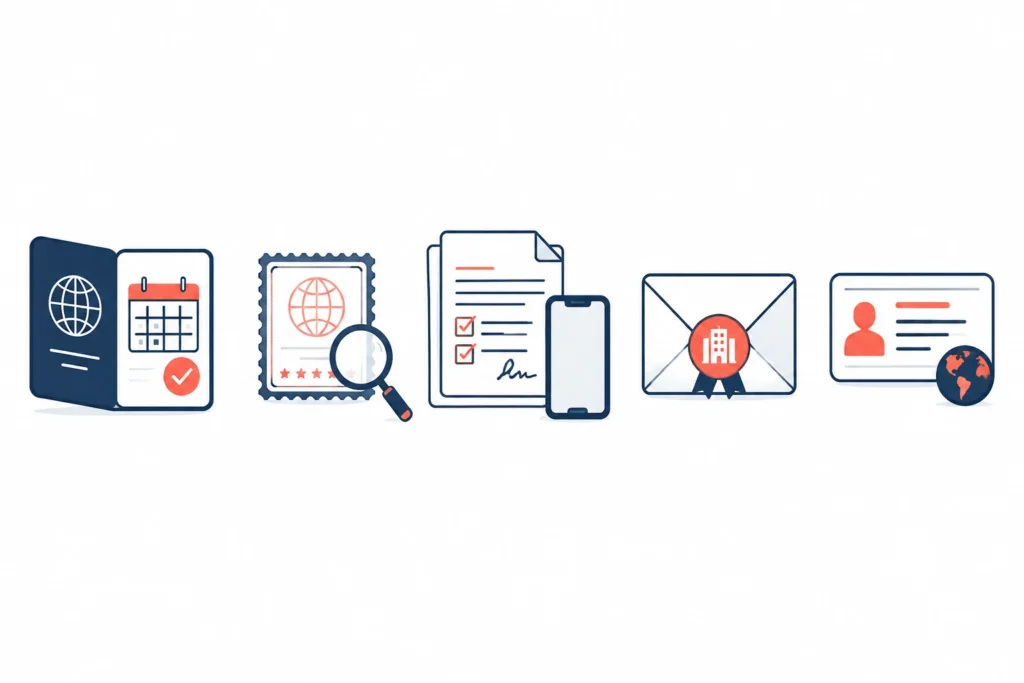
Every international business travel checklist should start with paperwork, because document issues are the hardest to fix once you’re close to departure. Sort these first, ideally three to four weeks before you fly.
- Passport Validity Check: Confirm your passport has at least six months of validity left from your return date. Many countries refuse entry without that buffer, even for a short work trip. If you’re close to the cutoff, renew now rather than risk it at the airport.
- Business Visa: A tourist visa doesn’t always allow business activities. Australia, for example, has a separate Business Visitor visa stream for eligible travellers, and many other countries make similar distinctions. So check the requirements for your destination well in advance, as processing times and supporting documents vary.
- Printed and Digital Copies: A flat phone battery can quickly become a problem if an immigration officer asks to see your itinerary or hotel booking. Printed copies give you an immediate backup when you can’t access your digital documents.
- Employer or Invitation Letters: Border officials may ask for documents that explain the purpose of your visit. That could mean employer authorisation letters, client invitations, or conference registrations. Keep both printed and digital copies so you can access them quickly if border officials request them.
- Driver’s Licence: If you plan to hire a car overseas, make sure your driver’s licence is valid for use in your destination. You may also need an International Driving Permit, so confirm the local requirements before you travel.
Once you’ve ticked off the paperwork, you can turn your attention to the travel arrangements that keep your trip running smoothly.
Flight, Hotel, and Ground Transport Logistics
Getting to the right place at the right time starts long before your flight departs. A few checks can prevent unnecessary delays once you arrive.
| Category | What to Confirm |
| Flight | Seat preference for long-haul comfort, booking confirmation, and check-in details |
| Hotel | Location relative to your meeting venue, confirmation number, and early check-in if needed |
| Ground Transport | Pre-arranged airport transfer or car hire, and local transport options for getting between meetings |
Confirming these details early also gives you time to adjust if flights change, meetings are rescheduled, or your arrival plans need to shift.
Work Documents and Materials to Pack
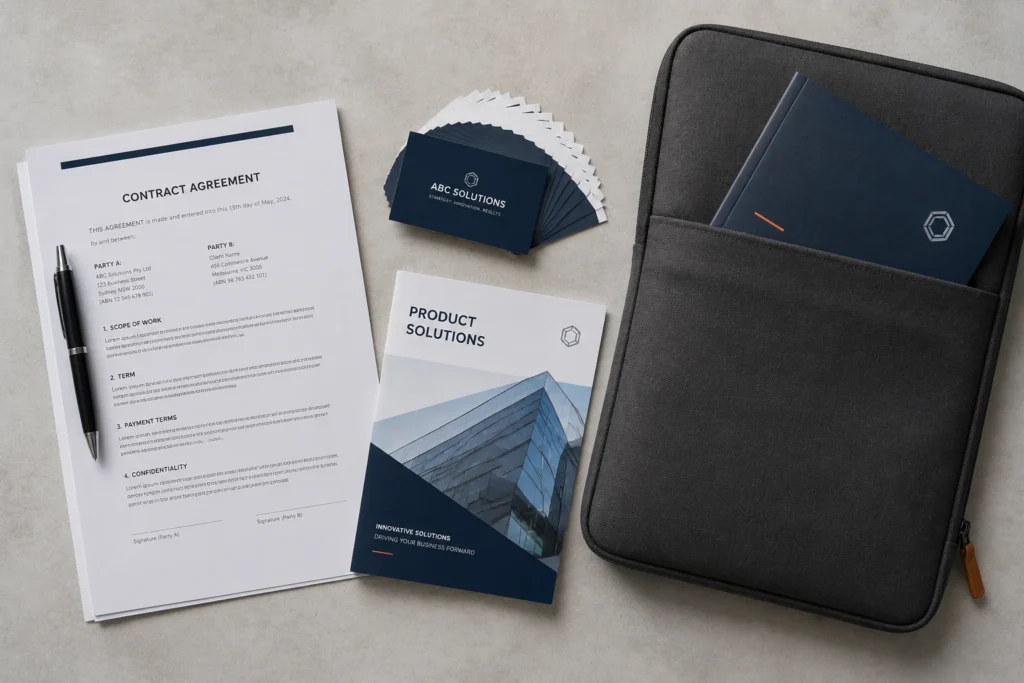
A business trip packing list should keep work essentials separate from personal items, so nothing important gets buried at the bottom of your suitcase. Start with these work-related items before packing everything else.
- Presentations and Contracts: Bring printed and digital copies of any client-facing materials. A printing issue at a foreign hotel the morning of a meeting is not a position you want to be in.
- Compliance and Regulatory Documents: Certain industries require additional permits, certificates, or other documentation before work can begin overseas. Check what’s required for your destination before you pack.
- Business Cards: Don’t assume you’ll only need a handful. Bring enough for every planned meeting, plus a few extras for unexpected conversations. In many international markets, particularly across parts of Asia, exchanging business cards is still a professional expectation.
- Branded Materials: If you’re attending a conference or exhibition, bring any brochures, product samples, or branded materials you’ll be handing out. Pack them according to the needs of each event rather than “just in case.”
Every item in your bag should have a purpose. If it supports the work you’re travelling to do, leave the space for something that does.
Electronic Devices and Connectivity Prep
Your devices are only useful if they work when you need them. A forgotten adaptor or an inactive roaming plan can cost you valuable time when you’re trying to navigate a new place. So run through each item below before you pack:
| Device / Item | What to Check Before You Pack |
| Laptop | Fully charged, necessary files saved for offline access, and packed in a dedicated laptop sleeve |
| Mobile Phone | Roaming plan or local SIM card activated, key contacts saved, and boarding pass downloaded |
| Power Adapters | Correct adaptor for your destination’s outlets, plus a power bank for days away from a desk |
| Phone Charger | Packed in your carry-on for easy access during the flight and on arrival |
| Messenger Bag | Organised so your most-used devices and documents sit at the top |
Worth Doing: Confirm the outlet types for your destination. Not every country uses the same standard, and arriving without the right adaptor can leave your devices with no power until you find one locally.
Travel Insurance for Business Trips

It’s easy to treat travel insurance as another box to tick before departure. The problem is that most personal policies aren’t designed for the realities of a work trip.
Lost luggage is inconvenient on a holiday. On a business trip, it can mean arriving at a client meeting without your laptop, your presentation, or the documents you need to do the job. That’s why, check your policy specifically for coverage of work equipment, professional liability, and trip cancellation tied to work obligations.
And if your company uses corporate travel management, your employer may already have a policy in place. So confirm what’s covered before purchasing separate insurance.
For extended trips or frequent travellers, a dedicated business travel insurance policy is worth the investment. Hopefully you’ll never need to make a claim, but having the right cover can save costs if something goes wrong.
Health and Personal Essentials
Good preparation isn’t limited to paperwork and travel logistics. Looking after your health before you leave makes it much easier to stay focused once work begins.
Start with any destination-specific requirements. Check whether you’ll need vaccinations or health certificates, then pack any prescription medication in its original packaging along with a doctor’s letter if required.
Once the essentials are covered, think about everyday health and comfort. A small kit with over-the-counter medication, hand sanitiser, and bandages can save you searching for a pharmacy in an unfamiliar city. An eye mask and reusable water bottle are also worth packing if you’re facing long flights or multiple time zones.
Beyond these basics, what you pack depends on your personal routine, destination, and itinerary. A packing list for a business trip for female travellers may include additional personal care items, skincare products, or clothing choices based on these factors. Either way, pack for what the trip actually requires rather than covering every possibility.
The Day-Before Business Trip Sweep
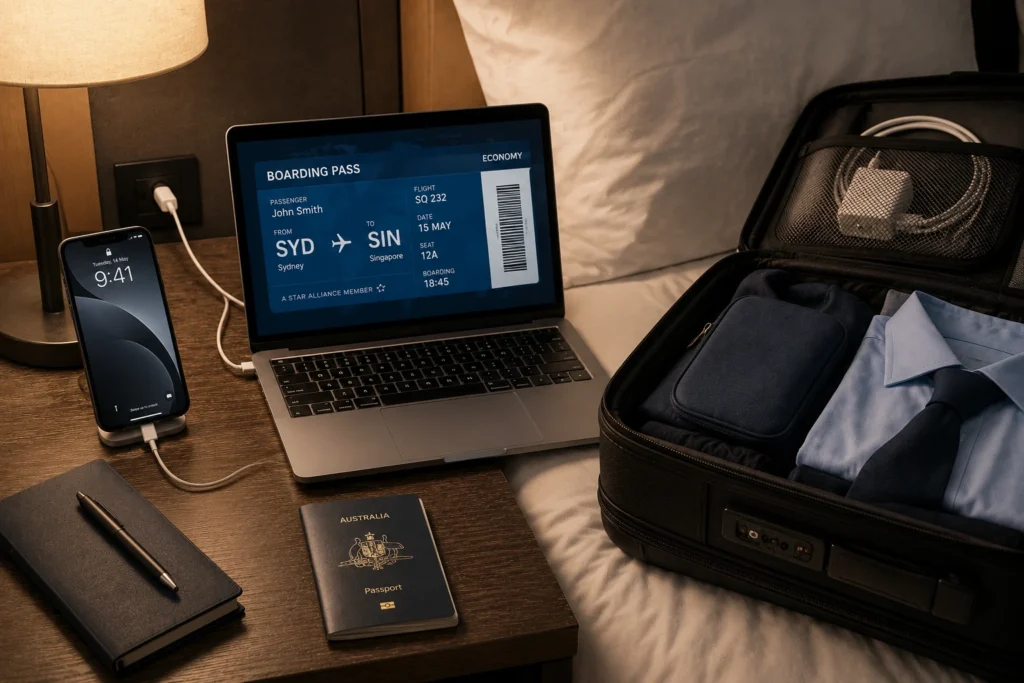
By the day before departure, everything important should already be booked and packed. This final sweep is simply about catching anything you’ve overlooked:
- Charge all devices fully and pack all cables, adaptors, and your power bank
- Confirm all bookings are accessible, both printed and on your phone
- Notify your bank of your travel dates to avoid your card being blocked on arrival
- Download offline maps and any documents you’ll need without Wi-Fi
- Check your bag for forgotten items like band aids, your phone charger, or travel adaptor
- Set your out-of-office reply and brief your team on anything time-sensitive
Five minutes on this final sweep beats discovering a missing charger or passport after you’ve left home.
Your International Business Travel Checklist Complete
A successful business trip starts long before you reach the airport. Working through documents, packing, tech, and insurance in this order means nothing slips through at the last minute. Each step builds on the last, so by the day-before sweep, you’re confirming details rather than hunting them down.
Want to make your next trip even easier to organise? GLA Packed can help you create a tailored packing list before every trip. Get in touch today to see how we can simplify your travel planning.
Related Posts

Knowing When To Start Packing For A Trip Without Rushing
Most people start packing for a trip the night before…

Planning How To Prepare A Car For A Long Road Trip Before You Leave
You've packed the bags, double-checked the route, and everyone's ready…
Building A Snow Trip Packing List Before You Travel
Packing for a snow trip is easy to underestimate. You…