
Launceston Airport sits in northern Tasmania and serves as the starting point for many trips around the region. The terminal is small and easy to navigate, with car hire desks located inside the building so you can collect a vehicle soon after landing. As a result, picking up a car at the airport is quick and simple for most travellers.
That convenience is one reason airport pickup is so common, but flexibility plays a big role too. Car hire at Launceston Airport makes it easier to explore Tasmania at your own pace. Public transport is limited outside the city, and taxis become expensive over longer distances, so having your own vehicle gives you far more control over your plans.
After landing, rental collection takes place inside the arrivals hall, where the main car hire counters are located.
Picking Up Your Rental Car at Launceston Airport
Most Launceston Airport car hire providers operate from counters inside the arrivals hall. After collecting your bags and walking through customs, you can head straight to the desk, show your documents, and collect your keys. If your booking is already confirmed, the process usually takes around 10 minutes.
Some operators, however, use an off-site depot instead of a counter in the terminal. In that case, a free shuttle picks you up from outside the airport, usually near the taxi rank, and takes you to their location on Evandale Road. The drive takes about five minutes, and shuttles run regularly during business hours.
Either way, the pickup process is quick. Most travellers are on the road within 10 to 15 minutes of landing. We recommend having your booking confirmation ready on your phone or printed to speed things up at the counter.
What You’ll Need to Hire a Car
A valid driver’s licence, credit card, and booking confirmation are the three essentials for car rental at Launceston Airport. Each one is checked at the counter before your rental can be released.
Documents and Payment Requirements

The first requirement is your driver’s licence. It should be a full licence that’s been valid for at least 12 months. In most cases, companies don’t accept learner permits and provisional licences, though some of them allow P2 (green P) licences for certain vehicles.
For international visitors, the rules are the same, with a few exceptions. You can use your home country licence if it’s in English and includes a photo. However, if your licence isn’t in English, you’ll need an International Driving Permit or an official translation. Without the right documents, the rental desk will turn you away and your booking will be forfeited.
You’ll also need a credit card in the main driver’s name for payment security. Some companies accept debit cards as well, but policies vary, so it’s worth checking when you book. Finally, bring your booking confirmation, either printed or saved on your phone, to verify your reservation details at the counter.
Age and Licence Rules
The minimum age to rent a car with most companies is around 21. Drivers under 25 often pay extra daily fees, which can add $15 to $30 per day. These surcharges apply even if you book online, so factor them into your budget early.
The same age rules apply if you’re adding additional drivers to the rental agreement, and they’ll need their own valid licence to be listed on the contract. Most companies also charge a fee for each extra driver, though some include one for free.
Choosing the Right Hire Car for Launceston and Tasmania Roads
Vehicle choice depends on your route. Small cars, for example, work well for city driving around Launceston and nearby suburbs like Riverside. They’re easy to park, cheap to fuel, and handle sealed roads without any trouble. So if you’re sticking to the city centre and shorter trips, a compact vehicle is usually the best choice.
But if you’re heading beyond the city to places like Cradle Mountain, the roads turn to gravel quickly. The East Coast route also has stretches of unsealed track, particularly once you leave the main highway. An SUV handles those rougher surfaces better and gives you confidence in wet or icy conditions during the winter months.
Bottom Line: For a road trip across Tasmania, think about where you’re going. City routes need nothing fancy, but backcountry destinations require more clearance and sturdier tyres to handle the terrain safely.
Car Hire Costs and What’s Included
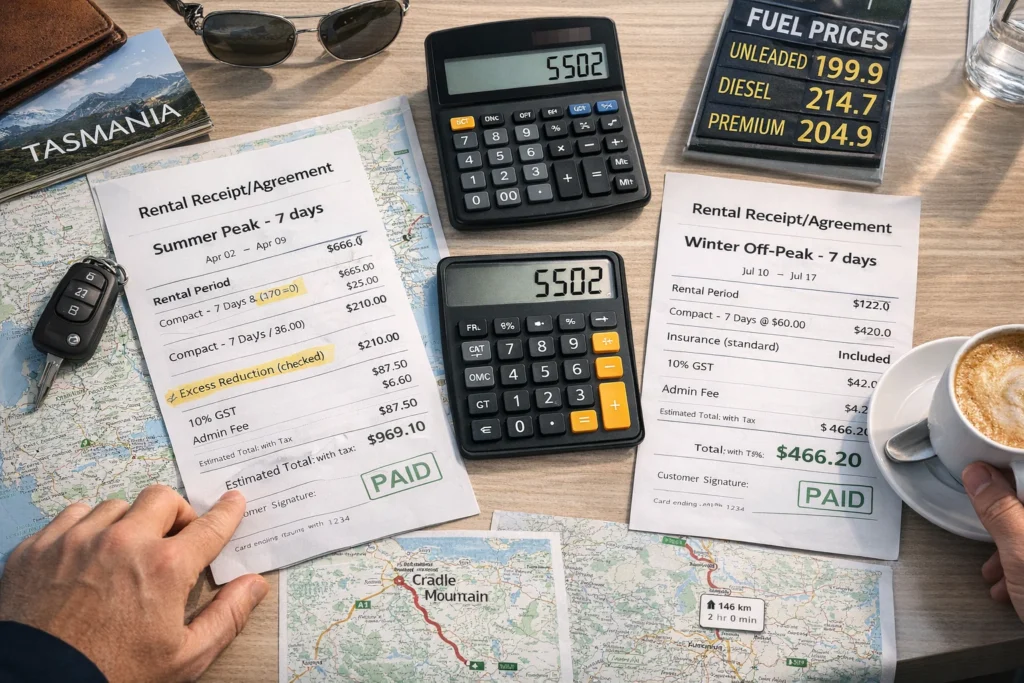
Rental prices vary based on the time of year, with summer holidays and public holidays costing more than winter. Booking outside those peak times can save money, and the longer you rent, the lower your daily rate usually becomes.
The base rate usually includes standard insurance, but this comes with an excess of around $3,000 to $5,000 if the car is damaged. Fortunately, most providers let you reduce that excess by paying for additional cover per day, which lowers your out-of-pocket cost if something goes wrong. This can be especially useful if you plan to drive on regional roads or unsealed surfaces, where the risk of minor damage is higher.
Beyond insurance, fuel is the other cost to plan for. Most rentals operate on a full-to-full policy, which means you return the car with a full tank or pay a refuelling fee. That fee is typically higher than local fuel prices, so filling up before returning the vehicle is usually the cheaper option.
Drive Times to Major Tasmanian Destinations
Launceston Airport is a convenient base for exploring Tasmania’s north and west, especially compared to flying into Hobart. From the terminal, most of the region’s main attractions are within an hour or two of driving. That includes:
- Launceston City Centre: The drive into town takes around 15 minutes via the Bass Highway. Once you’re there, you can explore Cataract Gorge, the Queen Victoria Museum, and Franklin House without needing to travel far.
- South Esk River Area: The South Esk River runs through this region, and it’s a quieter alternative if you want to stay close without heading into Launceston itself. From the airport, it takes about 20 minutes to reach towns like Evandale along the river.
- Cradle Mountain: Heading west from the airport takes roughly 90 minutes. The route is sealed for most of the journey, though you’ll hit gravel closer to the national park entrance.
- East Coast: Driving southeast towards the coast takes about two hours. Along the way, you can stop in Launceston’s surrounding suburbs before continuing to Bicheno and Freycinet National Park for coastal scenery.
These places stay sealed and well-marked according to Tasmania’s official tourism guide, so you won’t need off-road experience or a 4WD for most trips.
Popular Routes from Launceston Airport
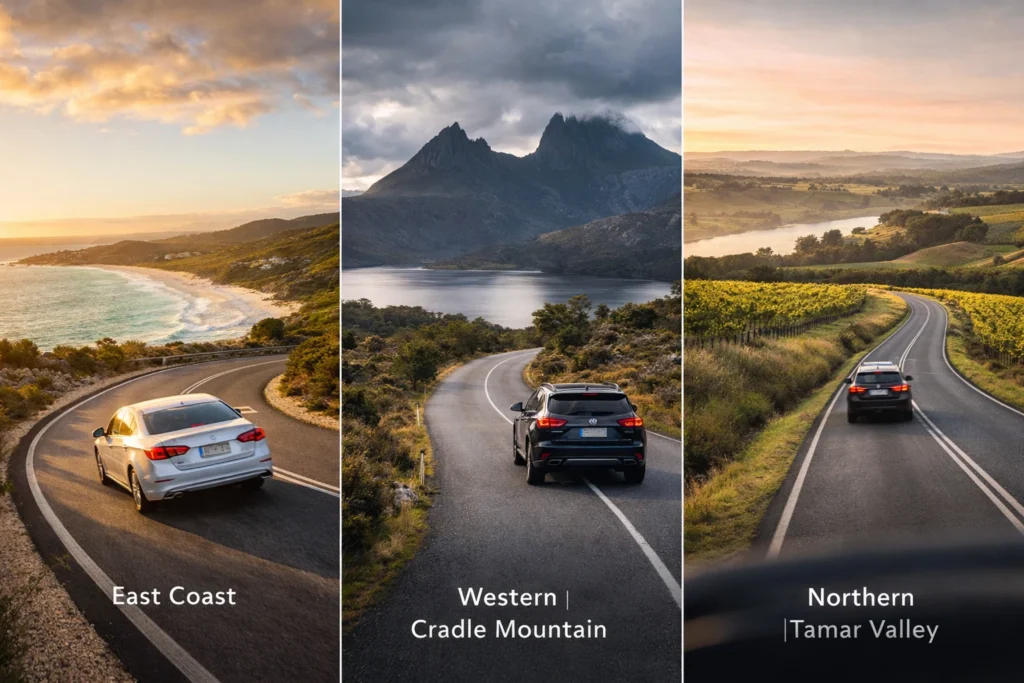
From Launceston Airport, most travellers follow one of three main routes: the east coast, the west toward Cradle Mountain, or the northern loop through the Tamar Valley.
The eastern route heads towards Bicheno and Freycinet National Park, following a coastline of fishing villages, beaches, and wide ocean views. Wineglass Bay is the standout highlight, and the drive is best experienced at a relaxed pace with time for stops along the way.
Heading west, the landscape changes gradually from farmland into alpine wilderness as you approach Cradle Mountain. It’s one of Tasmania’s most dramatic drives, and it ends in a region defined by lakes, forest, and hiking trails.
To the north, the Tamar Valley offers a slower and more settled journey. Vineyards line the river corridor, and small towns are scattered along the route, which makes it an easy drive with plenty of places to stop.
These routes show how quickly the scenery changes once you leave Launceston, which is why car hire in Tasmania is the most practical way to explore the region.
Get Behind the Wheel in Launceston
Car hire at Launceston Airport gives you the freedom to explore Tasmania without relying on tours or fixed schedules. The pickup process is simple, and you’ll be on the road within minutes of landing.
From there, the routes are well-marked and easy to follow. And having your own vehicle means you can take your time, adjust plans on the go, and stop wherever the scenery calls for it.
When you’re ready to book car hire, contact GLApacked to compare rates and find the right vehicle for your trip.
Related Posts

Do You Really Need Car Hire Port Douglas for Your Stay?
You don't need a car hire in Port Douglas if…

Not At Fault Car Hire Explained: What Happens After an Accident
If the accident was not your fault, you are legally…
Do You Really Need Car Hire Kangaroo Island for Your Trip?
The short answer is yes. Unless you want to spend…