
You’ve landed in Australia, bags packed and ready to explore. But the moment you start planning your days, the recommendations come flooding in.
One person says the Great Ocean Road is a must-see. Another insists you can’t leave without visiting Uluru. Before long, your itinerary is overflowing, and a two-week trip suddenly feels far too short.
So you start Googling. And three hours later, you’ve got 47 open tabs, zero clarity, and a mild headache. It’s a trap many visitors fall into.
That’s why we put together this guide to the best tourist attractions in Australia. We’ve broken it down attraction by attraction, so you can focus on the destinations that interest you most.
Let’s start with the one you can see from space.
You Can See the Great Barrier Reef From Space
The Great Barrier Reef is the largest living structure on Earth, so big that astronauts can spot it from orbit with the naked eye. It stretches along the Queensland coast for over 2,300 kilometres. And in 1981, it became one of the first places listed as a UNESCO World Heritage Site.
What makes the reef worth visiting isn’t just its size. It’s the rich biodiversity packed into it. Snorkelling or diving here feels like entering a different world. The reef supports more than 1,600 species of fish and 600 coral species. That accounts for roughly 10% of all fish species on the planet.
Uluru: The Sacred Rock That Still Keeps Its Secrets
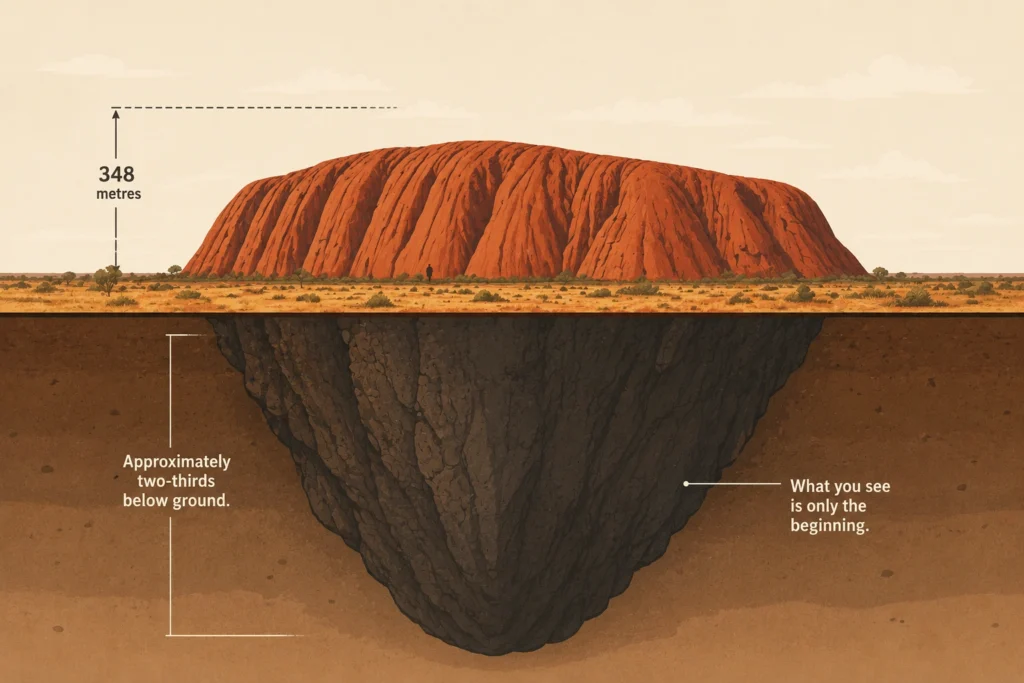
Uluru is not a mountain; it’s actually a rock. Just one that rises 348 metres above the desert floor and stretches nearly 10 kilometres around its base. And that’s just what you can see above ground. Around two-thirds of the rock sits beneath the surface, pushing kilometres deep into the earth below the Northern Territory desert.
For the Anangu people, who have lived here for tens of thousands of years, Uluru is far more than a geological landmark. Their spiritual beliefs, laws, and stories are all tied to the rock through Tjukurpa. Out of respect for those traditions, visitors are no longer permitted to climb Uluru.
Fortunately, you don’t need to climb it to get the full experience. A simple guided walk around the base brings you closer to sacred sites, Anangu culture, and the sheer scale of Uluru than any climb ever would.
Sydney Opera House: The Architectural Accident That Became Iconic
In 1956, Sydney held a global competition to design its next great landmark. 233 entries came in from architects around the world. Jørn Utzon was one of them. The Danish architect’s design was initially rejected by three of the four judges. The fourth arrived late, pulled his entry from the pile, and championed it over every other submission. That decision would go on to define Sydney’s image for generations.
With Sydney Harbour at its doorstep and the Sydney Harbour Bridge nearby, the Sydney Opera House is now one of the most photographed landmarks in the world. Yet the building rarely came together as planned. It took 14 years to build, cost 15 times its original budget, and Utzon resigned before it was finished.
You don’t need a ticket to appreciate it either. A walk around the outside is free, but if you can, book a tour or catch a performance inside. Because the Opera House is impressive from the harbour, but it’s even better from within.
The Great Ocean Road Was Built by the Soldiers Who Fought On It
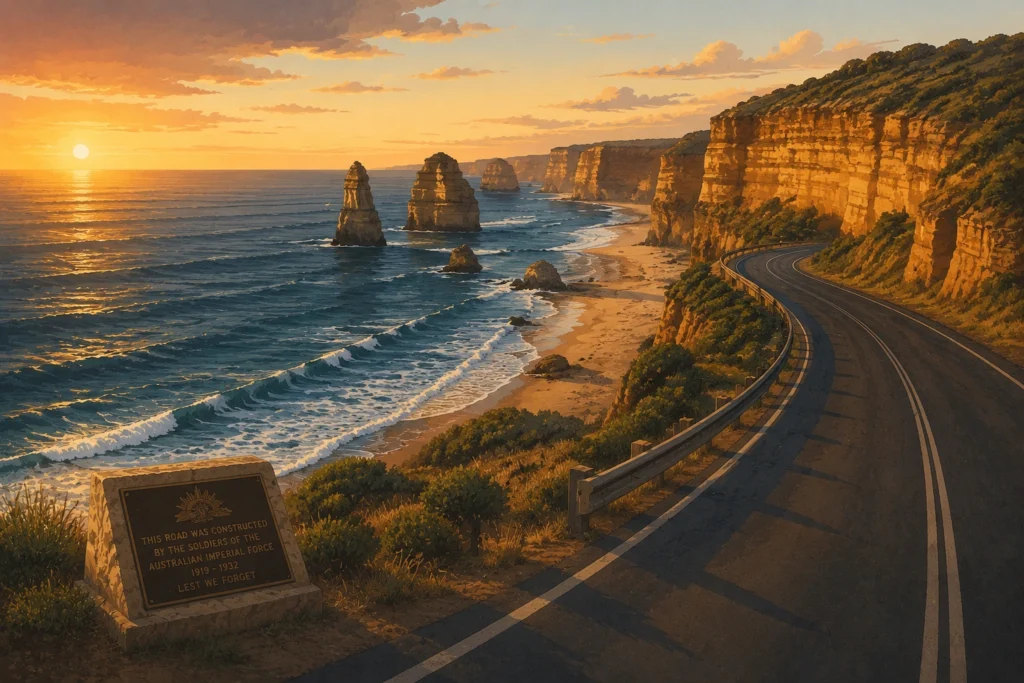
Some attractions ask you to stop and look. Whereas the Great Ocean Road asks you to keep driving.
It stretches for 243 kilometres along Victoria’s southwest coast, and it’s one of the best road trips in the world. The scenery does all the convincing. Coastal cliffs, ancient rainforest, and sweeping ocean views come at you one after another. It’s the kind of drive where you’ll find yourself pulling over constantly, even when you didn’t plan to.
The highlight most visitors come for is the Twelve Apostles, a collection of limestone stacks rising straight out of the Southern Ocean. At sunrise, the rock faces catch the light before the water does.
For a few minutes, eight amber columns stand against a dark ocean, then the sun climbs and the moment is gone. Only eight remain standing today. The Southern Ocean has been wearing them down for centuries.
The road’s history is every bit as compelling as the views. After World War I, the Great Ocean Road was built to provide returned soldiers with work and later became a memorial to those who didn’t come back. More than 3,000 returned servicemen worked on it over a construction period that lasted from 1919 to 1932.
Every kilometre of it carries that history, even if you don’t feel it while you’re driving. And when you do find out, it changes the way you look at the road.
Daintree Rainforest: Older Than the Amazon by 100 Million Years
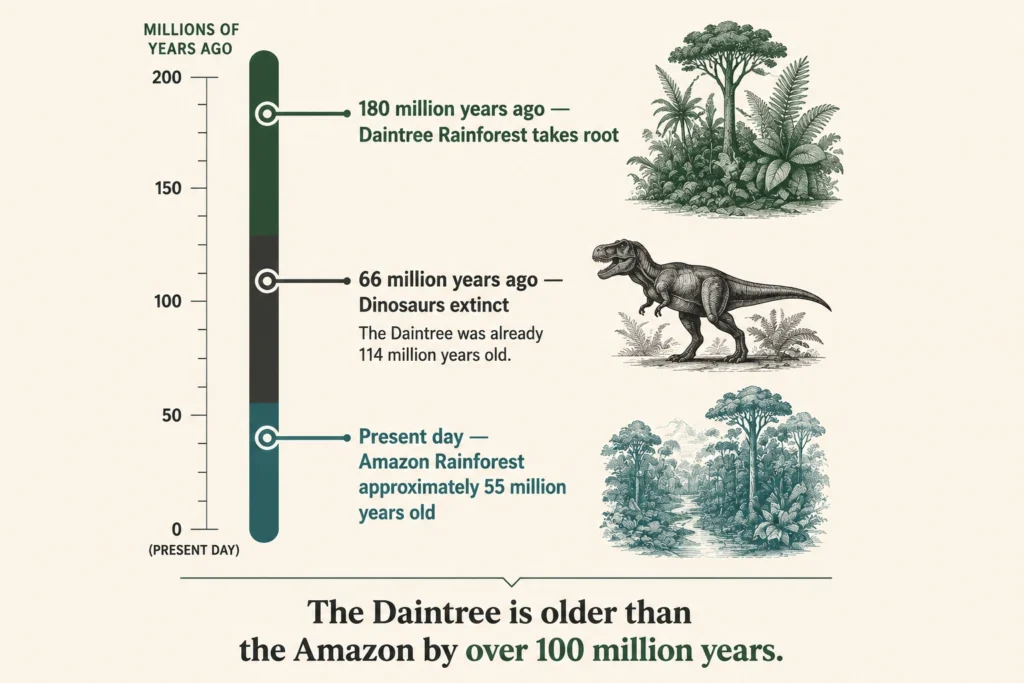
Dinosaurs were still 50 million years away from existing when the Daintree first took root. Today, it feels like stepping into a completely different era of the planet.
Located in Far North Queensland, the Daintree is the oldest tropical rainforest on Earth, estimated at around 180 million years old. So much time has passed, yet the canopy is still so dense in places that sunlight barely reaches the ground. No wonder it holds UNESCO World Heritage status.
What makes the Daintree genuinely rare is its location. It’s one of the only places on the planet where a rainforest meets a coral reef. For any nature lover, that combination exists nowhere else on Earth.
The rainforest is also home to around 12,000 insect species and roughly one-third of Australia’s frog, reptile, and marsupial species. Even when you can’t see it, life surrounds you. Most visitors arrive expecting a walk in the woods. They leave remembering the heat, the humidity, the layered green canopy, and the distant calls of birds mixed with the steady hum of insects.
Kakadu National Park: Where Aboriginal Art Is Still Being Made Today
Kakadu National Park covers nearly 20,000 square kilometres in the Northern Territory. That’s roughly half the size of Switzerland. Yet the vast landscapes aren’t what most visitors remember.
They recall standing beneath ancient rock shelters and cruising past crocodiles on yellow billabongs. Meanwhile, the landscape shifts constantly between wetlands, woodlands, and sandstone escarpments. Few places in Australia offer that kind of contrast in a single day.
That diversity is best seen at the park’s rock art sites, Ubirr and Burrungkuy. Some paintings are thousands of years old. And unlike many ancient art traditions around the world, these practices never disappeared.
Behind all of it are the Bininj and Mungguy people. They’re the Traditional Owners of Kakadu, and their connection to the land goes back tens of thousands of years. The rock art is part of that living story. The best way to see it is with a Traditional Owner guide who can share the stories that give the artwork its meaning.
Kangaroo Island: Australia’s Galapagos
Ask anyone to name one animal they associate with Australia, and nine out of ten will say Kangaroos. So it’s only fitting that there’s an entire island named after them.
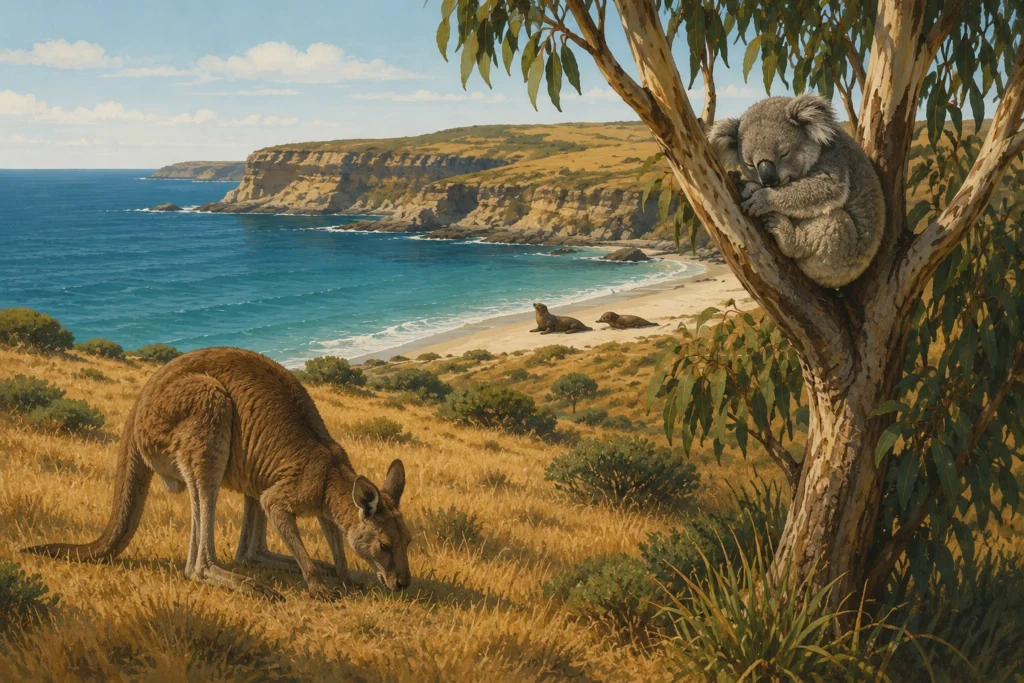
Kangaroo Island is one of the easiest places in Australia to see native wildlife in its natural habitat. Kangaroos graze in open fields, koalas sleep in eucalyptus trees, and sea lions stretch out along the beaches. It’s the kind of place where spotting wildlife feels like a daily occurrence.
Part of the reason is the island’s isolation. Since it was separated from the mainland for so long, pests like foxes never established themselves here. That’s why many native species have been able to thrive.
The scenery is just as impressive. Rugged cliffs, white-sand beaches, and natural landmarks like the Remarkable Rocks give visitors plenty to explore between wildlife encounters.
Phillip Island and the Penguin Parade
Just 90 minutes from Melbourne sits Phillip Island, home to the world’s largest little penguin colony, around 40,000 birds in total. It’s small, quiet, and easy to get around. Yet every evening at sunset, hundreds of people gather along Summerland Beach to watch one of Australia’s most unusual wildlife spectacles.
As darkness falls, little penguins emerge from the Bass Strait and waddle ashore in groups before making their way back to their burrows. It happens every single night without fail.
From the viewing platforms, you can watch the procession from just metres away. Kids love it, and the adults who expect to be unimpressed are often the last to leave. They don’t call it the Penguin Parade for nothing.
Of course, getting to any of these places starts with getting into the country.
What You Need to Enter Australia
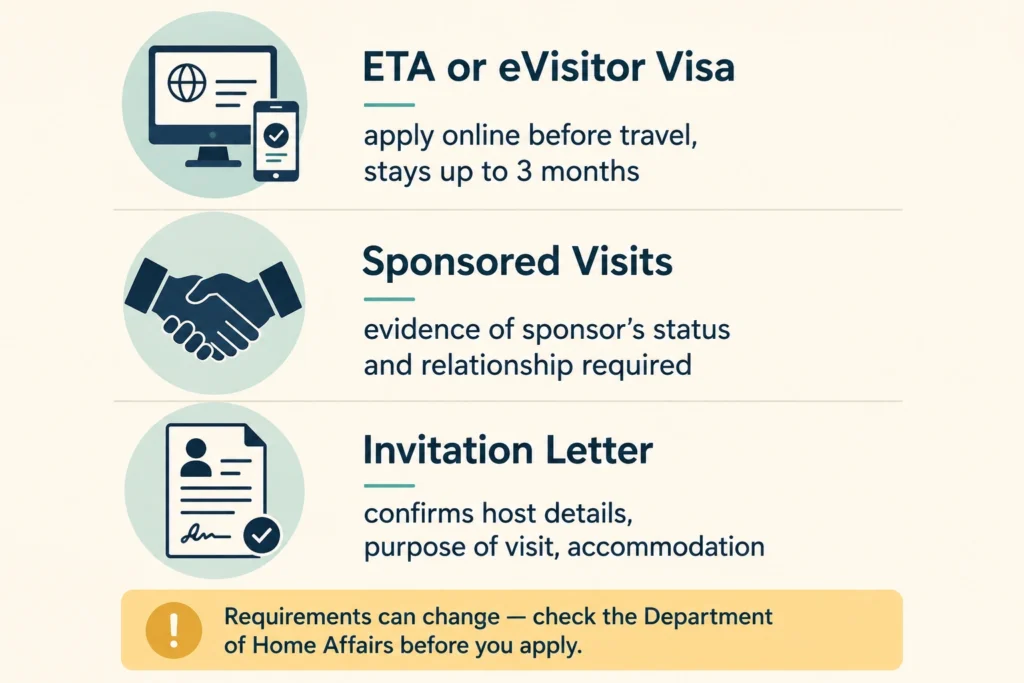
The exact requirements depend on your nationality, but most tourists will need a valid passport and the appropriate visa before travelling to Australia. You may also be asked to provide supporting documents. Here’s a closer look at each requirement:
- ETA and eVisitor Visa: Most visitors from eligible countries can apply for an Electronic Travel Authority (ETA) or eVisitor visa online before they travel. Both allow stays of up to three months and are typically processed quickly.
- Sponsored Visits: If someone in Australia is covering your costs or hosting your stay, you’ll need to meet the requirements for a tourist visa in Australia with a sponsor. This usually means providing evidence of the sponsoring person’s status and their relationship to you.
- Supporting Documents: A sponsored or family-based application will often require an invitation letter for an Australian tourist visa. This letter confirms your host’s details, the purpose of your visit, and where you’ll be staying during your trip.
Visa requirements can change, so it’s worth checking the latest visa requirements on the Department of Home Affairs website before you apply. It takes a few minutes now and saves a lot of stress later.
Your Australia Adventure Starts Here
Australia rewards the visitors who take their time. The landmarks in this guide alone could fill three to four weeks if you let them, and none of them deserves to be rushed.
Start with the ones that interest you most, give each destination the time it deserves, and sort your visa and transport before you land. The last thing you want is to be sorting logistics when you could be standing in front of Uluru at sunrise.
If Queensland is on your itinerary, GLA Packed can sort your car rental in Brisbane so you can explore at your own pace, on your own schedule. Contact us today to get started.
Related Posts
Planning How To Prepare A Car For A Long Road Trip Before You Leave
You've packed the bags, double-checked the route, and everyone's ready…

Packing List for Business Trip Female Professionals Can Rely On
Packing for a business trip always feels rushed, even when…

Knowing When To Start Packing For A Trip Without Rushing
Most people start packing for a trip the night before…