
Thousands of people travel to Australia each year to visit family and friends, attend business meetings, or explore the country’s cities and coastlines. And many of those visitors start their journey with some support from a sponsor.
Specifically, a family member or close friend already living in Australia can be your financier. It works when a funder helps strengthen the submission by confirming your relationship and the reason for your trip.
This article walks you through exactly what the visa request process involves, what documents you need to apply for, and how sponsorship affects your approval chances.
Read on to know what to prepare before you start working on your application.
Australian Visitor Visa With a Sponsor: What You Need to Know
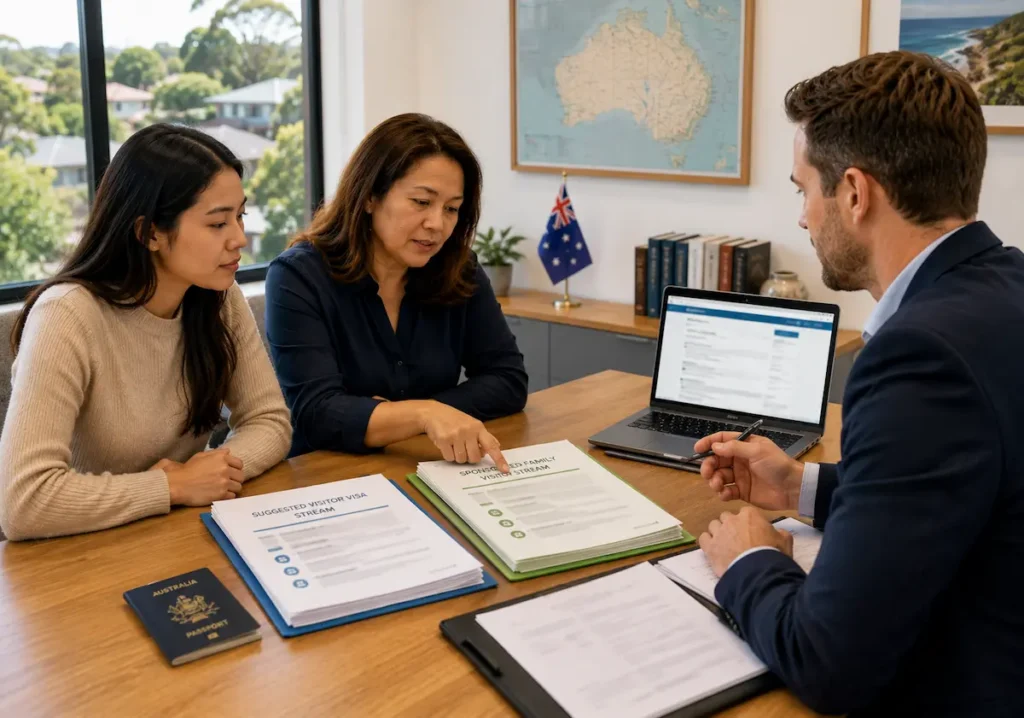
As mentioned earlier, an Australian Visitor Visa with a financier allows eligible travellers to visit the country with the backup of a family member or other approved sponsor. Although relative support can strengthen an application, the Department of Home Affairs still makes the final decision.
Generally, there are two streams under this visa:
- The Tourist Stream covers holidays and short-term trips.
- The Sponsored Family Stream is for applicants who have an eligible relative living here and are willing to assist with their submission.
Both streams have different requirements, so you need to understand which one applies to your situation.
Who Counts as a Sponsor for an Australian Tourist Visa?
An approved financier is typically an Australian citizen or a permanent resident with a genuine reason to support your visit. In most cases, that funder will be an eligible family member, such as a parent, sibling, or adult child living here.
Close friends can also qualify under the sponsored family stream in some cases, but they should properly document the relationship.
What the Australian Government Expects From Your Sponsor
The government wants your financier to confirm the purpose of your trip and show an ongoing relationship with you. This usually involves submitting a sponsorship declaration together with documents that verify the funder’s identity and connection to the visitor.
Financiers also need to confirm that the visitor intends to leave Australia before the visa expires. And the documents (travel itinerary, proof of home ties) you submitted must support that confirmation.
After sorting the sponsor side, here’s what the application itself actually needs from you.
Requirements for a Tourist Visa in Australia with a Sponsor
The visitor visa subclass 600 covers both single-entry and multiple-entry options, and the requirements for a tourist visa in the country with a funder apply across both. In fact, every visa submission goes through the same core assessment areas regardless of which entry type you are applying for.
A full breakdown of the requirements that the Australian government checks when reviewing your papers.
| Requirement | What It Covers |
| Identity Documents | Valid passport, national ID, birth certificate, and full name consistency across all records |
| Financial Capacity | Bank statements, proof of funds, and evidence of enough money to cover your stay period |
| Health Requirements | Medical examination and chest X-ray for eligible applicants from certain countries |
| Character Assessment | Criminal history check and compliance with past visa conditions |
| Travel History | Previous visa records, entry and exit patterns across all countries visited |
| Sponsorship Criterias | Sponsor’s identity, relationship proof, and signed declaration form |
| Supporting Documents | Any additional documents requested on a case-by-case basis during assessment |
Each of these areas carries an equal weight in the verification process. Sometimes, a gap in your travel history records or an inconsistency in your identity records can hold up an almost complete application.
Note: The Department of Home Affairs assesses each submission individually. As a result, the documents may vary depending on your home country and personal circumstances.
Identity, Financial, and Health Requirements Up Close
Most visitor visa applications are assessed across a few core areas, including identity, financial capacity, and health requirements.
While the criteria look straightforward on paper, applicants often run into questions once they start gathering evidence and preparing documentation.
Here’s a closer look at what each one involves.
Identity Documents and Personal Information
Your passport is the first thing officers check, and it should have at least 6 months of validity remaining at the time you lodge your application.
The visa office also requests additional identity records like birth certificates or national ID cards, depending on your home country and age. We have seen submissions held up simply because a middle name was missing from one form.
Beyond just documents, every detail across your supporting papers needs to match exactly, including your full name, date of birth, and nationality. Any mismatch present here can raise questions about the accuracy of your application.
They’ll want to look at your travel history as well. Officers use it to assess how you have managed previous visa conditions and whether you left Australia on time during past trips.
Financial Capacity and Enough Money to Cover Your Stay
Proving you have enough funds to stay in the country comfortably is an important part of the visa process. And it applies to both you and your sponsor. Applicants who cannot show eligible financial means on their own often rely on their financier to provide proof of funds instead.
Regarding financial proof, bank statements covering the last 3 to 6 months are the most commonly accepted way. These papers show a consistent pattern of savings rather than a lump sum appearing right before you apply (yes, even a joint account statement works here).
Health Requirements You Need to Meet
Not every applicant goes through a medical assessment. But for some travellers, it’s a required step before their entry permit gets granted.
For example, a chest X-ray is typically required for people coming from countries with higher tuberculosis rates. The assessment also considers other health conditions depending on how long you plan to stay in Australia.
More importantly, medical examinations must be completed through an approved panel physician listed on the Home Affairs website, so don’t book just any doctor for this.
Additional Documents Your Sponsor May Need to Provide
Your own paperwork is only one side of the application. Your sponsor has their own set of records to pull together, and missing any of these can hold up the entire process (similar to the gaps in your own records).
An eligible relative or approved contact typically needs to submit the following:
- Proof of Status in Australia: Your financier needs to provide evidence of their Australian citizenship or permanent resident status. A current passport, citizenship certificate, or permanent resident visa label in their passport all work as valid proof here.
- Invitation Letter: A formal invitation letter for a tourist visa to Australia is one of the most important documents in a sponsored application. It needs to cover the purpose of your visit, your intended travel dates, and where you will be staying during your time here.
- Financial Evidence: If your funder is covering your costs, they need to provide recent payslips or bank statements showing enough funds to support your trip. The officers may also request a security bond in some cases (usually between AUD 5,000 and AUD 15,000 per person). It’s a deposit paid to the native government as a guarantee that you will leave before your visa expires.
- Relationship Documentation: To validate the relationship, family and friends need to show that the attachment is genuine. This means providing evidence like family certificates, photos together, or records of communication over time.
Together, these papers give the Department of Home Affairs a clear picture of who your sponsor is and why they are supporting your visit.
Once your financier has everything in place, you should concentrate on timing.
Processing Time and What Happens Outside Australia
Unlike a tourist visa from Australia to the USA, the native system assesses each application on a case-by-case basis, so there is no single fixed timeframe to count on.
Delays also happen in the visa procedure for several reasons. For instance, the Department of Home Affairs may request additional information during assessment, which pauses the process until you respond.
A general guide to how long the assessment typically takes, depending on your situation:
| Application Type | Typical Processing Time |
| Tourist stream, simple request | 1 to 7 days |
| Sponsored family stream application | 1 to 4 weeks |
| Submissions with health requirements | 4 to 8 weeks |
| Applications requiring additional documents | Varies, on a case-by-case basis |
| Multiple entry or long stay period requests | 3 to 6 weeks |
(Note: We based this timeline on travel industry data.)
However, you can check the estimated processing time for your visa by entering details, including the visa type, visa stream, and application date. You can access this estimate only after you have submitted your visa papers.
Moreover, your visa conditions will specify your stay period and validity period once you receive visa approval. A single-entry visa usually expires after you leave Australia, while a multiple-entry permit lets you return within the validity period (without applying for a new visa each time).
Common Reasons Tourist Visa Applications Get Refused
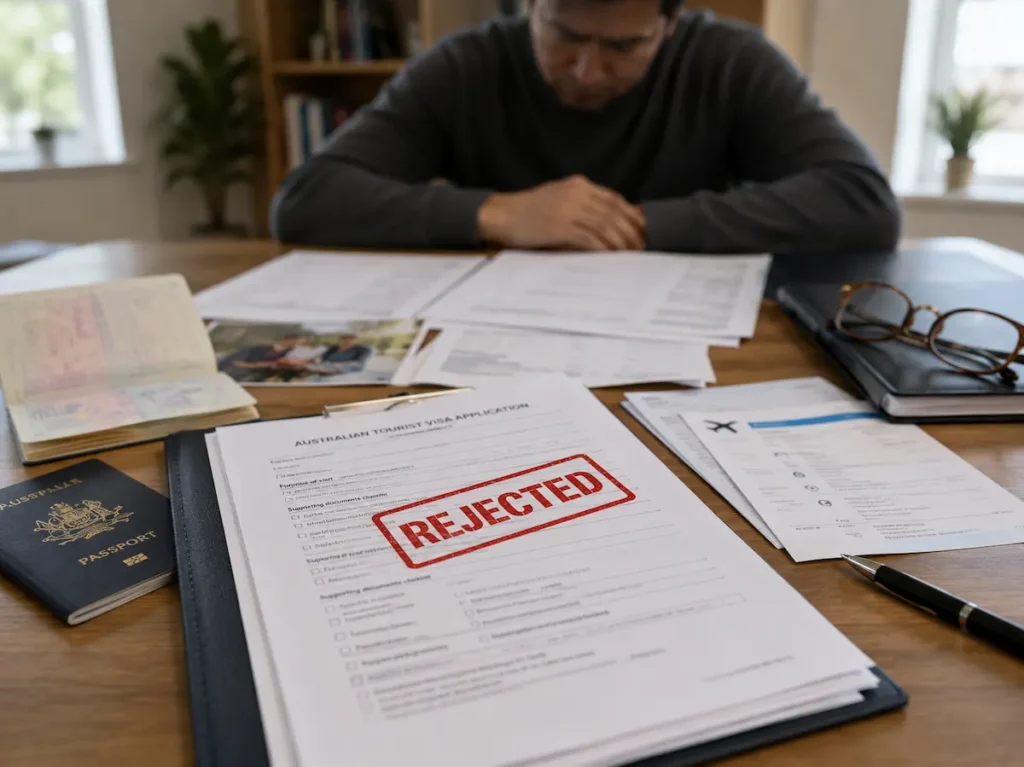
Most visitor visa refusals happen when supporting evidence doesn’t clearly match what the applicant is trying to prove. While the requirements look simple on paper, issues usually appear once documentation is assessed in detail.
The table below covers the most common reasons a visitor visa gets refused and why each one raises a red flag.
| Reason for Refusal | Why It Causes a Problem |
| Not appearing as a genuine visitor | Officers assess whether you genuinely intend to leave Australia before your visa expires |
| Weak ties to the home country | No steady job, family, or property back home raises doubts about your plan to return home |
| Insufficient financial capacity | Not enough funds to cover your stay period without relying on others raises concerns |
| Missing documents or identity documents | Incomplete or inconsistent records make it impossible for officers to verify your application |
| Poor travel history | Previous visa conditions breaches, or overstays in any country, affect your approval chances |
| Wrong stream selected | Applying under the tourist stream instead of the sponsored family stream, or vice versa, leads to automatic issues |
| Visa conditions were not met previously | Any record of overstaying or breaching Australian laws on a past trip is a serious flag |
Simply put, applications that come through incomplete almost always take longer to decide, and some don’t make it through at all. So if you want to avoid delays and unnecessary complications, provide complete and consistent supporting evidence from the start.
Got Everything Together? Here Is How to Move Forward
Applying for a sponsored visitor visa in Australia involves a lot of formalities. Getting the right stream, preparing your documents, and making sure your financier is across their own obligations all need to be in place.
Fortunately, each stage becomes much easier with the right planning. GLA Packed has you covered for car hire across Brisbane and beyond, so you can focus on the visit rather than the logistics.
Trust us! When you do land in the country after all those troubles, the tourist attractions in Australia alone make the effort worthwhile.
Related Posts

Understanding An Invitation Letter For Tourist Visa Australia Applications
An invitation letter for an Australian tourist visa application isn't…