
Applying for a US tourist visa from Australia is usually simple once you understand the requirements that apply to your situation. The challenge is figuring out which application pathway applies to you, which is where many first-time applicants get confused.
If you’re not sure where to start, this guide walks you through the entire process from start to finish. We’ll cover:
- Which visa option applies to you
- What documents to prepare
- How to apply
- How long the whole thing takes
By the end, you’ll know exactly how to apply for a tourist visa to the USA from Australia with confidence.
Do Australians Need a Tourist Visa for the USA?
Not always. Australian passport holders can enter the US through the Visa Waiver Program or by applying for a B-2 tourist visa. Under the Visa Waiver Program, travellers must apply for travel authorisation through ESTA. Which option you need depends on your trip length and travel history. We break them down below.
ESTA (Electronic System for Travel Authorisation)
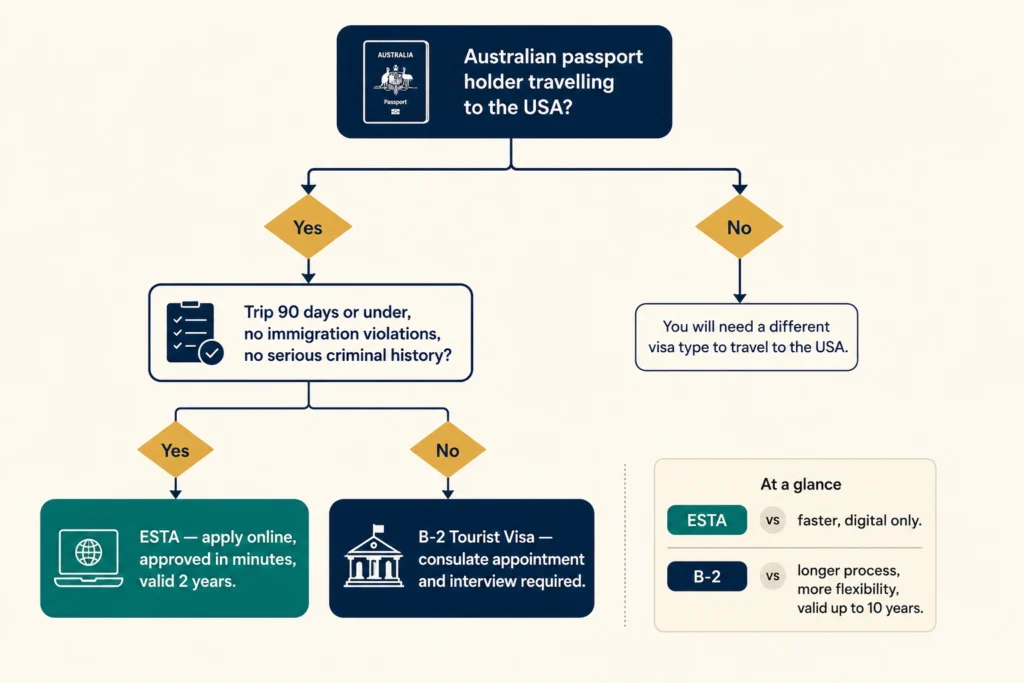
ESTA is the quicker option for Australians planning a short holiday to the USA. It allows eligible travellers to enter without a traditional visitor visa for stays of up to 90 days. Eligibility generally applies if you are:
- Travelling for tourism or short business visits
- No history of serious criminal offences
- No previous immigration violations or overstays
To apply, you complete an online form. Approval usually arrives within minutes, and once granted, the authorisation is valid for two years. There’s no consulate visit or interview required, and everything is handled digitally.
If you don’t meet these conditions, you may need to apply for a B-2 tourist visa instead.
B-2 Tourist Visa
The B-2 is the formal visitor visa for Australians who need to stay longer than 90 days or do not qualify for ESTA. It requires a full visa application, a consulate appointment, and an in-person interview.
The process takes longer to complete compared to ESTA, but it offers more flexibility once approved. A B-2 visa is also valid for up to ten years and allows you to re-enter the USA multiple times.
Documents to Gather Before You Apply
If you want your visa application to go smoothly, you’ll need to have the right documents ready before your consulate appointment. Without them, your application can be delayed or, in worst cases, refused outright. There are two categories to prepare: mandatory documents and supporting documents. Let’s break them down.
Mandatory documents:
- A valid passport, with at least six months’ validity beyond your intended stay
- Your DS-160 confirmation page
- Visa application fee payment receipt
- A passport-sized photo meeting US visa specifications
Supporting documents:
- Bank statements from the last six months, showing you have enough money to cover your stay
- An employment letter or proof of business ownership
- A travel itinerary outlining your plans
- Evidence of ties to Australia, such as a lease, property documents, or family responsibilities
These documents help establish your identity and confirm your intent to return home after your visit. For most applicants, that covers everything.
If your trip is being sponsored by a friend or family member, you may also need additional supporting documents to show the details of that arrangement. One of the most common is an invitation letter for your tourist visa in Australia.
The invitation letter should include the sponsor’s personal details, your relationship to them, and confirmation that they will support your stay financially. In some cases, officers may also ask for birth certificates or marriage certificates to verify the relationship.
How to Apply for a US Tourist Visa from Australia
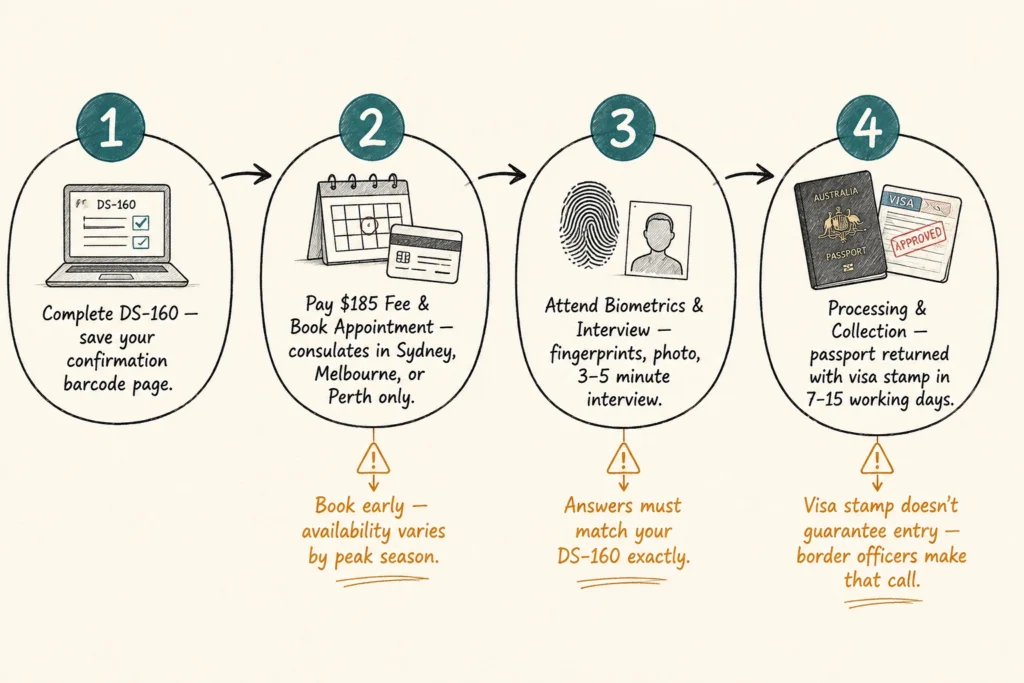
Applying for a US tourist visa from Australia involves four stages:
- Complete the DS-160 form
- Pay the fee and book your appointment
- Attend the biometrics and your visa interview
- Wait for processing and collect your passport
The sections below walk through each one in detail.
Step 1: Complete the DS-160 Form
The DS-160 is the official online visa application form and the starting point for every B-2 application. It collects your personal details, including your full name, address, passport number, travel history, and employment background. It also asks about your intended travel details and the purpose of your visit to the USA.
To lodge your application, head to the DS-160 form on the US Department of State website and complete it carefully. Once finished, you’ll receive a confirmation page with a barcode. Keep that page. You’ll need to present it at every subsequent stage, including your consulate appointment and interview.
Step 2: Pay the Fee and Book Your Appointment
With your DS-160 confirmation page in hand, create a profile on the US visa application portal. From there, you’ll need to pay the non-refundable $185 application fee. After payment, you’ll receive a receipt. Hold onto that too, because you’ll need it to book both your biometrics and interview appointments.
And since appointment availability varies by consulate location, it pays to book early. The earlier you secure your spot, the less likely you are to run into delays, especially during peak travel periods.
Step 3: Attend Biometrics and Your Visa Interview
You’ve paid the fee and locked in your appointment. Next, you’ll head to one of the US consulates in Sydney, Melbourne, or Perth. Note that the Canberra Embassy does not process visa applications, so make sure you book at one of these three locations.
When you arrive for your appointment, the process typically begins with biometrics. This involves a fingerprint scan and a digital photo taken on-site. Once that’s complete, you’ll attend a short interview, which usually lasts between three and five minutes. A few common questions include:
- Why are you visiting the USA?
- Who is supporting your trip financially?
- What do you do for work in Australia?
Make sure your answers match what you submitted on the DS-160. Contradictions between your form and your interview are one of the most common reasons applications run into trouble.
Step 4: Processing, Approval, and Passport Collection
After the interview, your application moves into the processing stage. Once approved, you’ll receive a notification, and your passport will be returned with the visa stamp inside, usually within seven to fifteen working days. You can read more about what to expect after your interview on the US Department of State website.
One important note on entry: The visa stamp in your passport does not guarantee you’ll be allowed into the USA. Immigration officers from the US Customs and Border Protection make that call at the border, and they decide how long you can stay. The visa simply confirms you’re eligible to travel.
Processing Times and Validity
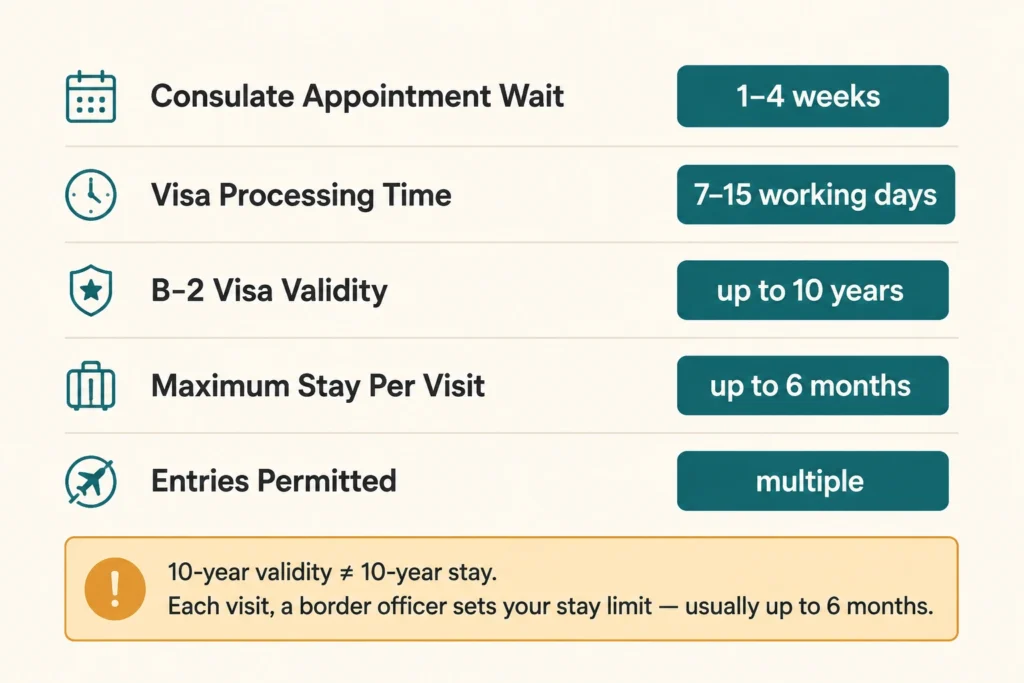
Processing times for the B-2 visa vary depending on the consulate and the time of year. To help you plan your trip, here’s a general guide to current processing times and visa validity:
| Item | Typical Time / Validity |
| Consulate appointment wait | 1–4 weeks |
| Visa processing time | 7–15 working days |
| B-2 visa validity | Up to 10 years |
| Maximum stay per visit | Up to 6 months |
| Entries permitted | Multiple |
Now, there are a couple of things you won’t get from the table alone. For example, the ten-year validity means your visa stays active across multiple trips, not that you can stay for ten years straight. Instead, each time you arrive, a US Customs officer at the border sets your stay limit, usually up to six months per visit. The visa itself doesn’t determine that.
And before you leave Australia, it’s worth checking whether you’re eligible for a tourist tax refund in Australia. The Tourist Refund Scheme (TRS) lets you claim back the Goods and Services Tax (GST) on goods you purchased. To be eligible, you need to have spent 300 AUD or more, and you’ll make the claim at the airport before departure.
Common Reasons Tourist Visas Get Rejected
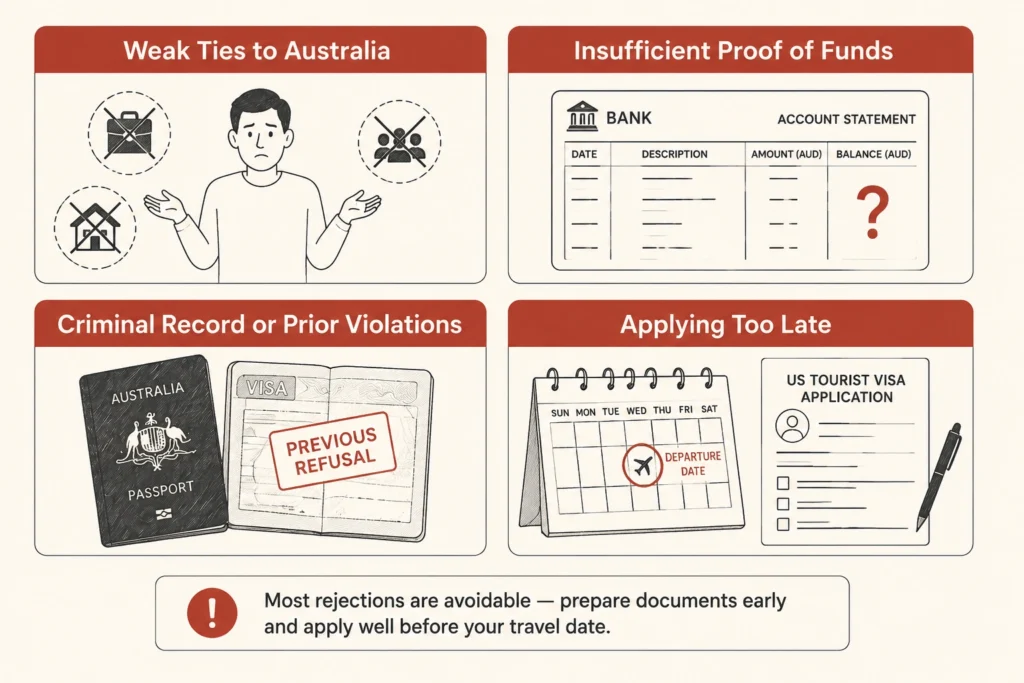
Even with a complete application, approval is never guaranteed. From what we’ve seen, most refusals come down to these few avoidable mistakes:
- Weak Ties to Australia: Officers want to see that you have real reasons to return home after your trip. That includes full-time employment, a lease or property, family responsibilities, or active study enrolment. If you can’t demonstrate at least one of these, your application is likely to be refused.
- Insufficient Proof of Funds: To cover your stay, you’ll need to show you have enough money without relying on unauthorised work. Bank statements, payslips, or tax returns are the most reliable way to prove this.
- A Criminal Record or Prior Immigration Violations: A criminal record or prior immigration violations, including overstays or visa refusals, can increase scrutiny and may affect your eligibility.
- Not Leaving Enough Time to Apply: This won’t result in a direct refusal, but if processing runs long, your visa may not be ready before your travel date.
Most of these rejections are avoidable with the right preparation. In practice, that usually means getting your documents in order, answering questions honestly, and applying well before your planned travel dates.
Ready to Book Your Trip to the USA?
At this point, you should have a clear picture of what the application involves and what you’ll need to prepare. Most applicants who submit the right documents and apply early move through the process without major issues.
If you’re still unsure about any part of the process, GLA Packed can help. Our team has assisted many travellers with their applications, document preparation, and next steps. Get in touch if you’d like a second opinion before you apply, and we’ll point you in the right direction.
Related Posts
Understanding An Invitation Letter For Tourist Visa Australia Applications
An invitation letter for an Australian tourist visa application isn't…