Before you leave Australia, you can claim back the tax you paid on goods bought during your visit. The tourist refund scheme is how you get it, and it covers the goods and services tax on most purchases. That is real money, and it is yours to collect.
The catch is that most tourists only hear about the GST refund once they are already past customs. By then, the window will have closed. That is a frustrating situation, especially when that money was yours all along.
This guide walks you through eligibility, what documents you need, and how to lodge your claim before you leave. Five minutes of preparation at the airport is all it takes.
Read on, and you will be glad you did.
What Is the Tourist Tax Refund in Australia?
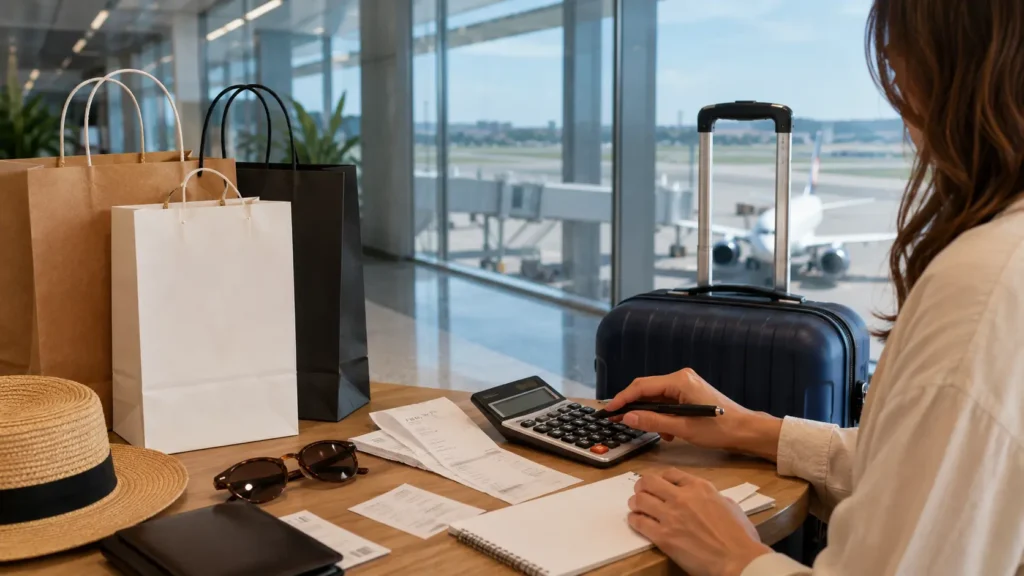
The Tourist Refund Scheme is a government programme run by the Australian Border Force. It lets visitors recover the goods and services tax paid on goods bought in Australia. The only condition is that those goods leave the country with you.
So how much can you truly get back? The GST in Australia sits at 10%, so on a $500 purchase, you are looking at a $50 refund. And on a larger shopping trip, that figure climbs fast. To qualify, your purchases need to fall within 60 days of departure, with a valid tax invoice for each.
That said, not every visitor automatically qualifies. The scheme is open to most international travellers, but there are a few eligibility rules worth checking before you assume you are covered.
Are You Eligible for the Tourist Refund Scheme?
A temporary visitor to Australia is eligible for the Tourist Refund Scheme (TRS), but only if their visa does not grant permanent residency. So before you line up at the TRS facility, here is what you need to know:
Who Can Apply?
Tourists and temporary visa holders can apply for a TRS claim when leaving Australia (permanent residents do not qualify). To put it simply, if you flew in on a tourist or student visa, you are in the right category.
Also, citizens and nationals from any country are welcome, as long as their visa does not grant permanent residency. That said, make sure your travel details are ready before you reach the TRS facility.
What Goods Are Eligible?
Most physical goods qualify, think clothing, electronics, jewellery, and accessories bought during your trip. The goods just need to leave Australia with you, either as carry-on or in your checked bags. Anything opened or consumed before you board does not count.
Food, drinks, and goods you have already used up before departure are out. And if you are unsure about a specific item, the Australian Border Force website has a full breakdown of what qualifies.
The Tax Invoice Requirements You Need to Meet
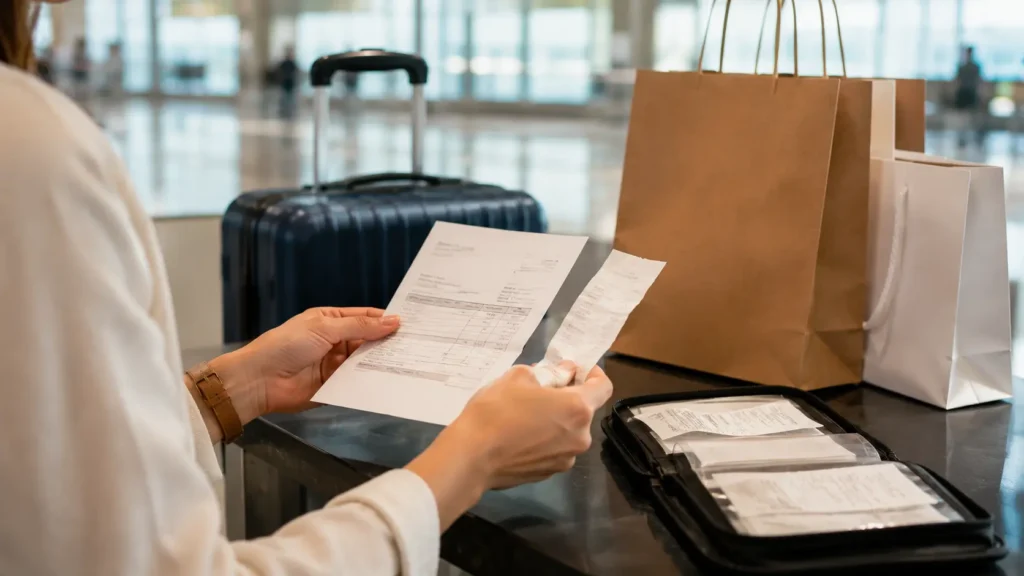
To make a valid TRS claim, you need two things: a valid tax invoice for every purchase and the original receipts to match. Do both, and your claim will go through without a hitch.
What a Valid Invoice Includes
Your tax invoice needs to show the retailer’s Australian Business Number, the total price paid, a description of the goods purchased, and the date of purchase. The Australian Border Force will not process any claim missing those details”
That also means every original receipt counts, so hold onto anything you plan to claim (no, a screenshot won’t work).
Buying From the Same Retailer Twice
If you shopped at the same store more than once, those receipts can work in your favour. Multiple purchases from the same retailer can be combined to hit the $300 threshold.
Each receipt still needs to be an original tax invoice, though. And the Australian Business Number must match across all of them, because a mismatch is one of the most frequent reasons the ABF rejects claims.
Once your invoices are sorted, the next step is lodging your claim at the airport.
How to Lodge Your TRS Claim Before Departure
To lodge your TRS claim, head to the TRS facility inside the airport after you clear customs. Every major international airport in Australia has one, but they shut around 30 minutes before departure. So do not leave it until the last minute.
Before you head to the TRS facility, these are the four things to bring:
- Passport and Boarding Pass: The ABF checks these first. So, have both out before you reach the counter. It sounds obvious, but you would be surprised how many people dig through their bags at the counter.
- Tax Invoice and Goods: Keep your goods in your carry-on. Every original tax invoice needs to match what you bring, and the Australian Border Force may want to inspect the items before approving your claim.
- QR Code From the TRS App: Download the free TRS app before you leave the house and pre-register your claim. It generates a QR code that the officer scans on the spot. That alone cuts your wait time at the facility right down.
- Payment Method: You will need to nominate how you want to receive your refund at the counter. A credit card, an Australian bank account, or a cheque all work, and most travellers find the credit card option the fastest way to get their refund paid out.
Our team has seen customers arrive without a single original invoice and walk away empty-handed. Do not let that be you, so get everything sorted before you head out.
Your Refund Amount, and What to Do When You Return
Your refund amount depends on what you bought. Two types of tax refunds are available under the TRS, namely the Goods and Services Tax (GST) and the Wine Equalisation Tax (WET).
The table below shows how each one works.
What You Bought | Tax Type | Refund Rate | Who Qualifies |
Most goods | Goods and Services Tax (GST) | 10% of the purchase price | All eligible travellers |
Wine | Wine Equalisation Tax (WET) | Up to 14.5% | Travellers who bought wine |
Most travellers only claim the GST portion. Wine is different. It carries a separate refund on top, so if you picked up a few bottles during your trip, claim both.
One thing catches tourists off guard on the way back. You must declare any refunded goods you bring back into Australia on your incoming passenger card (The ABF will bill you back). Our customers heading back through Brisbane airport have been caught out by this more than once.
The TRS claim is usually the last thing on a tourist’s pre-departure list, but it is rarely the only thing left to sort.
A Few Other Things to Sort Before You Leave Australia

Most tourists wrap up their TRS requirements and think they are done. But there are usually a few other things worth sorting before you leave Australia.
A common question many ask: Can a tourist buy a car in Australia? Yes, it is doable. But it involves registration checks, transfer paperwork, and more lead time than most short trips allow for.
Some travellers also need an invitation letter for a tourist visa for Australia for their next destination.
For example, if you need a tourist visa (USA from Australia), sort that out early. Consulates book out fast, and visa issuance timelines are not always predictable.
One Last Thing Before You Head to the Gate
The Tourist Refund Scheme puts real money back in your pocket, and most tourists never bother claiming it. Yet all you need are the right invoices, the goods you bought, and ten minutes at the TRS facility before your flight.
We walked you through who qualifies and what invoices to bring. This guide also covered how to lodge your TRS claim and what to do on the way back into Australia. Everything you need is in this guide.
Do not walk past the TRS facility and leave your refund behind. Reach out to GLA Packed. And our team will make sure your invoices, travel details, and every TRS requirement are sorted before you reach the gate.
Your refund is waiting.
Related Posts
Preparing A Business Trip Packing List For Work Travel
A business trip packing list covers at least four things:…

Everything You Should Know About Car Hire Mackay Before Booking
Car hire in Mackay gives you the freedom to explore…

Family-Friendly Brisbane: Top Spots for Your Next Family Travel
Brisbane is a playground for families, offering a mix of…