
Yes, tourists can buy a car in Australia while visiting the country. The purchase itself is pretty simple. The part that trips people up is everything that comes after.
To legally own and drive the vehicle, you’ll need to sort out registration, insurance, and identification in whichever state you buy it. And each state handles those requirements differently. Buy in Queensland, and the rules aren’t the same as buying in Victoria.
If you’re asking, “Can a tourist buy a car in Australia?”, the short answer is yes. But the full answer depends on where you buy and what you plan to do with the car before you leave. This guide walks you through all of it.
Let’s start with what you’ll need to have ready before you buy.
What You Need Before Buying a Car in Australia
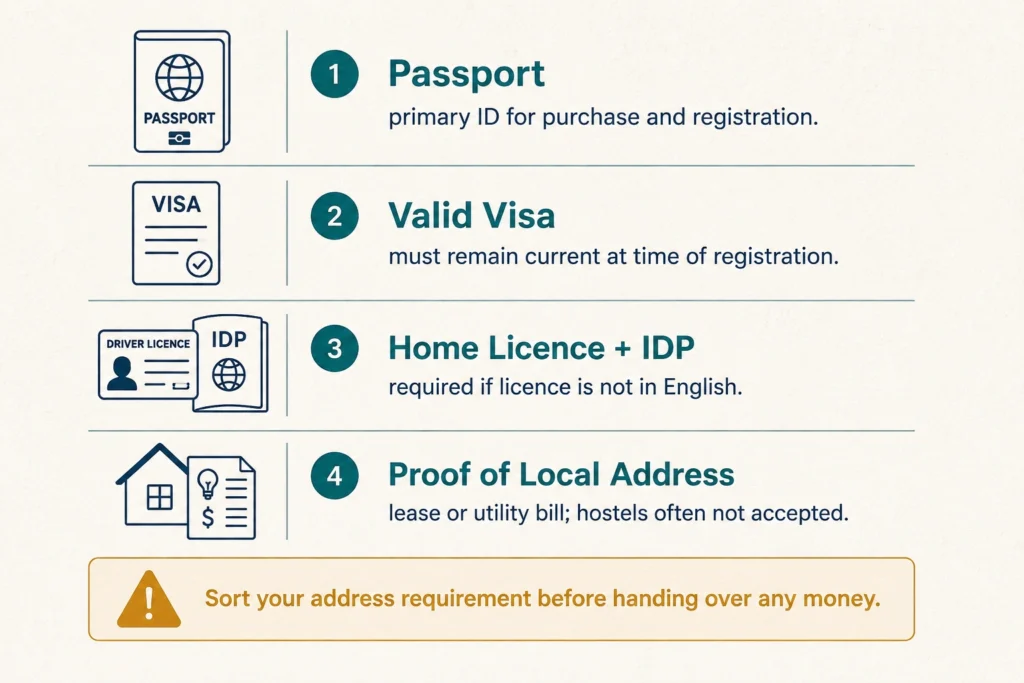
You need a valid visa, passport, driving licence, and a local address to buy and register a car in Australia. We cover them in detail below.
Licence, Passport, and Visa
Your passport is the primary form of identification you’ll need for the purchase. Most sellers, both private individuals and dealerships, will ask to see it before the transaction goes through. You’ll also need a valid tourist or visitor visa that remains current at the time of registration. On top of that, most states require you to be at least 18 years old to register a vehicle in your name.
As for driving, your home-country licence is generally accepted as long as it meets local requirements. If the licence isn’t in English, you’ll usually need an International Driving Permit or a certified translation. Without one, you won’t be able to legally drive the vehicle.
Proof of Address and State Requirements
You can’t register a car in Australia if you can’t prove you have a local address. This is because authorities need a local contact point for official records. What counts as acceptable proof, though, depends on the state or territory. Some states accept formal documents such as a lease agreement or utility bill, while short-term addresses like hostels are often not accepted.
And if you don’t have a long-term residence, you’ll need to make alternative arrangements, like using a friend’s address with their permission. That’s why it’s a good idea to sort out your registration requirements before handing over any money for the vehicle.
Paying for a Car in Australia as a Foreign Buyer
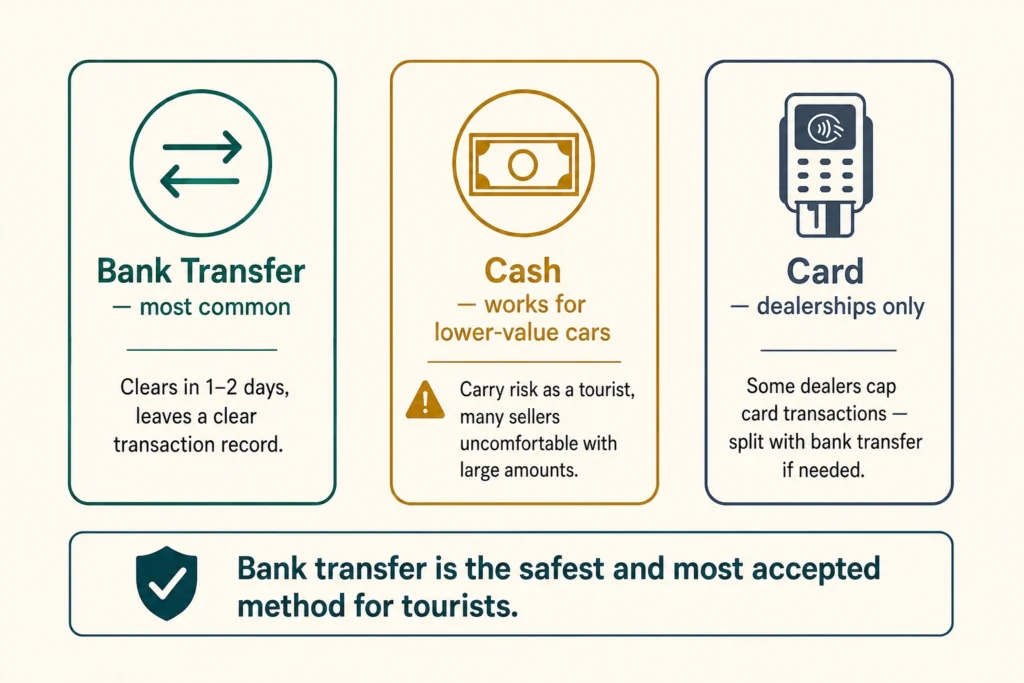
To buy a car, you’ll obviously need to pay for it. But you can’t do it in your local currency. That said, you don’t need a local bank account (not to mention it’s a lot of work). There are several ways you can pay for a car in Australia.
The most common is a bank transfer. You send the amount in Australian dollars directly to the seller’s account, and it usually clears within one to two business days. It also leaves a clear record of the transaction, which is useful if anything comes up later.
You can pay in cash as well, but it comes with risks. As a tourist, carrying large amounts of cash makes you a target for theft. On top of that, many sellers feel uncomfortable accepting it for higher-value cars. That’s why it works best for lower-value purchases where the amounts are more manageable.
If you’re buying through a dealership, card payment is also an option. Most dealerships accept debit and credit cards, though some cap how much you can put on a card in one transaction. In that case, you’d split the payment between card and bank transfer.
Registering a Car as a Non-Resident
One mistake visitors often make is assuming ownership transfers automatically after the sale. In reality, buying a car and registering it are two separate steps.
To complete the registration transfer, you’ll need to go through your state’s transport authority directly. In New South Wales, for example, buyers generally have 14 days to transfer vehicle registration after purchasing the car.
The good news is that you don’t need to be a permanent resident or Australian citizen to complete the registration process. However, you do need to meet the requirements set by the state where the vehicle will be registered. These commonly include proof of identity, a local address, and a valid visa.
Registration also isn’t permanent for tourists. If your visa expires before the registration period ends, you’ll need to make alternative arrangements. That usually means transferring the vehicle to someone else or selling it before you leave.
Car Insurance Requirements for Tourists
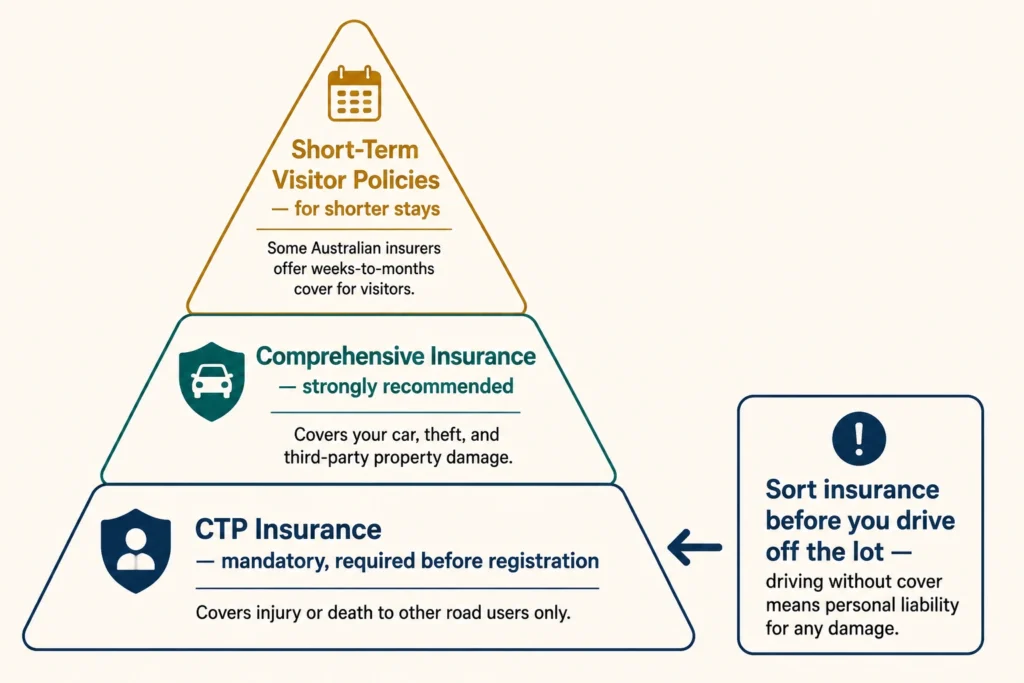
Australia splits car insurance into three layers, and only one of them is mandatory. Here’s what each one means for you:
- CTP Insurance: Before you can register a vehicle, you’ll need to sort out CTP insurance, which is required by law in most states. It covers injury or death to other road users, but it doesn’t extend to damage to your car or anyone else’s property.
- Comprehensive Insurance: This covers damage to your own vehicle, theft, and third-party property damage. If you’re going to span a large distance across Australia, a comprehensive policy is a safe call.
- Short-term Policies: For shorter stays, some Australian insurers offer visitor-specific policies that run for a few weeks to several months. Just make sure you arrange cover through a local Australian provider, as international policies generally don’t apply to locally registered vehicles.
We suggest getting your insurance sorted before you drive the car off the lot. Driving without comprehensive cover is legal in Australia.
But if you cause damage to another vehicle or property, you’ll be personally liable for the cost. This could mean paying out of pocket for repairs, legal fees, or compensation claims.
Common Challenges Tourists Face When Buying and Registering a Car
Most of the process is manageable, but the harder parts rarely surface at the point of sale. They tend to emerge later, once the purchase is done and the paperwork begins. The three below come up most often:
- Hidden Financial Obligations: Some second-hand cars still have unpaid loans attached to them from the previous owner. To avoid getting stuck with someone else’s debt, run a PPSR (Personal Property Securities Register) check. It reveals whether the vehicle has any money owing against it before you commit to the purchase.
- Roadworthy Certificates: Some states require a roadworthy certificate before a car can be legally sold. As a tourist, it’s easy to miss this requirement. If the seller hasn’t provided one, ask for it before you hand over any money.
- Timing Your Purchase Around Travel Plans: Tourists don’t always have flexibility over when they arrive in Australia. If your travel arrangements involve additional paperwork, such as an invitation letter for a tourist visa in Australia, factor in the processing time. Otherwise, you could miss the end-of-financial-year sales period, when dealerships typically offer their strongest discounts.
Most of these issues are avoidable with a bit of preparation. The tourists who run into trouble are usually the ones who rushed the process. That typically means skipping the PPSR check, missing the roadworthy certificate, or arriving during a period when dealership prices are at their highest.
What Happens When It’s Time to Leave
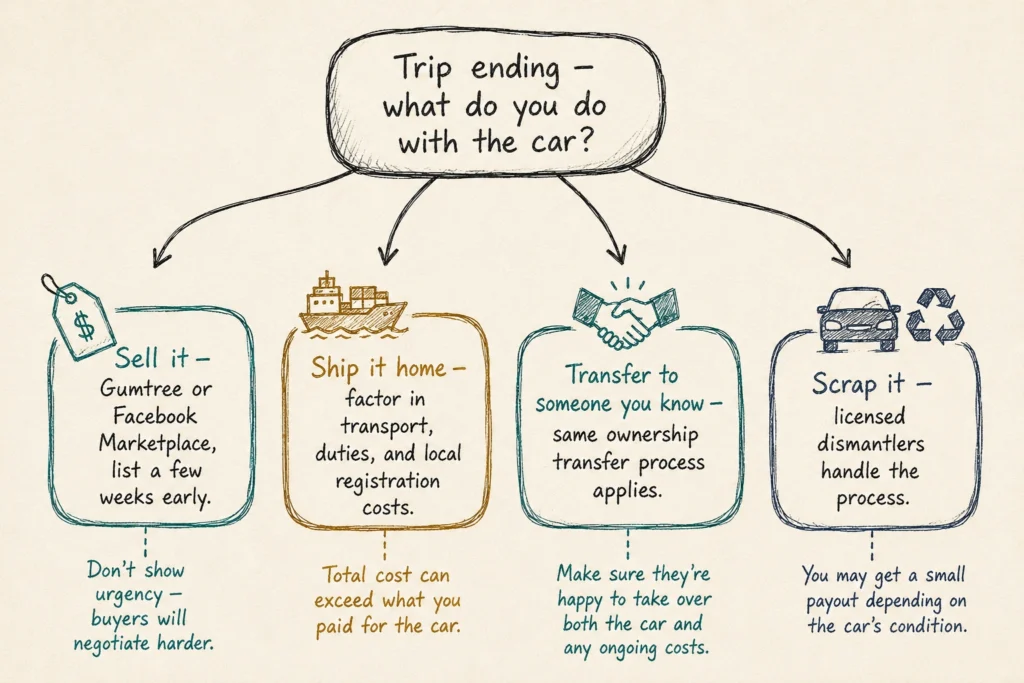
When your trip winds down, you have four options for the car: sell it, ship it home, transfer it to someone you know, or scrap it. Below, we break each option down.
Selling the Car
The best way to get rid of your car is by selling it. Put it up on Gumtree or Facebook Marketplace a few weeks before you plan to leave. There’s no lack of buyers on these platforms, and most sellers find someone within a few days to a week. Just don’t let it show that you’re in a rush. Those people can sense urgency, and they’ll use it against you on price.
And once you find a buyer, the rest doesn’t take much time. Both you and the buyer fill out the ownership transfer forms through your state’s transport authority, and you’re done.
Shipping It Home
Did you like a car so much that you want to bring it home? There are ways to do it, but it’s not as simple as shipping it back. You’ll need to arrange international vehicle transport from Australia.
On top of that, you’ll need to meet import and customs requirements in your destination country. In some cases, you may also need to register the vehicle locally before you can drive it.
By the time you factor in shipping, duties, and registration costs, the total can end up higher than the price you paid for the car itself.
Other Options
If selling isn’t practical in the time you have left, you can transfer the vehicle to someone you know in Australia, such as a friend, host, or fellow traveller. The same ownership transfer process through the state’s transport authority still applies.
And when none of those options works out, scrapping is always there as a last resort. It’s a legitimate choice for a car that isn’t worth selling, and you’re running out of time. Fortunately, you don’t have to figure it out alone. Most states have licensed vehicle dismantlers who handle the whole process for you.
Whichever route you take, there’s one more thing worth sorting before you head to the airport.
Before You Leave: Tourist Tax Refund in Australia
Before leaving Australia, check whether you’re eligible for a tourist tax refund in Australia through the Tourist Refund Scheme (TRS). It allows visitors to claim back the GST paid on certain goods purchased during their stay. If you qualify, lodge the claim at the airport before you board.
Ready to Get on the Road?
You now know that buying a car in Australia as a tourist is entirely doable. For long stays and regional travel, it’s often the more practical option. Just sort the paperwork in the right order, and the sections above walk you through each step.
If you’re visiting Brisbane or Queensland, GLAPacked has a range of vehicles to suit different budgets and trip lengths. Book online, pick up the car, and focus on the trip.
Related Posts

What Does Car Hire Excess Insurance Cover During A Rental
Car hire excess insurance covers the cost of damage or…
Is Car Hire Uluru the Right Choice for Your Trip?
Car hire is a great choice for most Uluru trips,…

Not At Fault Car Hire Explained: What Happens After an Accident
If the accident was not your fault, you are legally…