
A business trip has a lot of moving parts. You’ve got flights, hotels, meetings, and a full work schedule to manage at the same time. With so much to keep track of, it’s easy for small details to slip through. A missed confirmation email, a forgotten charger, or a passport left on the kitchen bench can quickly derail your plans.
A simple checklist helps you stay ahead of those details. This guide covers what to organise before you leave, what to pack, and how to stay on top of things while you’re away. You’ll also find a post-trip checklist to help you wrap up loose ends when you return.
Let’s get started.
Before You Leave: The Pre-Trip Checklist
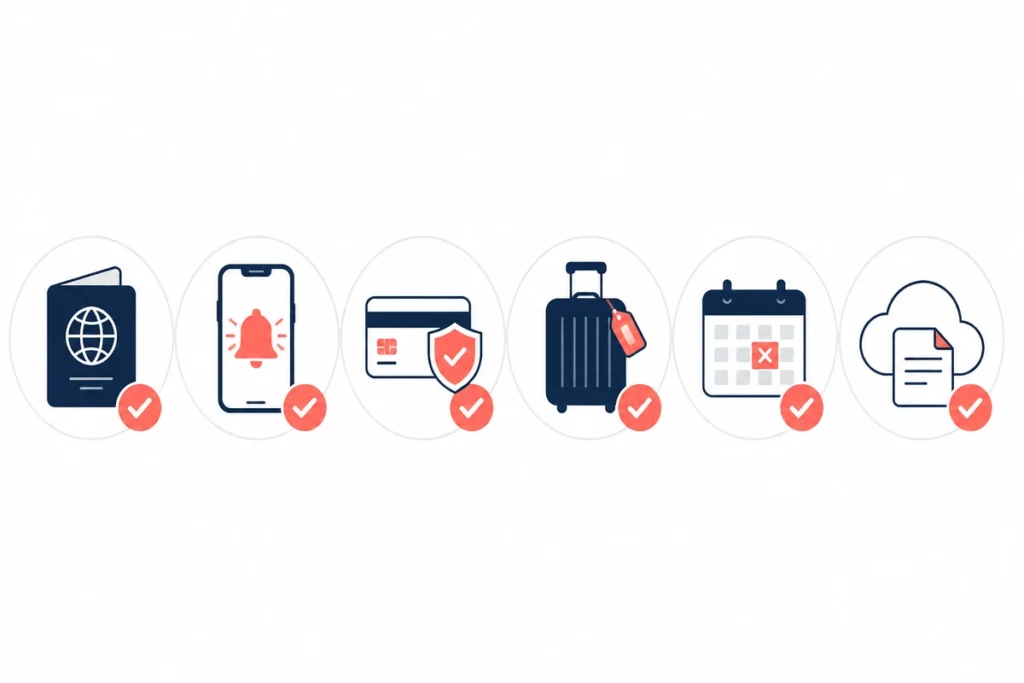
A solid business travel checklist starts well before your suitcase comes out of the closet. Sorting the items below in the days leading up to departure will keep the morning smooth instead of rushed:
- Confirm Flights and Accommodation: Flight times, hotel bookings, seat selections, and check-in details are worth reviewing at least 48 hours before departure. That leaves enough time to fix any issues without scrambling on travel day.
- Clear Your Calendar: Reschedule or delegate meetings that fall during your travel days, and let colleagues know who’s covering urgent work while you’re away.
- Set Up Your Out-of-Office: Set up an automatic reply with your return date, an alternative contact, and whether urgent requests will be monitored.
- Check Passport and Visa Requirements: Some destinations require several months of passport validity or a visa before arrival. Check both well in advance to avoid last-minute surprises.
- Notify Your Bank: Overseas transactions can sometimes trigger fraud alerts. Letting your bank know your travel dates helps avoid declined payments when you arrive.
- Review Your Travel Insurance: Check whether your policy covers work equipment, trip cancellations, and the specific countries on your itinerary. Not all business travel policies are the same.
- Save Important Documents Offline: Save digital copies of your passport, hotel confirmation, and itinerary to your phone ahead of your trip. Airport Wi-Fi isn’t always reliable, and roaming data overseas can disappear quickly.
A quick 10-minute check the night before departure is all it takes to make sure nothing’s been missed.
What to Pack for a Business Trip
One of the most common questions we get is “what to pack for a business trip?” The short answer is: pack only what you need to work confidently, travel comfortably, and handle surprises. The table below breaks it down by category so you can check everything off before you leave.
| Category | Items |
| Work Essentials | Laptop and charger, business cards, notebook, presentation materials |
| Clothing | Meeting-ready outfits, one backup outfit, comfortable shoes for transit |
| Tech | Phone charger, power bank, universal adapter, headphones |
| Documents | Passport or ID, boarding passes, hotel confirmation, travel insurance details |
| Personal | Toiletries, medication, a light jacket for cold offices or flights |
Adjust the list based on your destination and trip length. For instance, a two-day domestic trip needs a lighter bag than a week-long overseas visit with several client meetings. So pack accordingly rather than working off one fixed list.
Staying Organised During the Trip

A business trip packing list is only half the job. Once you’ve arrived, staying organised means keeping on top of your expenses and preventing small delays from disrupting your schedule.
Let either slip and, by day three, you’ll have a stack of unlogged receipts and be running ten minutes late to every meeting. A couple of simple habits stop that from happening.
Tracking Expenses as You Go
Save every receipt you receive, digital or paper, and photograph paper ones the same day. Thermal print fades within weeks, so waiting until the end of the trip means some receipts won’t be readable anymore.
This isn’t just good practice. Once your work-related travel claims pass $300, the ATO requires written evidence to back them up. Lose the receipt, and you lose the deduction, which on a week of flights, taxis, and meals can be a good chunk of money.
And if you’re managing a lot of receipts, expense tracking apps like Expensify or Wally make the process faster. Both store receipts and log expenses in one place. Just photograph or forward a receipt the moment you get it, and it’ll be filed against the expense automatically. Nothing depends on you remembering where you put it three weeks later.
Keeping Your Schedule on Track
Back-to-back meetings leave no room for a late taxi or a slow hotel lift. One delay pushes into the next commitment, and by mid-afternoon you’re apologising for being ten minutes late to everything. That’s why you should build 15 to 20 minute gaps between meetings so a single hold-up doesn’t affect the rest of your day.
But those gaps only help if you know what’s coming. Spend five minutes each evening checking tomorrow’s schedule: meeting locations, travel times, and any appointments that can’t be moved. This way the buffers will go where the day actually needs them.
The Post-Trip Checklist

Most people walk through the door after a work trip, drop their bag, and mentally move on. But there are still a few loose ends worth taking care of while everything is fresh. Aim to tick off the checklist below within 48 hours of getting home:
- Submit Your Expenses: Costs and receipts are still easy to remember when you’ve just returned, so the whole process takes half the time. The longer you leave it, the harder it gets to piece together what you spent and when.
- Follow Up With Contacts: You probably told someone you’d send over a deck, make an introduction, or set up a call. Send that email tomorrow, while they still remember who you are. Wait two weeks, and you’re a stranger asking for a favour again.
- Return Company Equipment: Return any rental cars, loan laptops, or other borrowed equipment as soon as your trip ends. It’s much easier to do while the trip is still fresh than weeks later when someone has to remind you.
If you travelled overseas, finish with two quick checks: review your bank statement for unfamiliar charges, and cancel any roaming or local SIM plan. An international business travel checklist isn’t complete without them.
In fact, we’ve found that these are the two tasks people are most likely to forget once they’re home. Taking care of them before you settle back into work saves an unnecessary headache later.
Build a Complete Business Travel Checklist You Can Reuse
A good checklist isn’t something you rebuild from scratch every time you travel. Save this one, then refine it after each trip. If you forgot something, never used an item, or wished you’d packed differently, update the list while it’s still fresh in your mind.
Over time, it’ll become a complete business travel checklist that reflects the way you travel. That’s the real value: less mental load and more time to focus on the reason you’re travelling.
If you’d like help putting together a checklist that fits your specific trip, get in touch with GLA Packed. We’ll help you figure out what you need before your next trip.
Frequently Asked Questions
Still have a few questions? Here are answers to some of the most common questions about planning, packing, and staying organised on a business trip.
Should I check luggage or travel carry-on only for a business trip?
It depends on the length and purpose of your trip. For short business trips, carry-on only is usually the better option. It saves time at the airport, avoids the risk of lost luggage, and gets you on your way faster after landing.
If you’re travelling with carry-on only, packing cubes can help you fit more into a smaller bag while keeping business clothing organised and reducing creases. For longer trips or those requiring several outfits, checked luggage may be the more practical choice.
How do I keep suits and dress shirts wrinkle-free when packing?
Use a suit bag for your jacket and either roll or carefully fold dress shirts to minimise creasing. Packing cubes can also help keep clothing compressed and separate from heavier items. Once you arrive, hang your clothes as soon as possible. Steam from a hot shower can help relax minor wrinkles, while wrinkle-resistant fabrics are worth considering if you travel regularly for work.
What should business travellers always carry on the plane?
Keep anything you’ll need immediately after landing in your carry-on, including your laptop, phone, chargers, travel documents, and presentation materials. If your checked luggage is delayed, you can still travel, check in, and attend your first meeting without disruption.
Related Posts

Planning How To Prepare A Car For A Long Road Trip Before You Leave
You've packed the bags, double-checked the route, and everyone's ready…

Exploring Tourist Attractions In Australia During Your Visit
You've landed in Australia, bags packed and ready to explore.…

Packing List for Business Trip Female Professionals Can Rely On
Packing for a business trip always feels rushed, even when…