
Business trips run on tight schedules, and a rushed pack often means a forgotten charger or a wrinkled shirt. One missing document at the airport can throw off your whole morning. Don’t worry, that kind of stress is easy to avoid with a bit of planning.
If you get organised early, the days before your flight feel far less hectic. You won’t be digging through drawers at midnight, trying to remember where you put your dress shoes. At the end of the day, an organised pack means a calmer trip from the moment you leave home.
In this article, we’ll cover the documents and carry-on items you need. We’ll also walk through dress code, a full packing list broken into categories, and a backup plan for the unexpected. By the end, you’ll know exactly what goes in your bag and why.
The Non-Negotiable Items to Pack for a Business Trip
The right essentials can determine how smoothly a business trip goes. And most of them are easy to overlook when you’re rushing to pack. So let’s start with the documents and carry-on items you can’t afford to leave behind:
Business Documents and Boarding Pass Checklist
Your boarding pass, driver’s license, and other business documents should sit together in one dedicated folder. That way, everything stays within reach when you’re moving through airport security. Instead of digging through your whole bag at the gate, you’ll have everything in one pouch.
On top of that, print backup copies of your travel documents and travel insurance documents in case your phone battery dies. It only takes a few extra minutes, and it saves a lot of stress later. Digital copies stored in your email work well too.
Before you head off, double-check visa requirements and meeting itineraries the night before you leave. We’ve seen travellers get caught out at check-in over a missing visa page, so this step is worth the effort. A quick review now can save you a headache-free morning.
Carry On Essentials for a Quick Turnaround
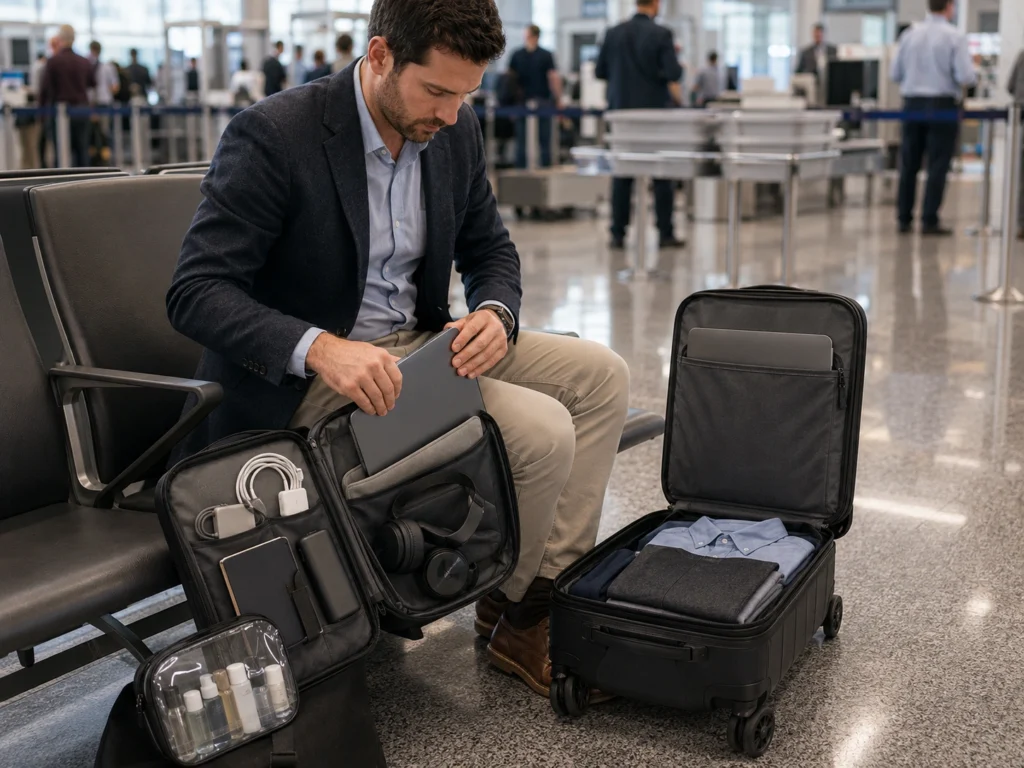
A well-packed carry-on means you’re ready to work the moment you land. With that in mind, pack a laptop, a phone charger, and one change of clothes in case checked luggage gets delayed. A dedicated laptop compartment or dedicated laptop sleeve keeps your device protected during the flight.
Your personal item should hold anything you need quick access to, like headphones or a notebook. At the same time, keep liquids under 100ml and separated for security screening to avoid holdups at the gate. One small pouch usually does the trick for this.
Lastly, pack your electronic devices so they’re easy to pull out at security checks. This strategy saves time and keeps the queue moving for everyone behind you. A little organisation here makes the whole process smoother.
How Should You Handle Dress Code for a Business Trip?
Handle dress code by packing versatile business attire that works for meetings and travel days alike. Whether you’re after a packing list for business trip female travellers or a general checklist, the essentials mostly stay the same.
Here’s how to plan your outfits and footwear properly:
Business Attire That Works for Meetings and Travel
Stick to two or three coordinating colours so every shirt pairs with every jacket or trouser. That way, a wool suit or a single suit jacket can cover most formal events without extra bulk. One suit is often enough for a short trip.
You’ll also find that wrinkle-resistant fabrics hold up well during long flights, unlike cotton blends that crease within the hour. They help you arrive wrinkle-free, even after a full day of travel. This helps a lot for anyone heading straight into a meeting.
Even so, pack one backup outfit in your carry-on in case checked luggage doesn’t arrive on time. We always tell first-time business travellers to plan for that one unlucky flight where the suitcase doesn’t show up. It’s a small step that saves a lot of stress.
Dress Shirts, Dress Shoes, and Casual Shoes: Getting the Balance Right
Roll your dress shirts instead of folding them to cut down on creases during transit. A garment bag also helps keep them flat and ready to wear. This works well for longer trips too.
Once your shirts are sorted, footwear is the next thing worth planning properly. Bring one pair of dress shoes for meetings and casual shoes for airport travel days. Professional shoes and shoe trees help maintain their structure between wears.
Along with that, shoe bags stop polish and dirt from transferring onto your folded business attire. A spare tote works fine too, if you’re short on packing space. This keeps everything clean until you reach your hotel room.
Building a Business Travel Packing List That Works
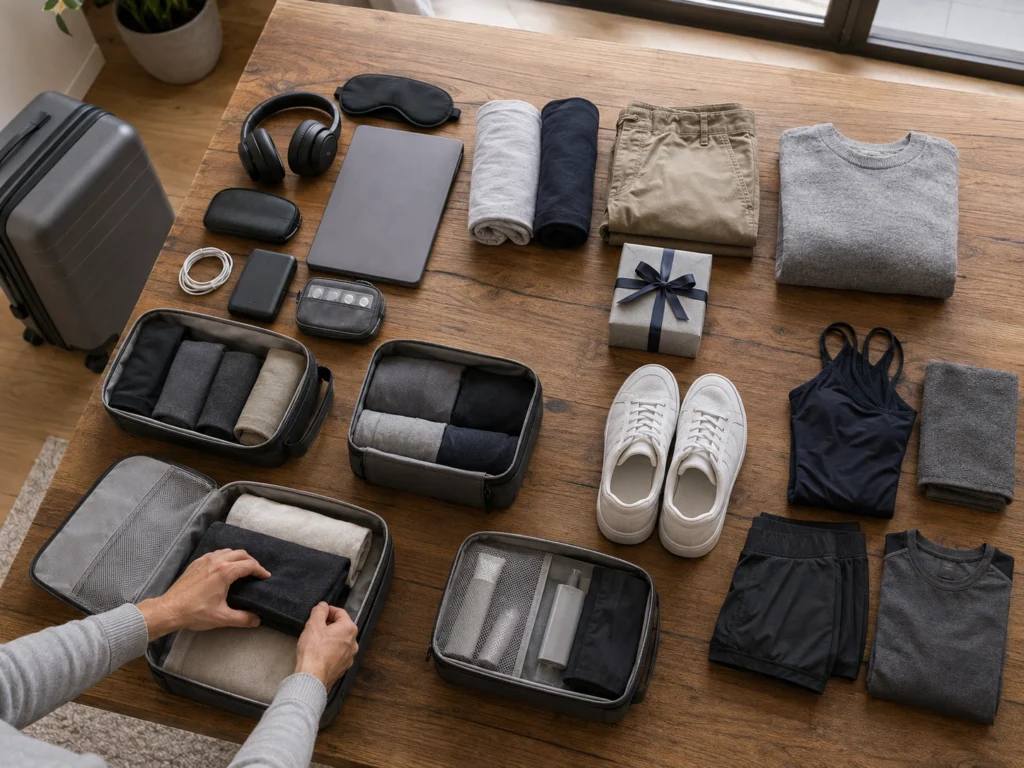
The easiest way to avoid last-minute panic is a business trip packing list split into clear categories. Once you know what goes where, packing takes half the time.
Use this checklist to avoid the items many business travellers forget.
- Tech and Comfort: Noise-cancelling headphones and an eye mask make long flights easier to handle. Your carry-on is the right spot for necessary medications, not checked luggage, just in case bags go missing.
- Quick Casual Wear: Keep a few T-shirts and casual clothes on hand for time off without much thought. Cooler evenings call for one light sweater too, in case the forecast doesn’t hold up.
- If There’s a Pool: A bathing suit is worth packing when your hotel has a pool or gym on site. An exercise routine is easier to maintain while you’re away with workout clothes or gym clothes on hand.
- Don’t Skip the Extras: Client gifts wrapped in tissue paper make a thoughtful touch on longer trips or conferences. To keep everything organised, use packing cubes so your bag doesn’t turn into a mess by day three.
When you stick to a work trip packing list like this, you’re far less likely to scramble the night before you fly.
If Your Packing List Needs a Backup Plan
If your packing list needs a backup plan, build in spares for documents, chargers, and unpredictable weather. After all, knowing what to pack for a business trip includes preparing for the small problems that catch most travellers off guard.
These final items depend on your destination and schedule:
Packing Spares for Chargers and Documents
Last-minute business travel problems usually come down to one missing item or one missing document. Frequent business travellers know this well, especially on a five-day trip or a five-day conference. A second copy of your itinerary saved to email helps if paper copies go missing.
On top of that, digital backups of hotel confirmations also save time if your phone runs out of battery. We keep everything duplicated in the cloud now, and it’s saved more than one trip.
With that sorted, keep everything in a single messenger bag so your documents stay close at hand. It’s a simple habit that complements any business travel checklist and makes deciding what to pack for a business trip much easier.
Instead of digging through checked luggage at the hotel, you’ll have your essentials within easy reach. It also fits neatly in the overhead compartment on longer trips.
Adjusting Your Business Travel Checklist for Weather Changes
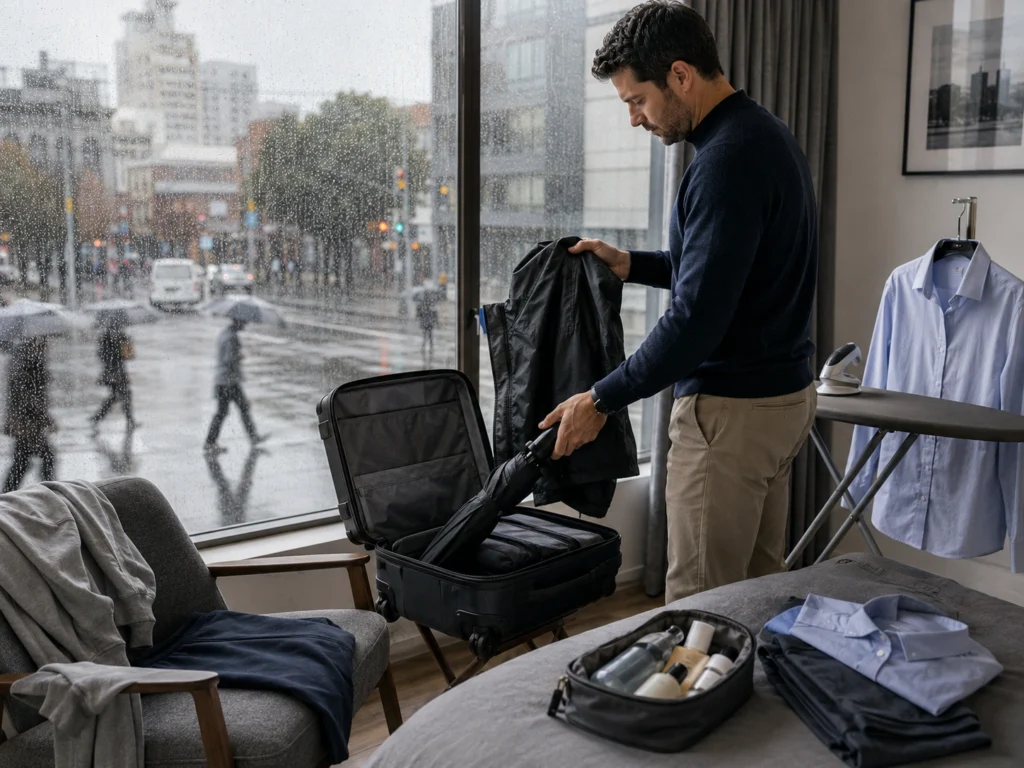
Check the destination forecast two days before an overnight business trip and adjust your business travel packing list accordingly. A light jacket or umbrella takes up little space but solves a lot of weather problems. This applies just as much to a short work trip as a longer one.
Even then, long flights can also mean dry cabin air, so pack accordingly for comfort. A hotel iron handles any wrinkles that show up once you land.
Along with the weather side of things, personal time counts too, even on a packed business travel schedule. One bag with a change of clothes for downtime keeps things simple in your hotel room. That way, you’re ready for whatever the trip throws at you.
Ready to Roll: Your Business Trip, Sorted
Packing the right documents, attire, and backups turns a stressful trip into a smooth one. From boarding passes to dress shoes, every item earns its spot in your bag for a reason. A little planning goes a long way once you’re at the airport.
Our best advice is to start your packing a few days early, rather than the night before you fly. That extra time catches the small things, like a missing charger or a wrinkled shirt, before they become a problem.
Once your bags are sorted, the next step is getting to the airport without any last-minute stress. Get in touch with GLAPacked for a rental that’s ready the moment your flight lands.
Related Posts

Organising A Blue Mountains Day Trip By Car From Start To Finish
Organising a Blue Mountains day trip by car from Sydney…
Making A Weekend Trip Packing List Before You Leave
A solid weekend trip packing list saves you from having…

Alice Springs 4WD Hire Unlimited Kms for Longer Outback Adventures
Central Australia covers a vast area, and the distances between…