
Long car rides have a way of making time feel like it’s standing still. The kilometres stretch out, the novelty fades, and the open road starts feeling less exciting somewhere around hour three.
Fortunately, it doesn’t take much to make the journey more enjoyable. Small things like a few road trip games, a good playlist, and planned rest stops can make a 10-hour drive feel much shorter.
In this guide, we’ll show you the best things to do on a long car trip to keep everyone entertained and the hours moving. By the time you finish reading, you’ll have a full game plan ready before you even pull out of the driveway.
Entertainment Ideas for Long Car Trips
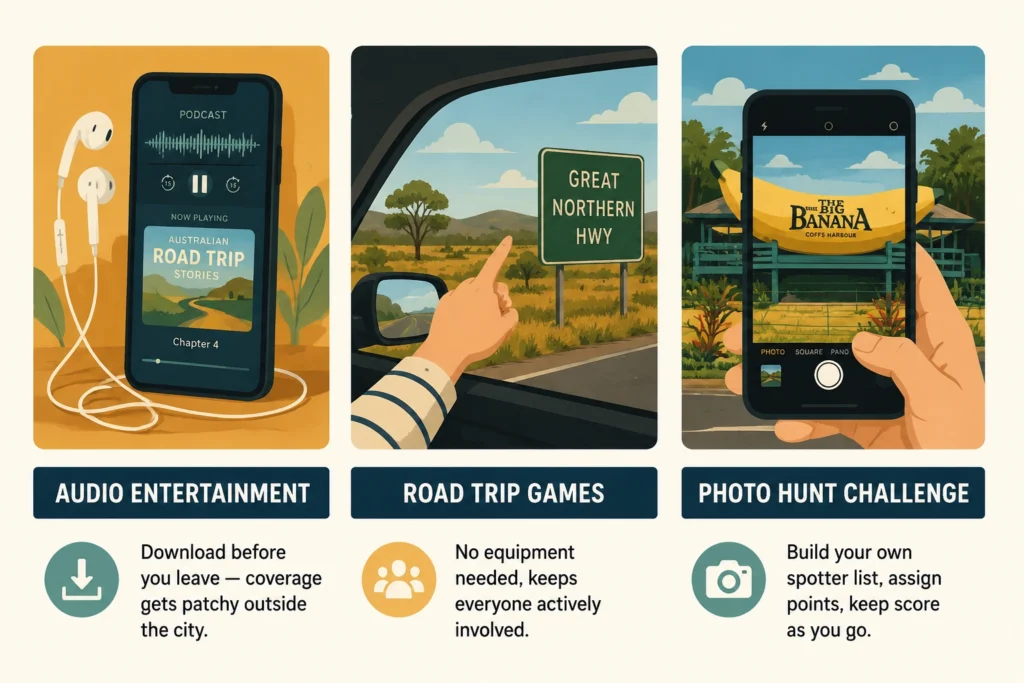
Entertainment ideas for long car trips work best when they fully occupy attention rather than passively filling time. That usually means mixing interactive games, audio-based entertainment, and a few light creative challenges so the drive feels more dynamic for everyone.
We break down the best options below.
Audiobooks and Podcasts: Let Someone Else Do the Talking
A good audiobook or podcast gives your brain something to actively follow for hours. And if it’s something from a series you already love, time seems to move even faster.
Just make sure to download everything before you leave. Some areas have patchy mobile coverage once you get outside the city, so streaming can cut out when you least expect it.
Road Trip Games That Hold Up for Hours
Unlike audiobooks or music, road trip games keep everyone actively involved in the moment. They break up the drive with interaction and make the hours feel more social. But some games can lose steam fast if they’re too simple or rely on equipment you don’t have.
That’s why it helps to stick with games that are easy to pick up and hard to put down, like these:
- I Spy: One person picks something in sight, and others guess what it is using clues until someone gets it right.
- The Licence Plate Game: Spot number plates from different states or territories and keep score as you travel.
- Twenty Questions: Guess an object by asking up to twenty yes-or-no questions.
- Word Association: Each person says a related word immediately after the previous one, with no pauses or repeats.
- The Alphabet Game: Find letters A to Z in order on road signs, billboards, and passing vehicles.
These games require nothing but the people already in the car, which makes them easy to start at any point in the drive.
Create a Road Trip Challenge or Photo Hunt
Want to take things up a notch? You can build your own game with nothing but a phone and a bit of imagination.
Put together a spotter’s list of things to look for through the window. Think unusual truck names, quirky road signs, or something you’d only see in that part of the country. Then assign points to each find and have everyone snap a photo as proof.
Keep a running score as you go. The harder the spot, the more points it’s worth. Once everyone’s scanning the road for the next find, the kilometres start disappearing fast.
Good Music Makes a Long Road Trip Go Faster
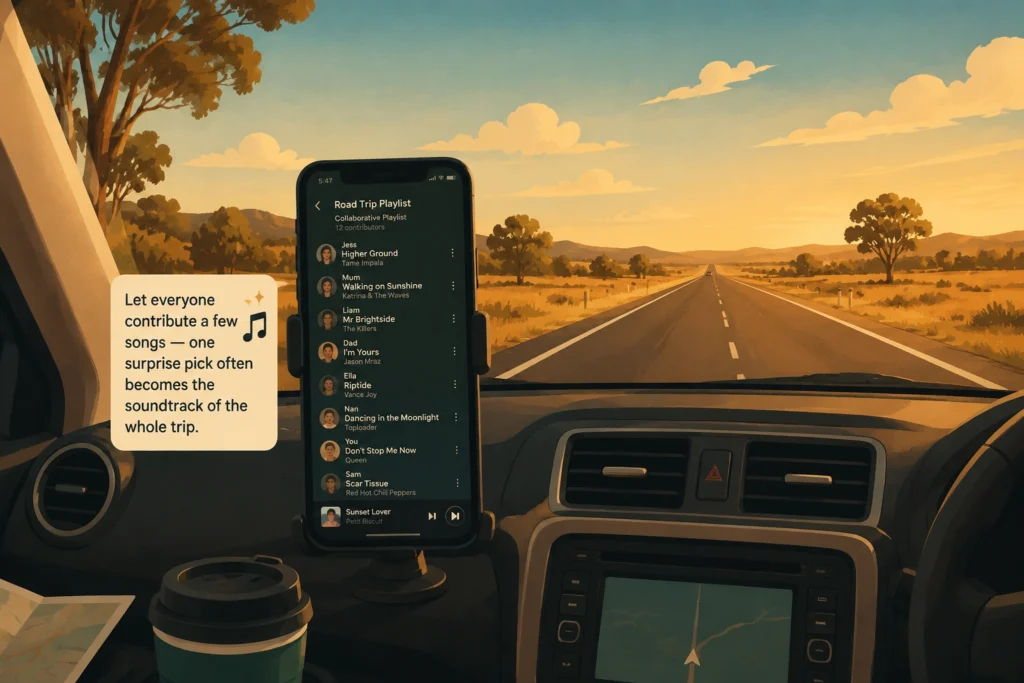
Picture cruising down an empty highway with Fleetwood Mac or a classic Australian pub rock playlist filling the car.
There’s something about the right music on an open road that makes the whole drive feel like it has a soundtrack. It sets a pace, lifts the mood, and keeps the energy steady across hours of driving without anyone having to do a thing.
To make that happen, spend a few minutes creating a playlist before the trip and let everyone contribute a few songs. The mix keeps things fresh, and one person’s surprise pick often ends up becoming the soundtrack to the whole journey.
Take Breaks Before You Need Them
Most drivers wait until they’re exhausted before pulling over. That’s precisely when stopping becomes most difficult. On long drives, fatigue builds gradually across hours of highway stretches. By the time you feel it, it’s already affecting your concentration on the road.
That’s why it’s worth treating tiredness as something to prevent rather than react to. According to Transport for NSW’s page on fatigue, fatigue-related crashes are almost three times as likely to be fatal as crashes not involving fatigue.
One of the simplest ways to reduce that risk is to schedule regular breaks. The Queensland Government’s guide on driving tired recommends stopping for at least 15 minutes every 2 hours to stay alert on long road trips.
Breaks do more than keep you safe, though. A planned rest stop gives everyone a chance to reset. You can stretch your legs, grab a coffee in a nearby town, and breathe some fresh air before the next stretch of road.
When you stop treating breaks as delays, they often become part of the experience. We’ve heard plenty of people say the unexpected stops became some of the most memorable parts of the journey.
Can Conversations Make a Long Car Ride More Enjoyable?
Yes, and good ones can carry you through hours without noticing. Part of that is the setting itself. A long car ride strips away the usual distractions and leaves you with something most families don’t get enough of: uninterrupted time together.
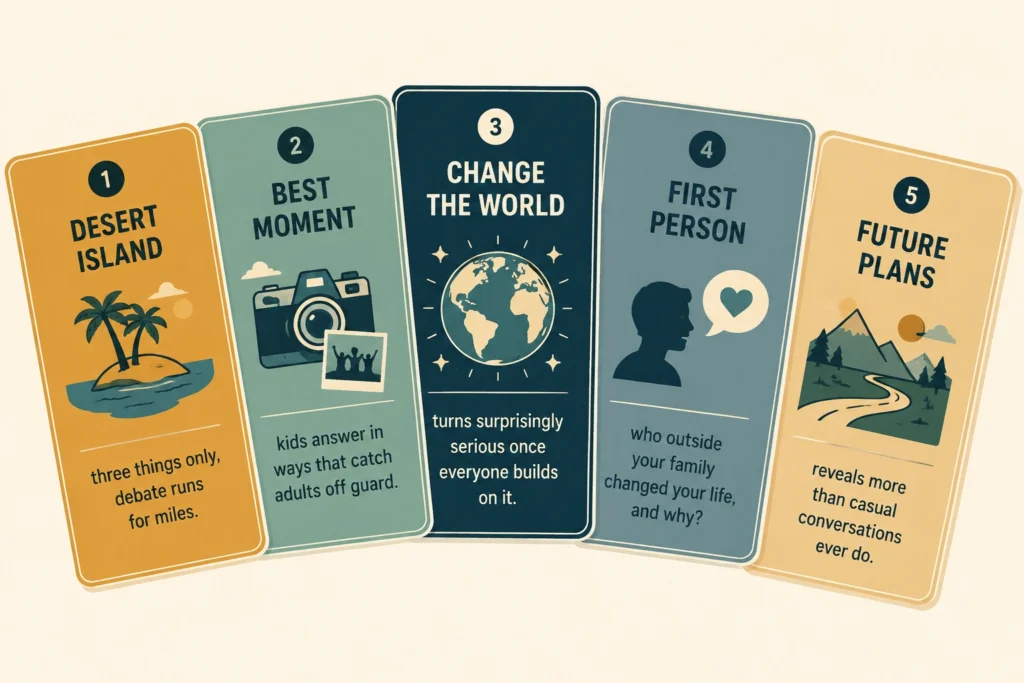
Getting past the small talk is the hard part, though. These conversation starters tend to open things up:
- Desert Island: You can only bring three things to a deserted island. The debate over what makes the cut usually runs well into the next town.
- Best Moment: Everyone shares the best moment of their life so far. Kids often answer in ways that catch adults off guard.
- Change the World: Pick one real-world problem and propose a solution, no matter how unrealistic. It often turns into a surprisingly serious discussion once everyone starts building on each other’s ideas.
- First Person: Think of someone outside your family who genuinely changed your life, and why. Use this prompt to kick off a deeper conversation and make the drive feel shorter.
- Future Plans: Where does everyone see themselves in ten years? It often reveals more than casual conversations ever do.
When the car falls quiet after a round of these, it’s rarely awkward. More often, it just means everyone’s thinking, and those are usually the best stretches of the whole drive.
Simple Ways To Stay Comfortable on a Long Drive
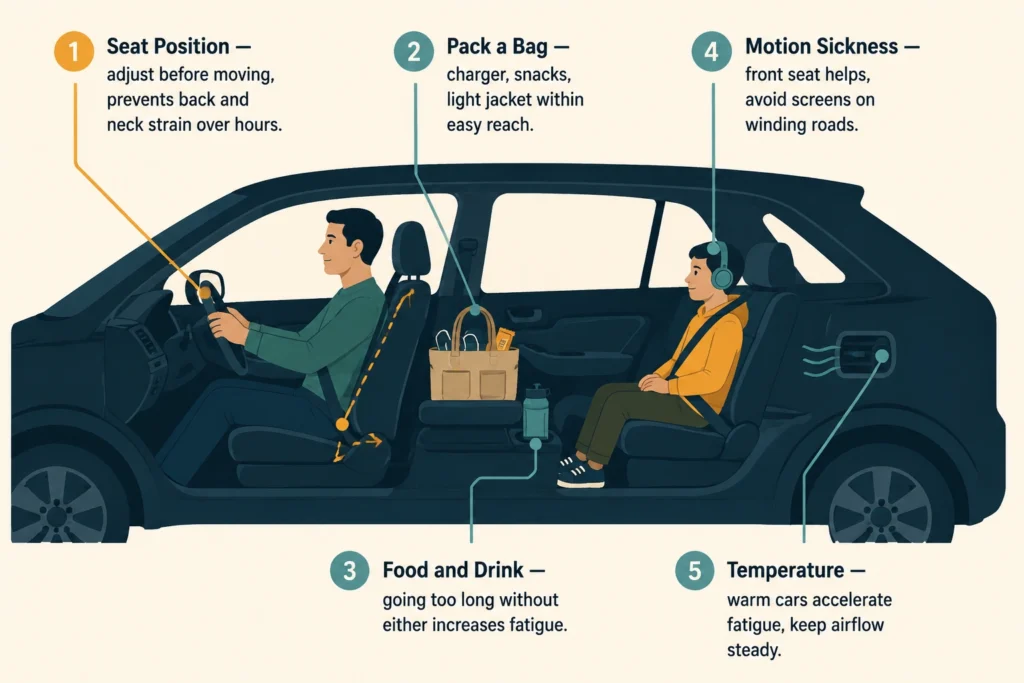
Comfort is easy to ignore when the focus is on getting to the destination. After a few hours in the same seat, though, small discomforts start to build up and affect the way the whole journey feels.
A few simple adjustments before you leave can prevent most of that from happening:
- Seat Position: A poorly adjusted seat can cause back and neck strain long before you’re halfway through a long drive. Set everything properly before you start moving, so you’re not constantly shifting around later.
- Pack a Bag: Keep a small bag within easy reach for essentials like a phone charger, snacks, and a light jacket. It saves repeated stops or reaching into the boot while on the road.
- Food and Drink: Going too long without eating or drinking makes it harder to stay focused and makes the drive feel more tiring than it should.
- Motion Sickness: For anyone prone to it, the front seat usually helps, and looking at screens on winding roads can trigger symptoms more easily.
- Watch the Temperature: When you drive for long stretches, especially on open highways, a warm car can make fatigue set in faster. Air conditioning or good airflow helps keep things comfortable and supports alertness.
Getting these basics right is a big part of how to prepare a car for a long road trip. Sort them before you leave, and you’ll barely think about them once you’re moving. That’s exactly the point.
Make the Miles Fly By
A good road trip starts before you even leave. Here’s a quick checklist to run through before your next drive:
- Games and entertainment downloaded and ready to go
- Playlist built and shared with everyone in the car
- Rest stops planned at roughly every two hours
- Comfort basics sorted: seat, bag, temperature, food
The drive home is part of the experience, too. A trip that’s enjoyable in both directions starts with a bit of planning before you leave.
If you have any questions about planning a long drive, the team at GLA Packed has plenty of experience helping drivers get the most out of every road trip. Get in touch to learn more.
Frequently Asked Questions
A few quick answers before you hit the road:
What is a good one-day trip from Sydney by car?
A good one-day trip from Sydney by car depends on what you’re after. For scenic views and bushwalks, the Blue Mountains are a classic choice. For beaches and coastal drives, destinations like Kiama or the Central Coast make excellent day trips that can be comfortably completed without rushing.
Is a Blue Mountains day trip by car worth it?
Yes. A Blue Mountains day trip by car gives you the flexibility to visit lookouts, walking trails, and small towns at your own pace without being tied to public transport schedules. Leaving early also helps you avoid traffic and gives you more time to enjoy the region before heading back to Sydney.
What is the best time to leave for a long road trip?
Early morning is generally the best time to leave. Traffic is lighter, temperatures are cooler, and you arrive at your destination with enough daylight left to make the most of it. On longer drives, especially over six hours, leaving before sunrise also gives you more flexibility to take breaks without feeling rushed later in the day.
Related Posts

Planning A One-Day Trip From Sydney By Car With Less Stress
You finally get a free Saturday, and the plan sounds…
International Business Travel Checklist Before You Fly Overseas
Most business travellers discover a problem at the worst possible…

Packing List for Business Trip Female Professionals Can Rely On
Packing for a business trip always feels rushed, even when…