
A car camping trip requires you to pack shelter, cooking gear, safety supplies, convenience items, and bug protection before you leave. But most people only realise this once they arrive at the campsite, which leads to unnecessary frustration during the outing.
Fortunately, packing well for an outdoor trip isn’t complicated once you split your gear into sleep, cooking, security, and comfort. A clear system before you load the car saves time and lets you actually enjoy the journey once you get there.
In this article, you’ll find a clear breakdown of camping essentials. Read on to organise your essentials and enjoy the journey ahead.
Car Camping Essentials: What Goes In Your Kit Before You Leave
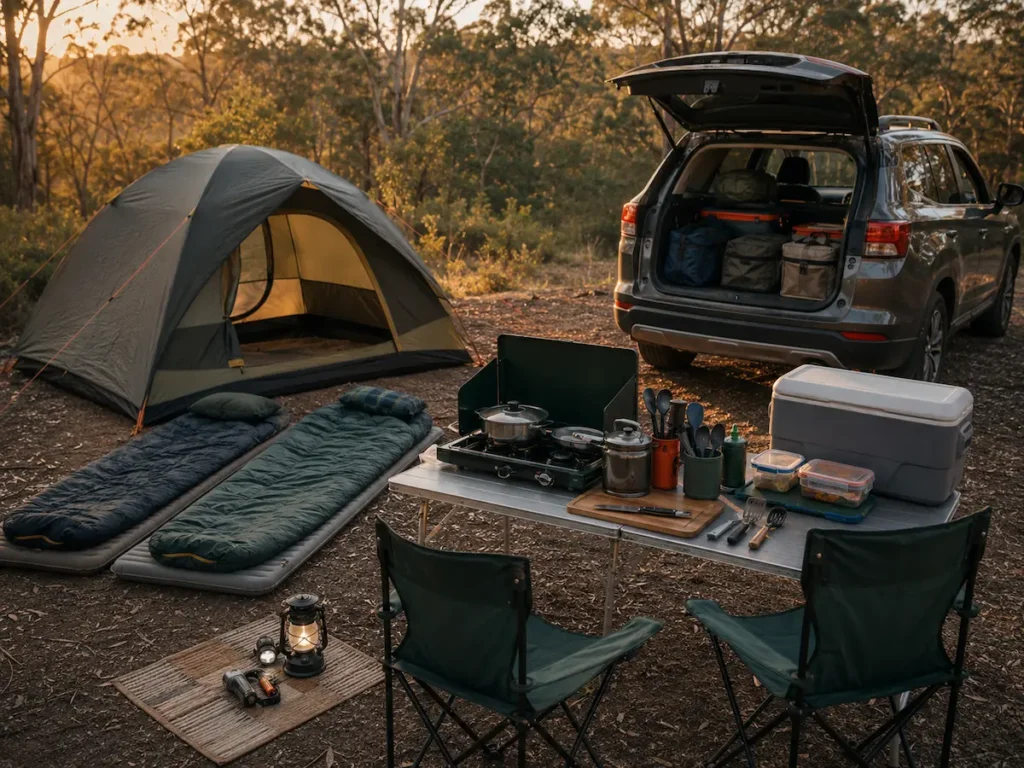
When you pack by category, nothing important gets left behind at home. Think of it like stocking a small kitchen before a dinner party. You only pull out what you’ll actually use, and everything has a place.
Generally, good car camping essentials fall into three clear groups: sleep and shelter, your cook setup, and comfort basics for time at the site.
Let’s learn these three areas in detail, and you’ll have a solid foundation for the outing.
1. Sleep and Shelter Gear Worth Packing
A quality tent, sleeping bag, and ground mat are the starting point for any overnight stay. Without these gears, you won’t sleep comfortably and will suffer the rest of the journey.
Specifically, your sleeping bag should match the overnight temperature at your destination (yes, even on a warm Queensland night) as the weather may drop after the sun sets. In this case, a bag too warm is uncomfortable, while one that is too cold is also a problem.
After helping many drivers prep for regional Queensland trips, we’ve noticed campers miss one item the most: a proper ground mat. Many also forget to pack tent stakes, which makes setting up shelter on harder ground a real struggle.
In addition, a tent footprint placed under your sleeping area protects the tent floor from moisture and rough ground. It also helps extend the life of your setup over time.
2. Camp Kitchen Setup and the Right Camp Stove
A reliable camp stove sits at the centre of any functional bush kitchen. When you pair it with fuel canisters and basic cookware, you can handle every meal at the site without any stress.
For group outings, a 2-burner stove gives you the flexibility to cook and heat water at the same time. Meanwhile, solo or couple outings work fine with a single burner, which takes up far less space in the car.
A cutting board, camp knife, cooking utensils, and can opener also round out the cook station. And don’t forget to pack reusable containers for storing leftovers and keeping food fresh overnight.
3. Camp Chairs, Tables, and Comfort Basics
After sleeping and cooking, it’s time for a convenient setup.
Lightweight folding chairs and a portable camp table make an ordinary site a genuinely relaxing spot. With this arrangement, meals feel better, evenings feel longer, and the whole outing gets more enjoyable just from having somewhere comfortable to sit.
Honestly, camp chairs are one of those things you’ll thank yourself for every single evening out there.
Beyond chairs and tables, a headlamp, a lantern, and extra batteries are necessary once the sun goes down. After all, moving around a dark site without proper lighting gets uncomfortable very quickly.
You can also place a small camp rug outside the tent entrance to keep dirt and moisture from tracking inside onto your sleeping area.
That said, a convenient gear only works if your safety kit is already organised before you leave home.
Your Car Camping Packing List for Safety on the Road
Most campers prioritise comfort essentials first and only think about security items at the last minute. It’s an easy mistake to make, especially when excitement takes over and attention goes to food, clothing, and the fun parts of the trip.
Right there, a proper car camping packing list changes the approach. Safety items sit alongside convenient essentials from the beginning, so nothing important gets left out when you travel.
The following two areas need attention before you depart:
First Aid Kit and Emergency Supplies
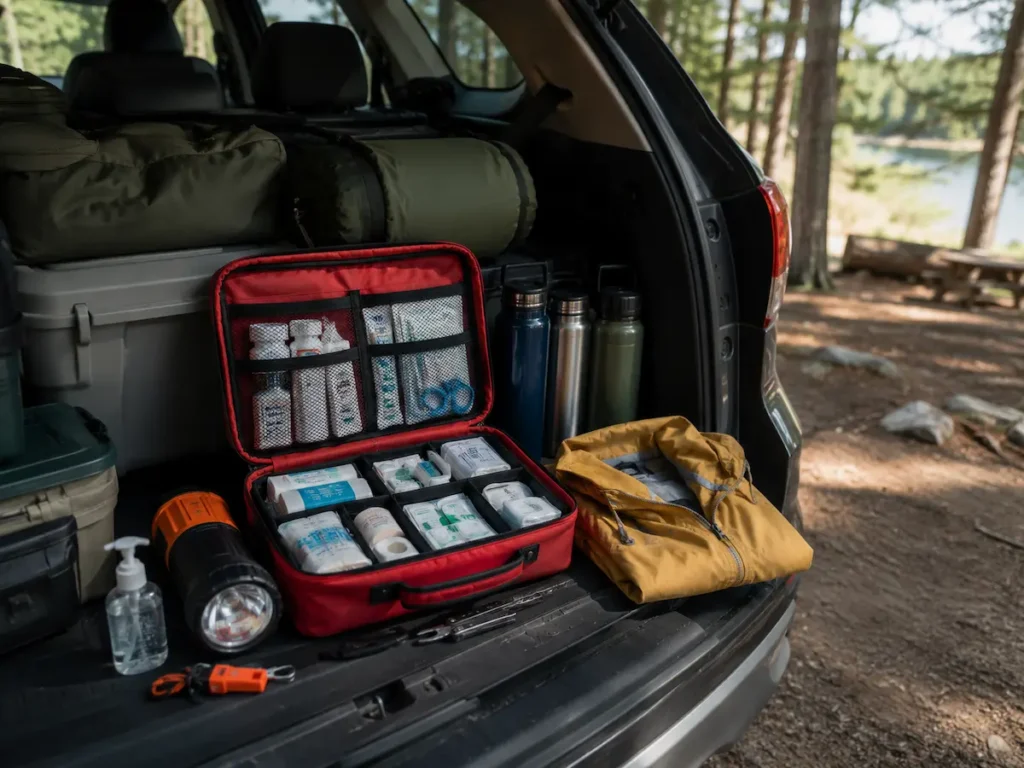
A well-stocked first aid kit must include bandages, antiseptics, pain relief, and blister treatment. Those four cover the injuries and discomforts you’re most likely to deal with at a campground, particularly if you’re a first-timer still learning the terrain.
You should also add an emergency backup torch, whistle, and basic tool kit alongside your aid kit supplies (keep these accessible in the car, not buried under gear). Then, store everything in one clearly labelled bag so anyone in your group can find it quickly without rummaging through the vehicle.
More importantly, running water isn’t always available at sites. That’s why you must pack hand sanitiser and a few water bottles as a backup. A rain jacket is worth throwing in too, since the weather at many campgrounds can shift quickly without much warning.
Bug Protection and Bug Spray Basics
Australian campsites can have heavy mosquito and midge activity, particularly near water sources at dusk (midge bites are no joke near river camps). As a result, insect protection is mandatory in these spots.
So don’t forget to pack a reliable bug spray with DEET for direct skin application, and a separate permethrin spray for treating clothing and gear. These two work differently and together provide broader protection than using a single product.
A mesh screen shelter or pop-up bug tent adds another layer of protection during outdoor meals and relaxed evening sitting. Many campers heading to spots around South East Queensland find this setup super helpful once the sun drops below the treeline.
Camping Gear That Saves You Time and Frustration at the Site
Honestly, the difference between a stressful and a relaxed journey comes down to choosing the equipment that does more than one job well. In fact, multi-use equipment usually reduces the total number of items you load into the car without sacrificing anything useful.
Here are six pieces of gear you should consider adding to your kit before you head off:
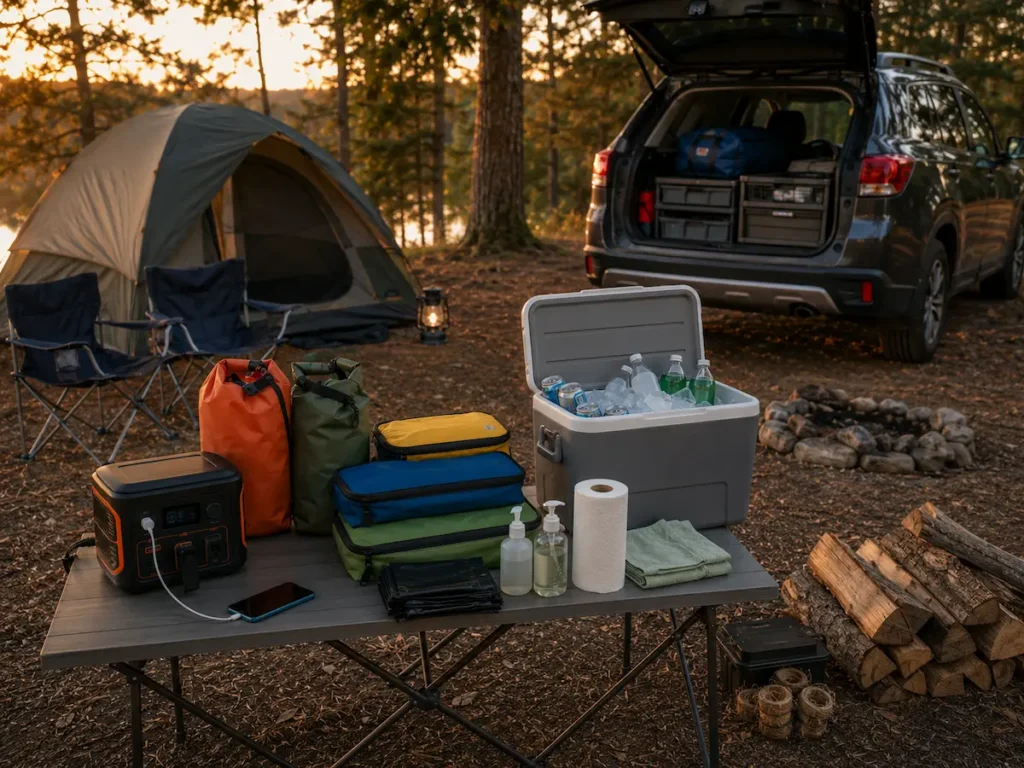
- Portable Power Station: It charges your devices during longer stays away from power. And if you’re travelling in a van-life arrangement or using window covers for overnight sleeping, it’s even more useful as part of your kit.
- Dry Bags and Packing Cubes: Waterproof dry bags and packing cubes keep your supplies sorted and protected from unexpected rain or spills.
- Trash Bags: Load these in bulk. They handle dirty clothes, wet gear, and general campsite waste all at once, which saves a lot of scrambling around for little space in the car.
- Hygiene Materials: Biodegradable soap covers washing dishes and personal hygiene without harming the environment at the campsite. Paper towels also help to keep the dishes dry and wipe down the cooking area quickly.
- Cooler and Drinks: Keep snacks, drinks, and ice in a quality cooler to hold drinks cold throughout the outing. It’s one of those small additions that provides you with comfort, especially on warmer days at the site.
- Campfire and Evening Essentials: A campfire adds warmth and fun to any evening, so fire starters help you get it going without wasting time looking for dry wood after dark. This benefit applies regardless you’re heading out on a one-day trip from Sydney by car or settling in for a longer regional stay.
Quick Tip: Lay everything out on the floor before loading the car. If you can’t justify why you have to pack something, leave it behind.
Camping Trip Packing Mistakes Most Campers Make
Many first-time campers and even experienced drivers repeat the same arranging mistakes, which only become obvious once they reach the site. These issues usually show up during setup, when missing items or poor preparation start affecting comfort and safety.
The table below breaks down the most common mistakes and why they’re an issue.
| Mistake | Why It’s a Problem |
| Overpacking the vehicle | No boot space left, gear is hard to find on arrival |
| Forgetting firewood and a lighter | The first hour at the campfire becomes a supply run |
| Skipping an offline map | No mobile coverage means no navigation at many campgrounds |
| Preparing too many clothes | Dirty clothes pile up fast and eat into your space |
| Bringing a coffee maker | Takes up room that other gear and essentials need |
| Ignoring must-haves like trash bags | Many campgrounds have no bins, so waste becomes your problem |
During arrangements, if your boot looks like a garage sale on wheels, you’ve overpacked (car camping isn’t backpacking). Although you’ve got more room than a hiker, that doesn’t mean you should stuff every corner of the vehicle with unnecessary things. You must prepare with purpose and leave the stuff you’re not sure about at home.
We’ve seen campers arrive at sites past Toowoomba with no offline map and no mobile signal. Fortunately, it’s a fixable problem, just as you’d think about how to prepare a car for a long road trip. Download your route from Google Maps and campground details before you leave. It takes five minutes and saves a genuinely stressful situation on the road.
Pack Wisely, Camp Better: Your Trip Starts Here
Car camping rewards the people who prepare. A well-sorted kit means less time scrambling at the site and more time actually enjoying the outdoors with the people you brought along.
Sleep gear, a functional cook setup, safety supplies, and solid bug protection cover the bulk of what you need for a comfortable overnight stay. Planning and organising these essentials in advance ensures you won’t waste time searching for items at the campsite and can focus on enjoying your trip.
When you’re ready to hit the road, GLA Packed can help you sort the vehicle side of your outing so you can focus on the fun part of planning your next campsite adventure.