
After an accident, one thing determines who pays for the hire car: fault. But fault isn’t always clear-cut, and insurers don’t always pay without a fight.
That uncertainty becomes even more important when you look at your own cover. Many drivers assume their insurance automatically includes a hire car, but that isn’t always the case. If you’re found at fault and don’t have the right cover in place, the entire cost can land on you.
This article covers who pays and what the hire car company can charge you after a crash. It also walks you through the steps to take straight after the accident, regardless of who was at fault.
Keep reading to learn more.
At-Fault vs. Not at Fault: Who Pays the Hire Car Bill
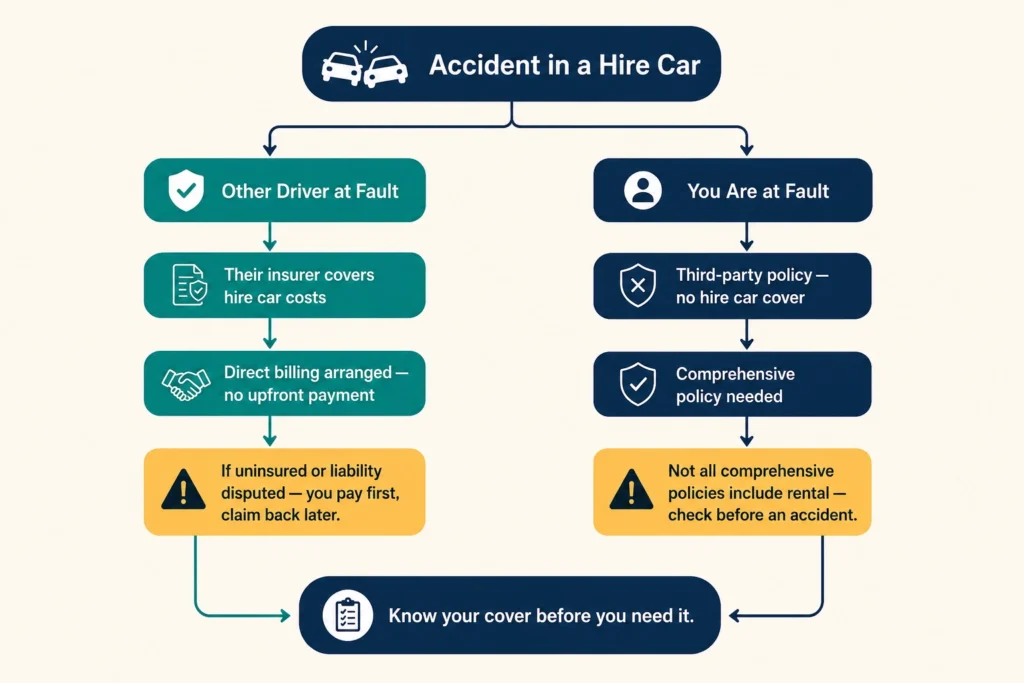
It comes down to which side of the accident you were on. The sections below explain what happens when the other driver is at fault, and what happens when you are.
The Other Driver Is at Fault
If another driver caused the accident, their insurer will generally cover your hire car costs while your vehicle is being repaired. In most cases, they’ll arrange the rental directly with the hire company. This process, often called direct billing, means you don’t have to pay the rental costs up front.
However, these arrangements generally depend on the at-fault driver having valid insurance. The Financial Rights Legal Centre notes that access to a replacement vehicle often relies on this coverage being in place.
But if the other driver is uninsured, or their insurer disputes liability, you’ll likely need to cover the rental costs yourself initially. You can then claim them back once fault has been formally established.
You’re the At-Fault Driver
When you are at fault, your access to a hire car depends on the insurance policy you hold. Third-party property insurance covers damage to the other driver’s vehicle, but it doesn’t provide a replacement vehicle for you.
To have a hire car covered, you need a comprehensive car insurance policy that includes rental vehicle benefits. Not all comprehensive policies provide this automatically. Some insurers offer rental cover as an optional add-on, while others include it in higher-tier policies.
So, check your policy before an accident happens. You don’t want to find out you’re not covered when you’re already arranging repairs and transport. Some customers have discovered this the hard way. They assumed their comprehensive policy included a hire car, only to find it didn’t.
Car Hire Excess and Your Financial Responsibility
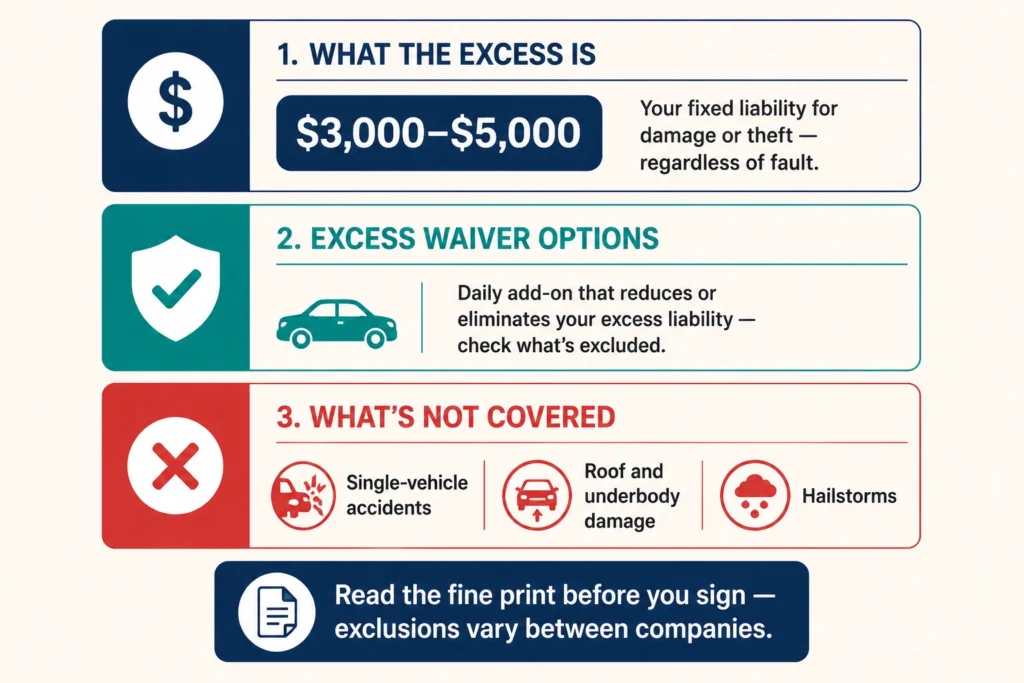
Regardless of who caused the accident, you may still be responsible for paying an excess under your rental agreement. Here’s what that means in practice:
- What the Excess Is: The excess is the fixed amount you pay toward repair costs if the hired car is damaged or stolen. The amount varies between rental companies and vehicle types. For example, in Victoria, car hire excess liability is typically capped between $3,000 and $5,000, with higher limits applying to prestige vehicles.
- Excess Waiver Options: Most hire car companies offer a collision damage waiver or excess waiver at an additional daily cost. It reduces or eliminates the excess amount you’d pay if the car is damaged.
- What’s Not Covered: Rental car excess cover doesn’t protect you from every situation. Common exclusions include single-vehicle accidents, roof and underbody damage, and hailstorms. Exclusions vary between rental companies, so read the fine print in your rental agreement before you sign.
- Standalone Excess Insurance: You don’t have to buy excess cover from the hire car company. Third-party insurers also offer rental vehicle excess insurance, often at a lower cost. A common question at this point is how much rental excess insurance costs, but the answer depends on the provider.
We often see first-time renters overlook the excess entirely when comparing hire car options. By the time they’re dealing with a damaged car, they’re already facing a bill they didn’t budget for. So before you sign anything, check the excess amount and read what’s excluded.
That’s also the right time to find out “how does hire car insurance work” under your existing policy.
What Credit Card Hire Car Insurance Covers and Excludes
Credit card hire car insurance typically covers damage to the rental vehicle itself, but only if certain conditions are met. For example, most card providers require you to pay the full rental fee on that card for the cover to activate. In addition, fees such as towing and excess charges are commonly excluded.
Coverage limits also vary between providers. A card that covers a standard sedan, for example, may not extend to larger rental vehicles.
To understand exactly what you’re covered for, check your card’s product disclosure statement. Then compare it with the rental company’s standard liability cover before relying on it. If gaps remain in your protection, some travel insurance policies include hire car excess cover as an add-on. This additional cover can help pay for costs that credit card policies exclude.
Charges Hire Companies Will Send You After a Crash
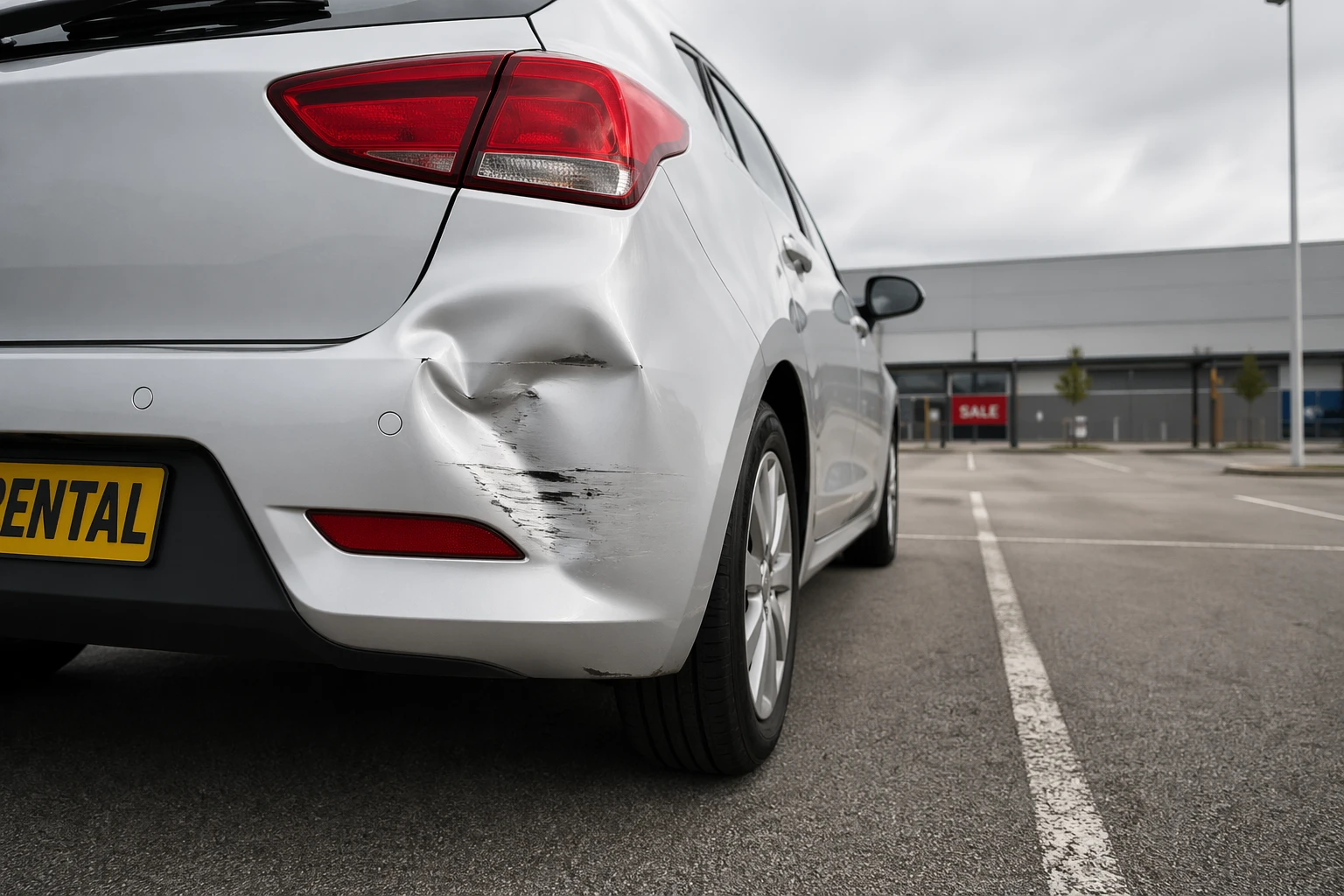
After a crash, the hire company’s invoice usually includes three main charges: repair costs, loss of use fees, and admin fees.
The table below breaks down what each one covers:
| Charge | What It Covers |
| Repair costs | The cost of repairing the car where it was damaged in the accident |
| Loss of use | The daily rental fee the hire company loses while the car sits in the repair shop |
| Admin fees | Processing and paperwork costs that the rental company charges to manage the claim |
These charges apply regardless of who caused the accident. Even if the at-fault driver’s insurer is handling the claim, the hire car company sends the invoice to whoever signed the rental vehicle agreement. That’s usually you.
That’s exactly why the ACCC advises consumers to check liability coverage, exclusions, and potential charges before signing a rental agreement. It also expects hire car companies to clearly explain these terms rather than hide them in the fine print.
Quick Tip: Before you drive away, ask the rental agency for a full breakdown of what you’d be liable for if the car is damaged. That way, you can spot high excess charges or exclusions before you agree to the rental.
Steps to Take After an Accident in a Hire Car
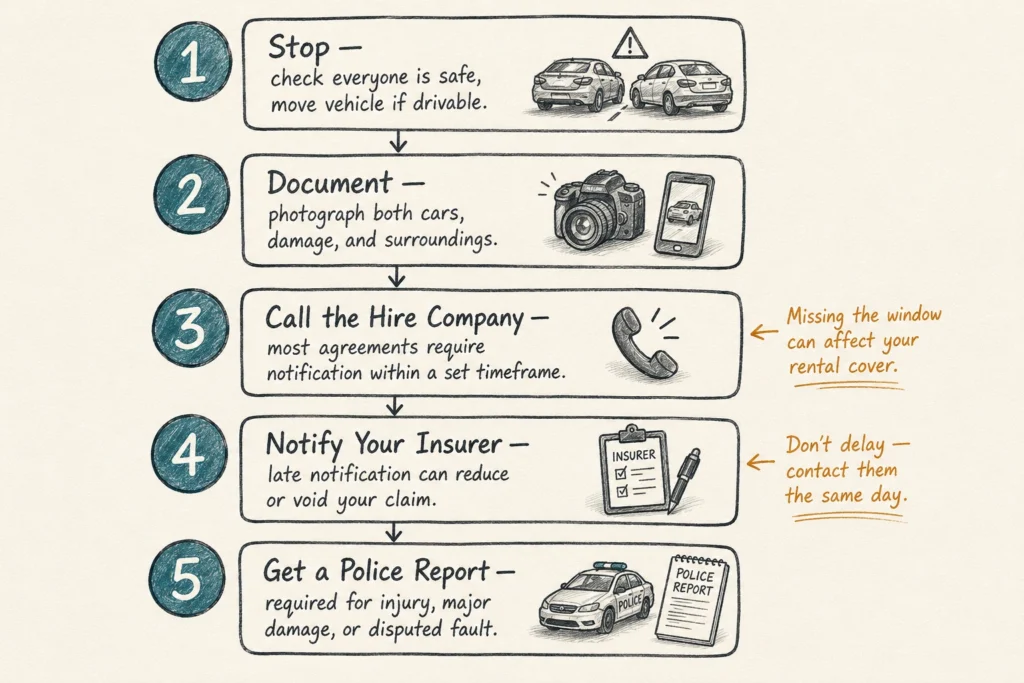
Accidents in hire cars can escalate quickly. In the first few minutes, your actions can influence how your claim is processed and whether complications arise later.
These are the steps to follow:
- Stop and Check for Safety: Make sure everyone involved is safe first. If the vehicle is drivable, move it out of traffic where possible.
- Document Everything: Having a clear record of what happened makes it much harder for anyone to dispute the facts later. So after the accident, take pictures of both vehicles, the surrounding area, and any visible damage.
- Contact the Hire Car Company: Call the rental car company as soon as possible and report the accident. This is because most rental agreements require you to notify the hire company within a specific timeframe. Missing that window can affect your cover under the rental agreement.
- Notify Your Insurer: A late notification can give the insurer grounds to reduce or reject your claim. That’s why you should contact your insurance company promptly after notifying the rental car company.
- Get a Police Report Where Required: In cases involving injury, major damage, or disputed fault, involve the police. A report provides an official record of the incident and can be used if liability is disputed later.
Following these steps gives your claim a clearer foundation and reduces the chance of disputes over fault or costs. But missing or delaying any of them can lead to delays in processing, uncertainty over liability, and potentially higher out-of-pocket expenses.
Sort Your Hire Car Cover Before You Pick Up the Keys
The rental process itself is simple. It’s the aftermath of an accident that gets complicated when drivers realise they weren’t properly covered. Fortunately, most of it is preventable.
Before you pick up the keys, just check:
- What your car insurance policy covers for hire cars
- Whether excess protection is included or needs to be added
- What exclusions apply to your rental vehicle type
- How your credit card or travel insurance fits into your overall cover
And if you’re not sure how to hire a car, our team at GLAPacked can help. We explain exactly what your excess covers, what exclusions apply, and how your insurance or waiver changes your liability before you confirm the booking.
Get in touch to get started.
Related Posts
Car Hire Hobart: What to Expect When Renting a Car
Renting a car in Hobart takes about ten minutes once…
Understanding Car Hire Excess Insurance and How It Works
When you hire a rental car, the agreement usually includes…

Cape Tribulation Car Rental for Scenic Coastal Drives
If you ask an Aussie where to find Australia's best…