
Car hire in Alice Springs gives you the freedom to explore the Red Centre at your own pace. You can drive out to Uluru for sunrise, detour through the West MacDonnell Ranges, or spend a day at Kings Canyon without checking bus schedules or waiting for tour groups.
Renting here works differently from major cities, though. Location surcharges, stricter driving restrictions, and road condition requirements apply across most providers, and they can bump up your base rate considerably if you’re not expecting them.
This guide covers what those costs involve, which restrictions apply, and how to book without overpaying.
What You Need Before Booking a Rental Car
You’ll need a valid licence, a credit card for the security bond, and to meet the minimum age requirement set by the rental company. Let’s break each requirement down in detail.
Licence and Age Requirements

Your licence must be current and valid for the vehicle class you’re hiring. You’ll also need an International Driving Permit (IDP) if you’re visiting from overseas and your licence isn’t in English.
Beyond licensing, most rental companies here set the minimum age around 21. Plus, if you’re between 21 and 25, expect to pay a young driver surcharge that typically adds $20-30 per day to your rental cost.
Payment Methods and Excess Insurance
Before picking up your rental, you’ll need a credit card for a security bond, which places a hold to cover potential damage during the rental. Debit cards don’t provide the same financial security for the provider, so they’re rarely accepted for this purpose.
The bond amount varies depending on the vehicle type. For example, a compact car might carry a $3,000 bond, while 4WDs can hit $7,500 or higher.
You can lower that financial risk with excess reduction insurance, which cuts down what you’d pay out of pocket if the car gets damaged. It can be purchased at the rental desk or arranged separately before you arrive.
Where to Pick Up Your Hire Car in Alice Springs
Alice Springs gives you two pickup options: the airport or town centre depots. Airport pickup is more convenient if you’re flying in and want to leave immediately. But it typically costs around 15-20% more than identical cars from the same company’s town location.
This difference comes from airport fees charged to rental operators, which are passed on as a surcharge. In contrast, town depots along Stuart Highway don’t carry the same overhead, so they keep rates lower.
If you’re not in a rush, picking up from a town depot can save you a couple of hundred dollars on a longer hire. And since the airport is only about 15 minutes from the town centre, the transfer into town is relatively quick.
How to Book and Get the Best Rate in Central Australia
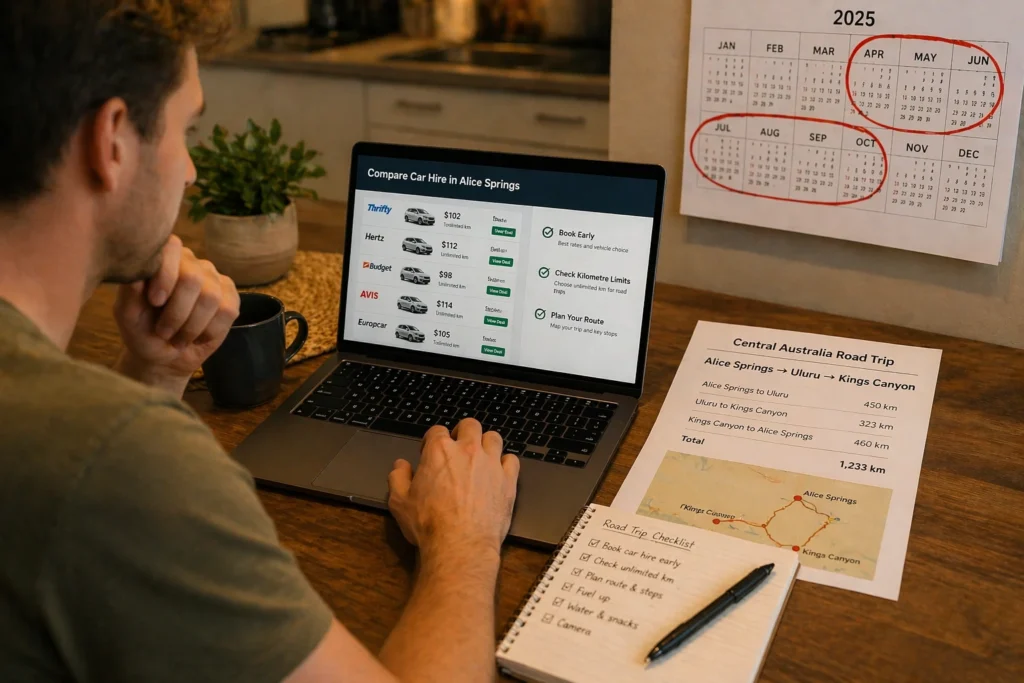
Securing the best rate in Central Australia comes down to timing, comparison, and a few details specific to this region:
- Book Early During Peak Season: During the dry season in Alice Springs (April to October) and holiday periods like Christmas, demand for rental cars is high, and fleets fill up quickly. So if you want to secure availability, book at least 2-3 months ahead.
- Check Kilometre Limits: When planning longer drives like Alice Springs to Uluru or Kings Canyon, confirm your rental includes unlimited kilometres. Without it, you’ll pay per kilometre once you exceed the cap, and a return trip to Uluru alone is nearly 500 kilometres.
- Book for Three Days to Avoid Drop-Off Fees: Some rental companies waive the one-way drop-off fee if you book for three days instead of two. The extra day is often cheaper than the fee itself.
- Look for Off-Season Deals: November through March often sees fewer visitors and lower rental rates, especially for travellers looking for cheap car hire in Alice Springs. If you can handle the heat, you’ll find more availability across most providers.
The more of these you apply, the more the savings compound, especially on longer Central Australia itineraries.
Hidden Costs in the Northern Territory
Last year, two separate couples told us the same story: they booked what looked like competitive car rental in Alice Springs rates online. At pickup, however, the total had jumped by $150–200. In most cases, that jump stems from two common charges: the Premium Location Surcharge and one-way drop-off fees.
Premium Location Surcharge
Many Alice Springs rentals include a Premium Location Surcharge, which can add roughly 10-20% to the base hire cost. It reflects the higher operating costs of supplying vehicles in Central Australia instead of being an optional add-on.
The surcharge usually applies to all renters because it’s tied to the pickup location rather than the driver. It’s also baked into the final booking total, so you can’t remove it.
This is not unique to Alice Springs. Car hire in Darwin and other remote areas often carries similar regional fees, although Alice Springs rates can be slightly higher with some providers.
To catch this charge early, ask the provider to break down the total cost line by line before you confirm your booking.
One-Way Drop-Off Fees
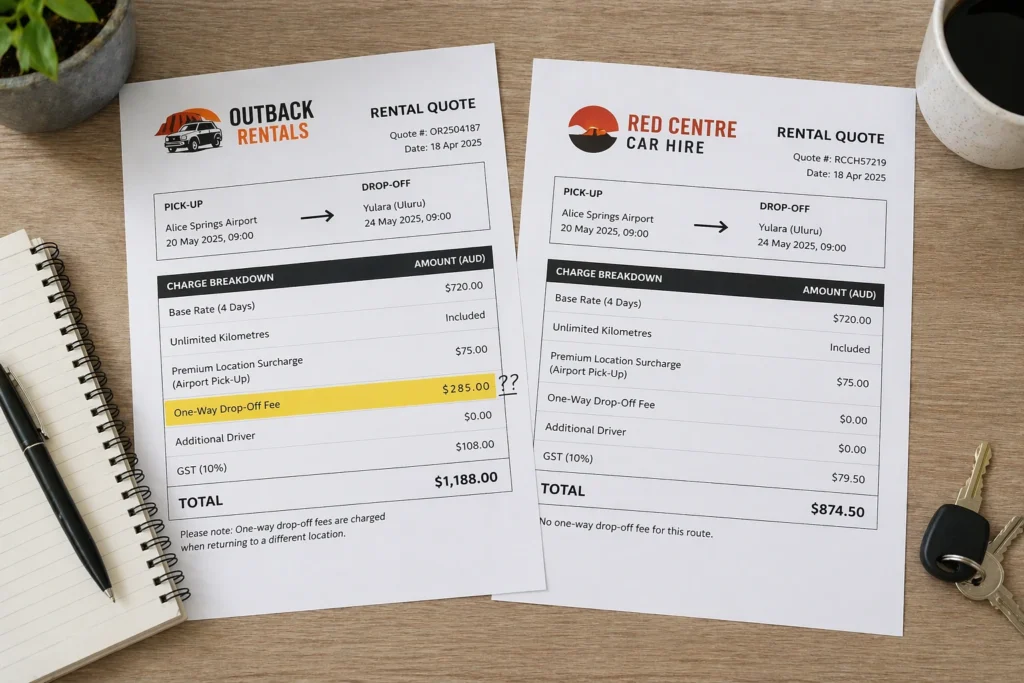
Another common extra cost in Central Australia is the one-way drop-off fee. If you collect a car in Alice Springs and return it at Uluru or Ayers Rock Airport, some providers charge for moving the vehicle back to their main fleet base.
Depending on the company and rental dates, that surcharge can run into several hundred dollars, even on a short two-day hire. That’s why it’s worth checking the return-location terms before booking.
Driving Restrictions in the Australian Outback
Driving rules are stricter in Central Australia, and ignoring them can void your insurance cover with an Alice Springs car hire provider. For example, most Alice Springs rental agreements ban driving on unsealed roads, even in 4WDs. This limitation catches tourists off guard, as many assume 4WD vehicles allow dirt road access. But if you break the rule, you may be responsible for the full repair and recovery costs after any damage or breakdown.
Some companies also prohibit night driving between sunset and sunrise in remote areas, when kangaroos, cattle, and other local wildlife are most active. That’s because a collision on an outback road can easily write off a vehicle.
These restrictions don’t mean every route requires a 4WD, though. In most cases, road surface is more important than distance, and many popular outback destinations are accessible via sealed roads. For instance, the highway from Alice Springs to Uluru is fully sealed bitumen, so a standard car is usually suitable for that trip.
Quick Tip: Check the road conditions for your specific route before booking, rather than defaulting to the biggest vehicle available.
Lock In Your Red Centre Rental Today
Car hire in Alice Springs opens up the entire region for exploration on your timeline. The process works smoothly once you understand the local surcharges, restrictions, and booking strategies.
Just book early, compare town and airport rates, and review your rental terms carefully before collecting the vehicle. These small checks can save you hundreds on longer Central Australia trips.
At GLAPacked, we help travellers compare Alice Springs car rental options and understand real pricing across Australia, so you can book with confidence and avoid hidden surprises. Contact us today if you need help choosing the right option.
Related Posts

Does Travel Insurance Cover Car Rental Excess? What to Check First
Many comprehensive travel insurance policies cover rental car excess, although…

Everything You Should Know About Car Hire Alice Springs Airport
Alice Springs Airport sits 15 kilometres from town and hours…

What Does Car Hire Excess Insurance Cover During A Rental
Car hire excess insurance covers the cost of damage or…