
You’ve packed the bags, double-checked the route, and everyone’s ready to hit the road for a long-awaited trip.
But long drives have a way of exposing small mechanical issues you might not notice in daily use. Things like a weak battery, underinflated tyres, or low engine fluids can cause unexpected delays that cut your trip short. Fortunately, most of these problems are easy to prevent with a little preparation.
In this guide, we’ll break down how to prepare a car for a long road trip. You’ll learn what to check, what to pack, and how to decide if your car is ready for the drive ahead.
Let’s start with the basics.
Check Your Vehicle’s Fluid Levels Before You Leave
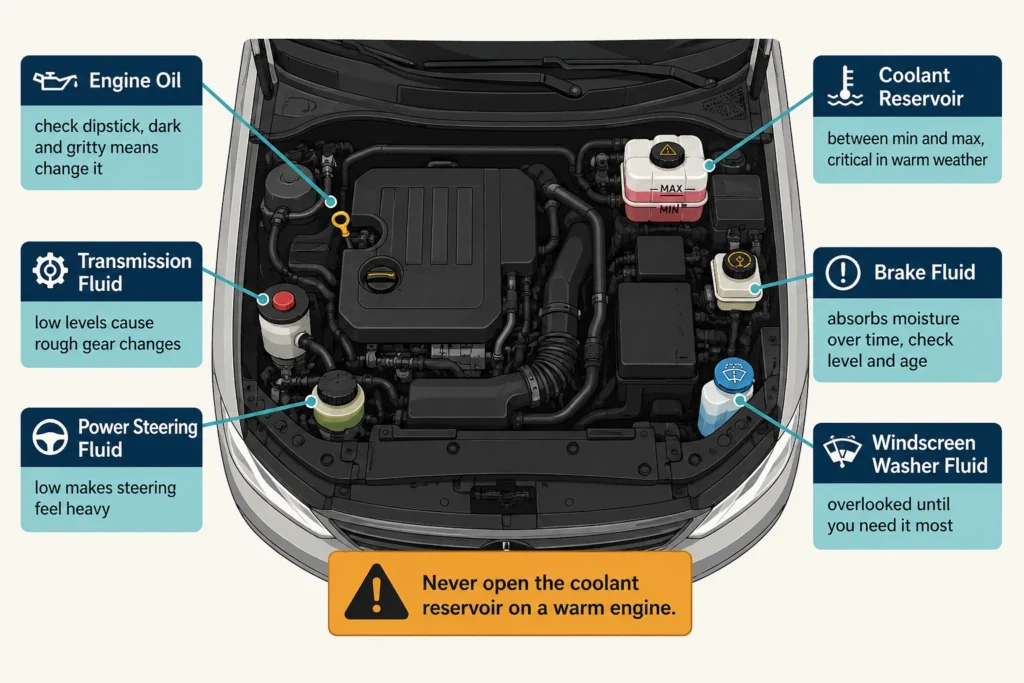
Before inspecting tyres, brakes, or anything else, start with your fluid levels. Things like engine oil, coolant, brake fluid, and transmission fluid help keep your vehicle running safely and efficiently during long hours on the road. The sections below break each one down.
Engine Oil and Coolant
When you’re checking your fluid levels, pay special attention to these two. If your car breaks down in the middle of nowhere, these are usually the main culprits.
To do this, pull out the dipstick, wipe it clean, and reinsert it to get a rough reading. If the oil sits below the minimum mark or looks dark and gritty, consider changing it before your trip. It’s a sign of degraded lubrication, which increases friction and places unnecessary stress on the engine.
Once you’re done, move on to the coolant reservoir. It’s the translucent plastic tank near the radiator, and you can read the level without opening it. Make sure the level sits between the minimum and maximum marks. If it’s low, top it up before you go. This is especially important if you’ll be driving in warm weather, heavy traffic, or hilly areas where engines tend to work harder.
Warning: Don’t touch the reservoir while the engine is warm. Wait for it to cool down first.
Brake, Transmission, and Steering Fluid
After you’ve checked the engine-related fluids, take a few minutes to look at the ones that affect braking, handling, and overall drivability. They’re easy to overlook, but can become far more noticeable when you’re spending hours behind the wheel.
Start with the brake fluid. Because it absorbs moisture over time, old fluid can reduce braking performance and responsiveness. Check that the level sits within the recommended range. If it hasn’t been replaced in several years, it may be worth having it inspected before your trip.
While you’re under the bonnet, check the transmission fluid as well. Low transmission fluid is one of the more common causes of rough gear changes on long highway drives. It also affects internal component wear over time, so if the level is low or overdue for a change, get it sorted before you leave.
If your vehicle uses hydraulic power steering, look at that fluid too. Low levels can make the steering feel heavier than normal. That’s the last thing you want when navigating unfamiliar roads, tight parking areas, or winding sections of highway.
And before closing the bonnet, top up the windscreen washer fluid. It’s a simple check, but you’ll appreciate it when dust, road grime, insects, or sudden rain start affecting visibility during the journey.
Tyres, Brake Pads, and Lights: The Safety Once-Over Before You Leave
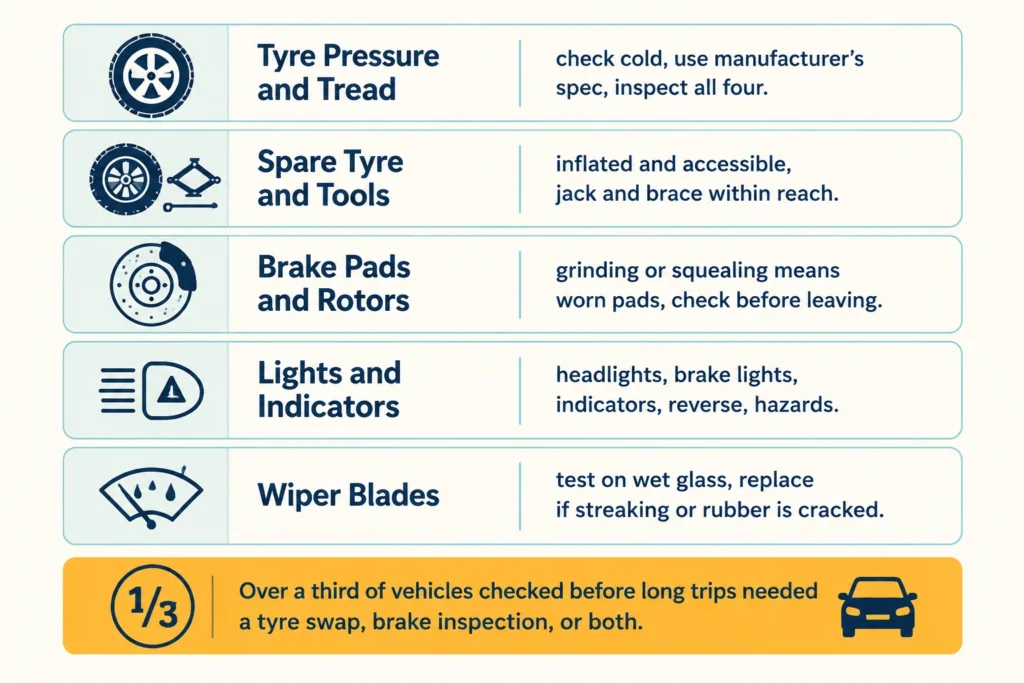
With fluids checked, the next step is a quick inspection of the core safety components. Tyres, brake pads, and lights wear down gradually, so it’s easy to miss problems until they start affecting performance. Check the following before you leave:
- Tyre Pressure and Tread: Check your tyre pressure against the manufacturer’s recommendation, and always measure it when the tyres are cold for an accurate reading. The right pressure improves handling, fuel efficiency, and wet-weather safety. From there, inspect tread depth across all four tyres using a gauge, since worn tread reduces grip and becomes dangerous at high speeds.
- Spare Tyre and Tools: A spare tyre is only useful if it’s properly inflated and accessible, so check it before you leave. And since accessibility is just as important as inflation, make sure your jack and wheel brace are easy to reach, too.
- Brake Pads and Rotors: Your brake pads take a lot of punishment on long drives, especially on hilly or winding roads. The easiest way to spot worn pads is a slow test drive. If you hear grinding or squealing when you press the brakes, that’s a sign the pads are worn thin enough to affect your stopping distance.
- Lights and Indicators: Go through all your exterior lights before you leave, including headlights, brake lights, turn signals, reverse lights, and hazard lights. They can look fine during the day but fail when you actually need them, which makes a quick check before you leave worth the two minutes it takes.
- Wiper Blades: Windscreen wipers often seem fine until it rains. A quick test on a wet windscreen before you leave will tell you straight away if they’re up to the job. Replace the blades if they streak, skip, or the rubber looks cracked.
Once you’ve been through this list, you’ll have a clear picture of what needs attention before you set off.
In our experience, tyres and brakes are the two things most drivers underestimate. In the last year alone, over a third of the vehicles we checked before long trips needed either a tyre swap, a brake inspection, or both.
So if anything looks worn or off, get it checked before you leave. It’s a much easier fix from your driveway than from the side of a highway.
Can Your Battery and Belts Handle a Long Trip?
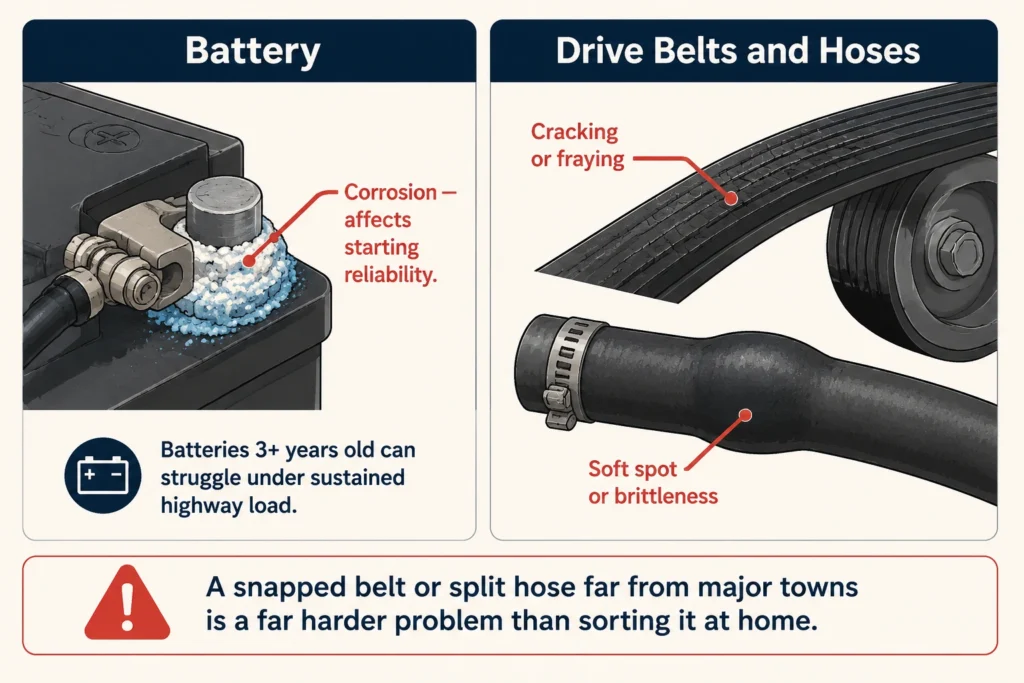
Not if they haven’t been checked in a while, no. A battery that’s three years or older can struggle under the sustained load of a long drive, even if it starts your car fine around town.
You can spot early warning signs by checking the terminals for any white or bluish buildup, which indicates corrosion and can affect how reliably the battery starts the engine. If you find any, take your car to a reputable service centre. They’ll clean the terminals, test the battery’s charge, and let you know if it needs replacing before your trip.
After sorting out the battery, move on to your drive belts and hoses. They should feel firm and smooth, with no visible cracking, fraying, or glazing on the belts. The hoses should have no soft spots or brittleness either. A snapped belt or split hose far from major towns is a much harder problem to deal with than sorting it out at home.
A Note for Electric Vehicle Owners
If you’re driving an EV, you’ll have fewer under-bonnet checks to worry about, but that doesn’t mean preparation is any less important. Charging infrastructure is still limited in Australia, especially in rural areas like outback Queensland and rural New South Wales. That’s why it’s important to plan your charging stops before you leave for a trip.
Your Emergency Kit and What to Pack for the Road
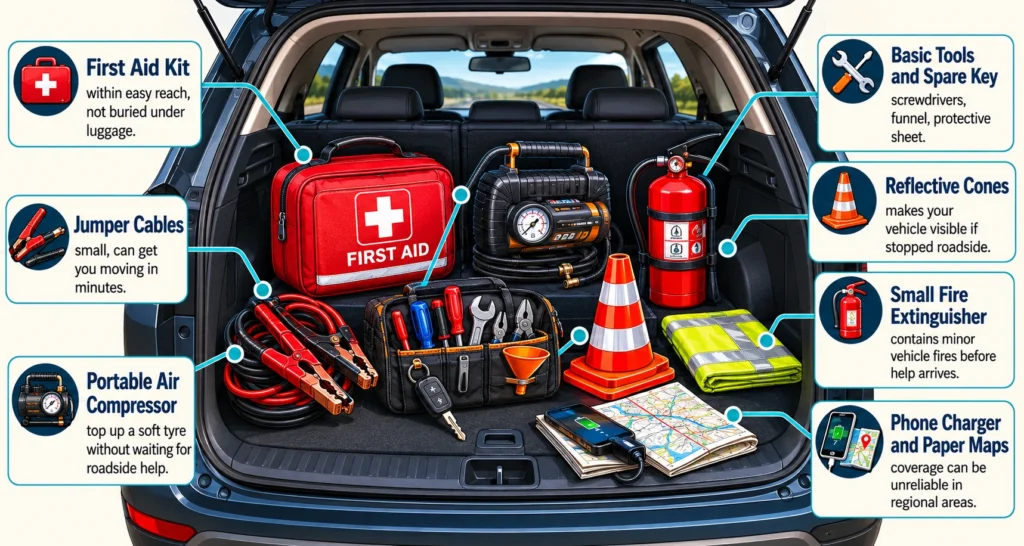
Even a well-prepared car can run into trouble on the road. The difference between a minor inconvenience and a genuinely stressful situation usually comes down to what you have in your toolbox. Here’s what to keep in the car before you leave:
- First Aid Kit: A first aid kit should always be within easy reach in the car, not buried under luggage in the boot. It doesn’t need to be elaborate, but cuts, burns, and basic pain relief are the bare minimum.
- Jumper Cables: Jumper cables or jumper leads take up almost no space and can get you back on the road in minutes.
- Portable Air Compressor: A spare tyre is a given, but bring a portable air compressor as well. This way, you’ll be able to top up a tyre that’s lost pressure on the road without waiting for roadside assistance.
- Basic Tools and Spare Parts: Pack screwdrivers, a plastic funnel, and a protective sheet for working under the car. Take a spare key as well. Losing your only key can leave you stranded for hours while you arrange a replacement or locksmith.
- Reflective Cones and a Fire Extinguisher: If you need to stop on the side of the road, reflective cones help make your vehicle more visible to approaching traffic. A small fire extinguisher is worth having in the car and can help contain a minor vehicle fire before emergency services arrive.
- Phone Charger and Paper Maps: Tuck a charger in the car so your mobile stays alive throughout the trip. Paper maps are old school, sure, but mobile coverage in regional areas can be unreliable enough to make you grateful for them.
If you’re also figuring out what to take on a car camping trip, most of these essentials carry over directly. And while you’re thinking about what to pack, make sure roadside assistance is sorted too. Something like NRMA, RAA, or your insurer’s roadside cover.
That way, if something does go wrong, you’ll already know who to call rather than scrambling for help on the side of the road.
Plan Your Route, Fuel Stops, and Driving Breaks
Route planning is one of those things that seems obvious but often gets left until the last minute. Doing it before you leave means you’ll know exactly where the gas stations, rest areas, and fuel stops are along the way.
This approach helps you avoid relying on chance stops, especially on long stretches of highway where services may be further apart. Once your fuel stops are mapped out, you can also plan regular breaks to stay alert and avoid fatigue on longer drives.
You need to plan for breaks as well because long drives can be exhausting. If you don’t, by the time you reach your destination, you often won’t have the capacity to enjoy it. That’s why the Transport Accident Commission recommends taking a break at least every two hours on long drives.
What If Your Car Isn’t Ready for a Long Road Trip?
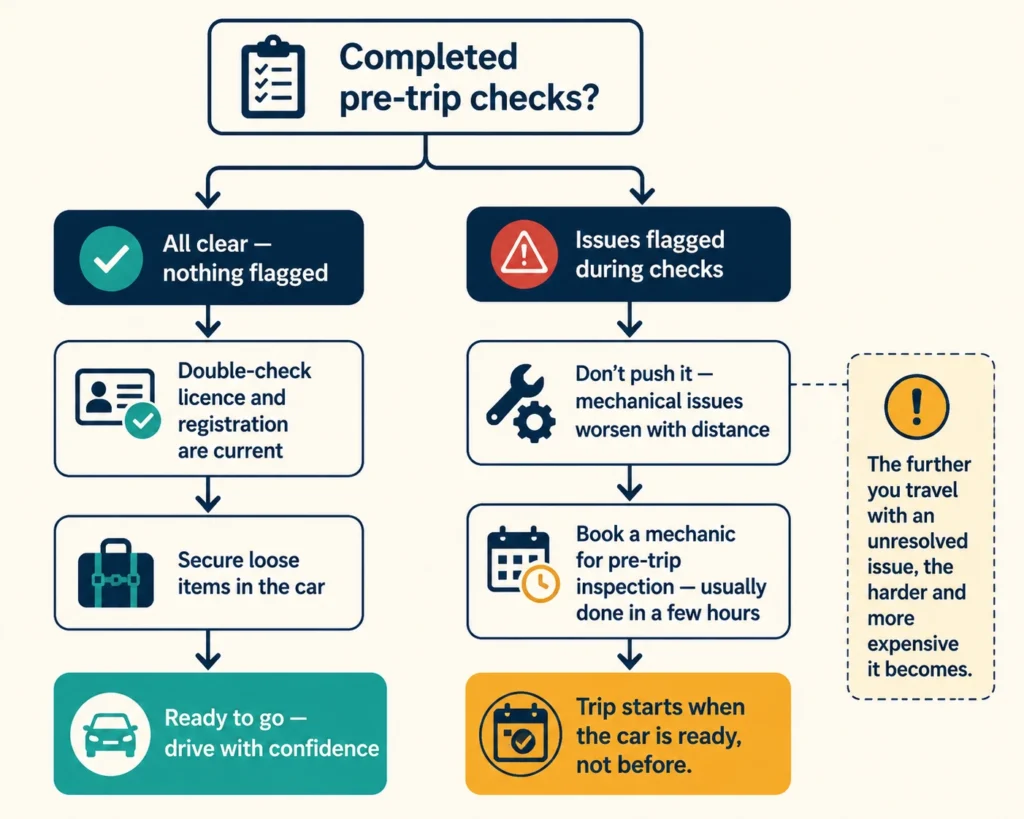
If your car isn’t ready, the trip doesn’t start yet. The further you travel with an unresolved issue, the harder and more expensive it becomes to deal with.
If any of the checks in this guide flagged a problem, don’t push it. A mechanic can usually complete a pre-trip inspection within a few hours. That’s far safer than dealing with a breakdown between fuel stops or on remote stretches of road.
Once the mechanical side is sorted, you can shift focus to the non-mechanical essentials. Make sure your driver’s licence and vehicle registration are current and kept in the car. It sounds basic, but these are easy to overlook when you’re focused on the vehicle itself.
It’s also worth securing any loose items in the car before you leave. Unsecured items can shift during the drive and become a distraction or a hazard.
Get Your Car Road-Ready Before the Journey Starts
Preparing your car for a long road trip doesn’t have to be complicated. Most of the checks in this guide take less than an hour, but they make a noticeable difference once you’re on the road. A properly prepared car is less about avoiding problems and more about driving with confidence, knowing nothing obvious has been missed.
Avoiding breakdowns is only part of it. A well-prepared car runs more efficiently, handles better, and lets you focus on the journey instead of what might go wrong.
If you’d like a second set of eyes before you head off, GLA Packed works with travellers planning long drives across Queensland and can help make sure everything is ready. Get in touch, and we’ll go through it with you.
Related Posts

Explore More with These Things to Do in Port Douglas
Port Douglas sits between two of Tropical North Queensland's largest…
Building A Snow Trip Packing List Before You Travel
Packing for a snow trip is easy to underestimate. You…

Business Travel Checklist for Better Organised Work Trips
A business trip has a lot of moving parts. You've…