
Yes, travel insurance can cover car hire, but it depends on your policy, and the gaps can cost you.
Most standard policies include some form of rental vehicle cover, but the details vary a lot. Some cover the excess only. Others include third-party liability but exclude damage to the hire car itself. A few cover everything. And some? They cover almost nothing unless you pay extra.
If you’ve been searching “does travel insurance cover car hire,” you’re already thinking about this the right way. Most people only think about it when a $60-a-day insurance package is suddenly in front of them at the rental counter.
That’s the situation we want to help you avoid.
In this guide, we’ll walk you through what to check in your policy before pickup and what rental companies don’t always tell you upfront. By the end, you’ll know exactly where you stand before you sign anything.
What Car Hire Cover Travel Insurance Usually Includes
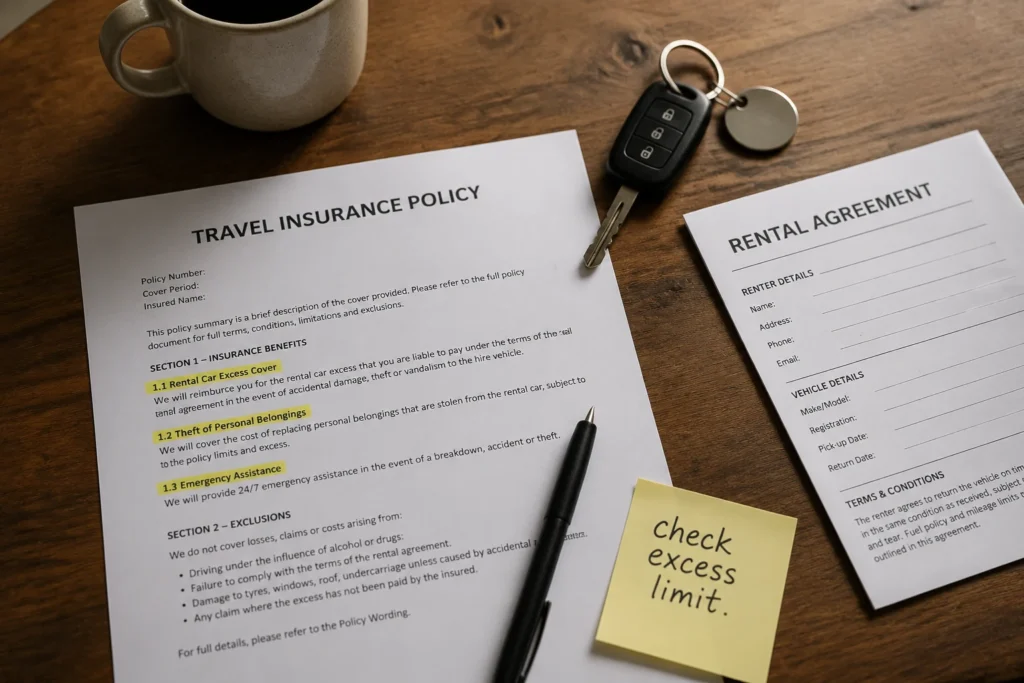
Most comprehensive travel insurance policies include some form of rental car excess cover.
This means your insurer pays the excess you’d otherwise owe the rental company if the hire car is damaged or stolen. That excess can run anywhere from $2,000 to $5,000, depending on the vehicle, which is a high out-of-pocket cost if you’re not covered.
That said, what’s typically covered varies between insurers. Most policies cover collision damage and theft, but not all of them extend to tyre damage, windscreen cracks, or damage to the underside of the car. These details are buried in the product disclosure statement (PDS), and most people skip them until they need to make a claim.
One thing to keep in mind is that some credit cards come with rental vehicle excess cover built in, provided you charge the full rental payment to that card.
NAB (National Australia Bank), for example, offers complimentary rental vehicle excess insurance on eligible cards under those conditions. Card cover varies widely, though, so check your specific card’s policy before you rely on it.
None of this is complicated once you know where to look. Your PDS has the full details on what your car hire excess cover specifically includes. And five minutes reading it now is a lot easier than sorting it out after something goes wrong.
Common Car Hire Exclusions in Travel Insurance
Insurers don’t approve every car hire claim. Claims get rejected for three main reasons: an unlisted driver, alcohol or reckless driving, or a breach of the rental company’s terms. We cover each one below.
Unauthorised or Additional Drivers
Your travel insurance only covers the nominated driver listed on the rental agreement. If someone else drives and an incident occurs, the rental company treats it as a breach of contract. That gives your insurer grounds to reject the claim outright.
To avoid that risk, add your partner or travel companion to the rental agreement when you collect the car. It costs a little more, but it keeps your cover intact if they need to drive during the trip.
Driving Under the Influence or Reckless Driving
Every travel insurance policy excludes incidents involving alcohol or drugs. Not to mention, being caught driving under the influence can also lead to fines, licence suspension, or even criminal penalties, depending on the country.
Reckless driving is excluded, too, but the problem is that insurers often define it broadly. Driving on a closed road or pushing through a flooded crossing may be enough to void your cover, even if it felt like a minor call at the time.
Smartraveller warns that breaking local road rules during an accident can invalidate many policies, so when in doubt, don’t.
Breach of Rental Agreement Terms
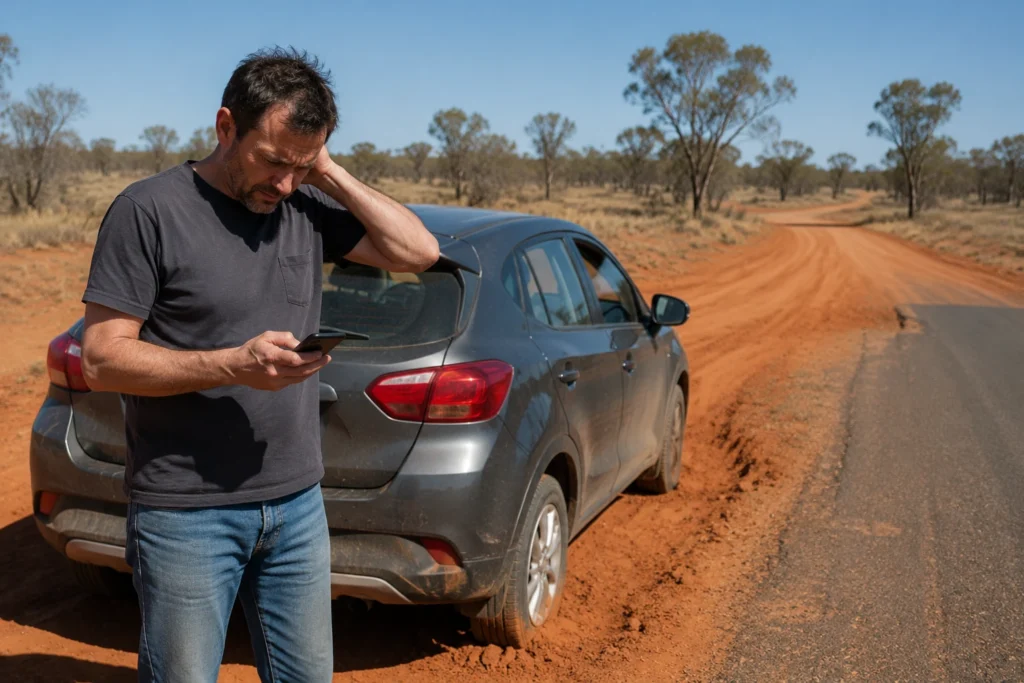
Rental vehicle agreements include conditions most hirers never read closely, and breaching them can void your cover just as quickly as an accident would. Driving on unsealed roads is one of the most common examples, especially in regional Queensland or Western Australia, where dirt tracks are easy to stumble onto.
Using the vehicle for ridesharing or crossing state borders without notifying the rental company can do the same thing. When that happens, the rental excess you’d normally claim back through your travel insurer is no longer recoverable.
On top of this, most policies also have sub-limits, which cap the maximum payout. Those limits still apply even when the claim is otherwise valid.
Essential Checks Before Signing the Rental Agreement
The rental counter isn’t the best place to make rushed decisions. It’s easy to wave through the paperwork after a long flight, only to realise later that you agreed to a higher excess or a credit card hold. So before you sign the rental agreement, take a minute to confirm your excess amount and how the credit card hold works. Also check whether your cover applies where you’re travelling and if you’re paying for duplicate insurance. Let’s walk through each one.
Confirming Your Excess Amount
Ask the agent to show you the exact excess figure in the contract. It sometimes differs from what was shown during online booking. Once you have it, compare it against your travel insurance reimbursement limit. If your policy only reimburses up to $800 and the excess is $1,500, you’re carrying the difference yourself.
Understanding the Credit Card Hold
The rental company will freeze an amount on your credit card equal to the excess when you collect the car. It’s not a charge, but it blocks that money until the car comes back undamaged. If your card doesn’t have enough available credit, you may not be able to take the car at all.
That’s why you should check with your bank beforehand to see how the hold affects your available funds. You should also check whether paying extra for an excess waiver removes it entirely.
Verifying International Coverage

Not every travel insurance policy covers every car hire. Before you travel, make sure your cover applies to the country and type of rental you’re planning. Some policies exclude domestic rentals, while others only apply in certain destinations.
And don’t assume the person at the rental counter can confirm this for you. They can explain the rental company’s insurance, but only your policy documents will tell you exactly what your travel insurance covers.
Checking for Insurance Overlap
Some travellers unknowingly pay for excess insurance twice, once through their travel insurance, and again at the rental counter through excess reduction products.
We’ve seen people walk away from a 10-day trip having paid an extra $400 at the counter for cover they already had sitting in their travel policy.
You can avoid that by calling your insurer before you reach the desk to confirm whether your travel insurance already includes rental vehicle excess. If it does, you don’t need the rental company’s product.
Confusion can also arise over the type of agreement you’re entering into. If you’ve ever wondered “what is a hire purchase agreement car?”, it’s worth understanding the answer before you sign anything. A hire purchase agreement is treated differently from a standard short-term rental. Confusing the two can lead to a claim being rejected on a technicality.
Travel Insurance vs. Car Hire Insurance: Do You Need Both?
When the agent at the counter offers you full protection, they’re selling you something called CDW, or Collision Damage Waiver. It sounds similar to what your travel insurance does, but it works differently.
CDW removes your excess liability before anything happens. If you scratch the car, nothing is charged to your card. Travel insurance, on the other hand, lets the charge hit your card first and reimburses you later. One prevents the problem. The other fixes it after the fact.
There’s a third option that often gets overlooked: standalone car hire excess insurance. Bought from a specialist provider before your trip, it typically costs between $5 and $12 per day in Australia.
By comparison, the rental company’s CDW usually runs between $30 and $74 per day for similar protection. Same cover, a fraction of the price, and you’re not making the decision under pressure at a busy rental desk.
What to Do If You Need to Make a Claim
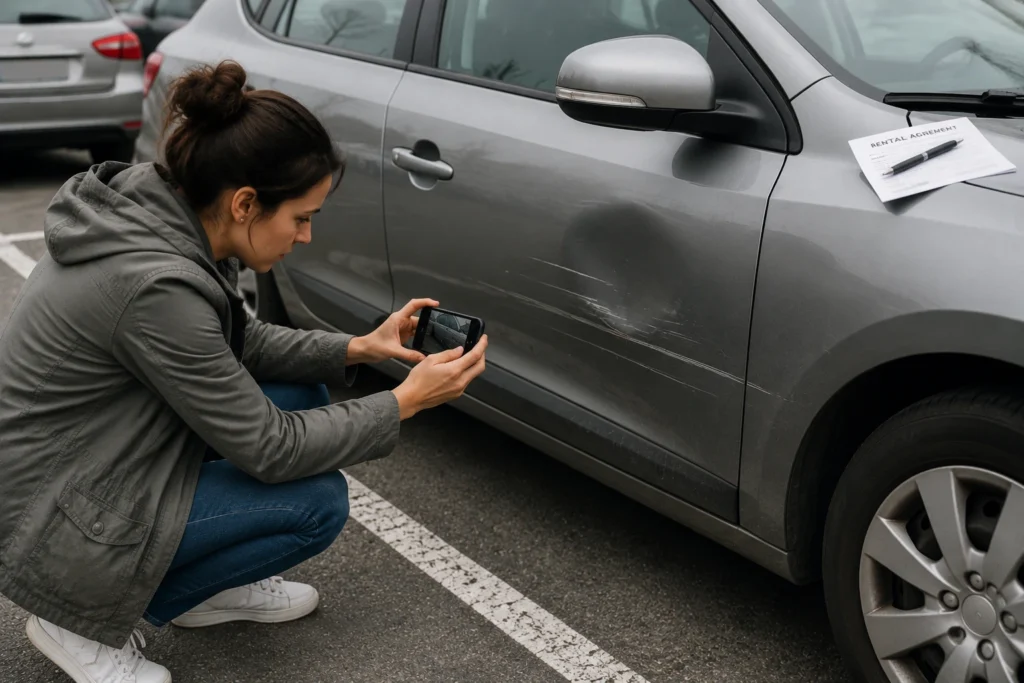
If something does go wrong, the most common reason travel insurance claims are rejected is missing paperwork. That includes photographs of the damage, a written report from the rental company, and a police report number if officers attended the scene.
To make sure that doesn’t happen, take photographs of everything at the scene. This means the damage, the surrounding area, the other vehicle if one is involved, and the road conditions.
Photos are your first layer of protection, but they’re not enough on their own. So get a written report from the rental company before you leave their premises and ask for a copy of any incident report they file.
Once you’re away from the scene, the next priority is your insurer. Contact them as soon as possible, ideally before you pay anything. Many policies require you to notify them within a specific timeframe, and paying a charge before informing the insurer can complicate your reimbursement.
When you submit your claim, include:
- Your rental agreement
- The damage report
- All receipts
- Your travel insurance policy number
- The photographs
A complete submission gets processed faster and gives the insurer no reason to come back asking for more.
Don’t Let the Fine Print Cost You More Than the Hire
Travel insurance and car hire cover can work well together, but only when you know exactly what each one does. Most people assume they’re covered, find out they’re not, and end up paying out of pocket.
Before your next trip, run through these checks:
- Read the car hire section of your travel insurance policy specifically
- Check your excess reimbursement limit against typical rental excess amounts
- Confirm which countries your policy and rental agreement both cover
- Decide whether a standalone car hire excess policy makes sense for your trip
If you want to know how to hire a car without the guesswork, the team at GLA Packed can help you choose the right cover before you book. Reach out, and we’ll walk you through your options.
Related Posts

Do You Need a Car in Port Douglas for Your Holiday?
Most visitors to Port Douglas need a car, and that's…
How Does Hire Car Insurance Work When Renting A Vehicle
Hire car insurance in Australia covers you against damage, theft,…
Road Trips from Brisbane: Car Rental Guide for 2025
Brisbane is perfectly placed for adventure. You can drive an…