
Hire purchase lets you drive a car now and pay for it in instalments over time. It’s one of the more popular vehicle finance options in Australia, particularly for buyers who want ownership at the end without a high upfront cost.
However, ownership doesn’t work the same way as it does with a standard car loan. The lender holds legal title to the vehicle until you make the final payment, and the ownership is transferred to you. That means you won’t be able to sell the vehicle or change your repayment plan until the agreement ends.
This guide covers what a hire purchase agreement car actually is, how the payments work, and what to check before you sign. By the end, you’ll have a clear picture of the agreement and whether it’s the right option for your situation.
What a Hire Purchase Agreement Car Is
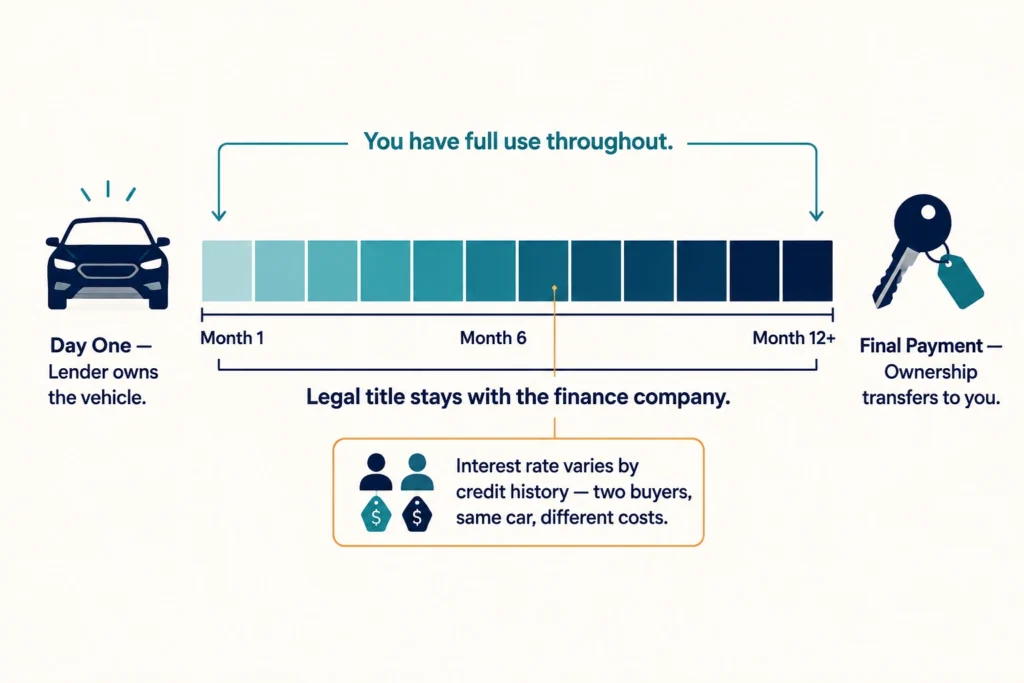
As mentioned before, a hire purchase agreement car is a type of vehicle finance where a lender buys the car on your behalf. You repay that cost in fixed monthly instalments over an agreed term, plus interest on the outstanding balance.
The interest rate itself can vary depending on your credit history, which is why two buyers financing the same car can end up paying quite different amounts.
That rate, along with every other condition of the arrangement, gets locked into a formal contract between you and the finance provider. It outlines the repayment schedule, any applicable fees, and what happens if you miss a payment or want to exit early.
And since it’s legally binding, what you agree to on the day is what you’re held to for the full term.
How the Payments Are Structured
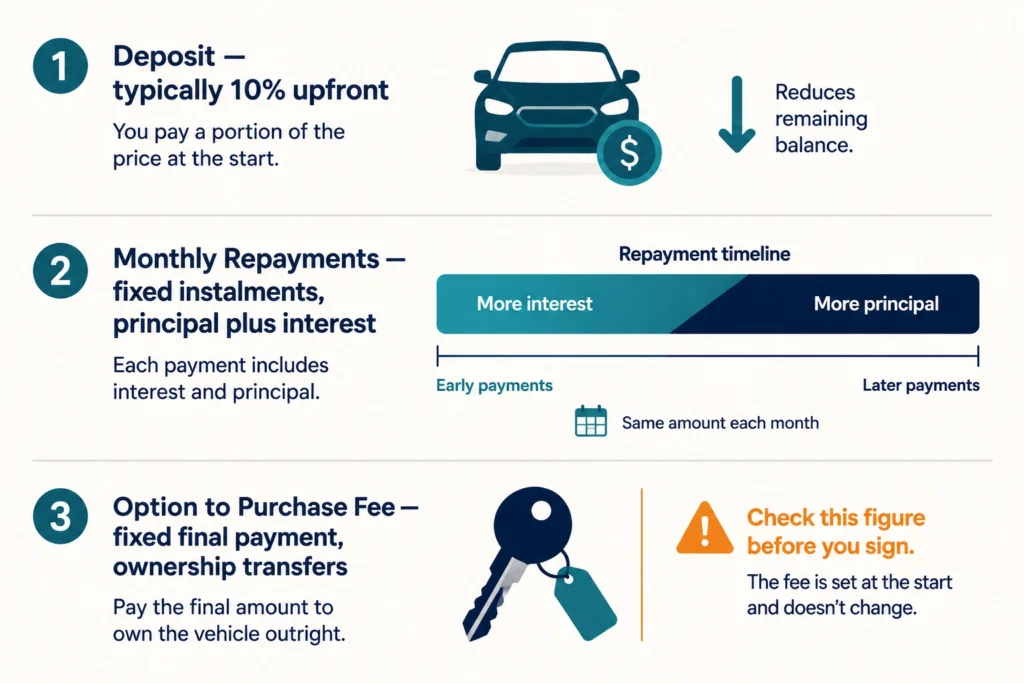
Hire purchase payments come in three parts: a deposit, monthly repayments, and a final option to purchase fee. We cover each in detail below.
The Deposit
The deposit is the first payment you make, and it’s paid upfront when you sign the agreement. Most lenders ask for around 10% of the car’s value, though the exact amount can vary depending on the finance provider and your credit profile.
Once you pay it, that amount is subtracted from the car’s total price. The remaining balance is then what your monthly repayments are calculated on. That’s why a larger deposit means lower repayments and less interest over the full term.
It’s also important to know that once you sign a vehicle purchase order, you’re typically entering a legally binding agreement. If you change your mind afterwards, you may lose your deposit. This is especially common among first-time buyers who assume a verbal agreement is still flexible.
So always confirm in writing whether your deposit is refundable before making any payment.
Monthly Repayments
Once the deposit is paid, the remaining balance is repaid through fixed monthly instalments over the agreed term. Each payment includes both a portion of the principal and interest charged on the outstanding balance.
The amount you pay each month depends on three main factors: the deposit size, the length of the contract, and the interest rate offered. In general, a longer repayment term reduces monthly costs but increases the total interest paid over time.
While the repayment amount stays fixed throughout the agreement, the internal breakdown changes over time. Early payments typically go more toward interest, while later payments contribute more toward reducing the remaining balance.
The Option to Purchase Fee
At the end of a hire purchase agreement, you’ll need to make one final payment before ownership transfers to you. This is called the option to purchase fee, a fixed amount your contract sets out from the start. And until you make it, the finance company retains legal ownership of the vehicle, even if you’ve completed all monthly repayments.
Your agreement typically outlines this fee upfront. While it’s usually a relatively small amount compared to the total finance cost, it’s still a required step at the end of the agreement.
That’s why you should check the exact figure before you sign. So there are no surprises when the contract reaches completion.
Who Owns the Car During the Agreement?
The finance company owns the car for the entire duration of a hire purchase agreement. You only become the legal owner once the final payment has been made.
Until then, you have full use of the vehicle, but it is not legally yours. That means any running costs or penalties that arise while you’re using it remain your responsibility.
Hire Purchase vs Other Car Finance Options
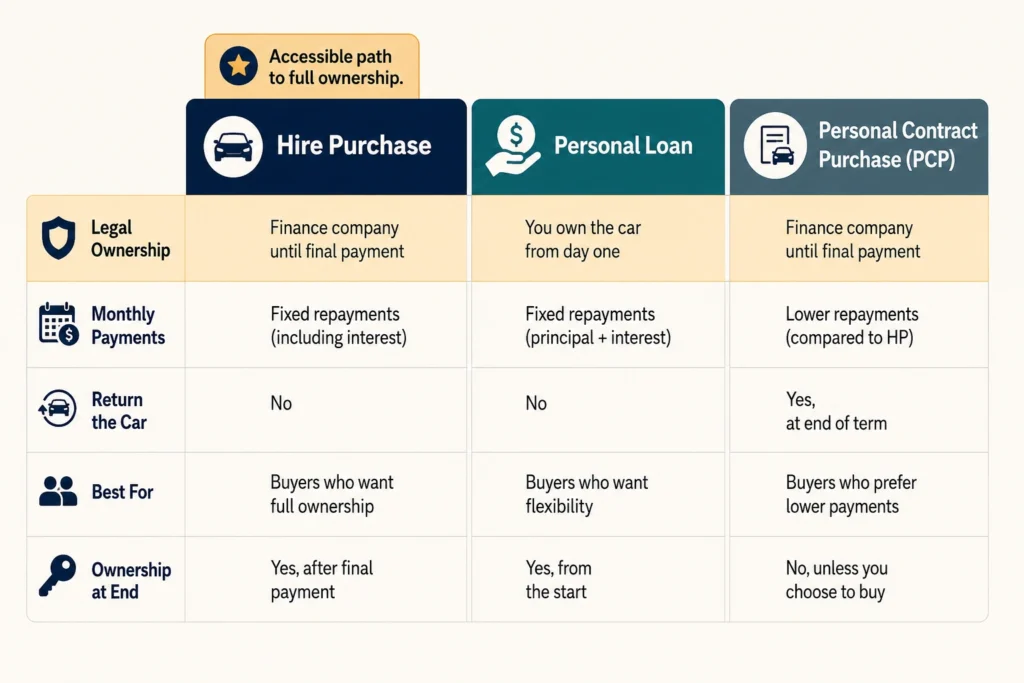
Most people looking to finance a car assume a personal loan is the only option. In reality, there are three main ways to finance a vehicle: hire purchase, personal loans, and personal contract purchase (PCP). Each works quite differently in terms of ownership, repayments, and what happens at the end of the agreement.
The table below breaks down how they compare.
| Hire Purchase | Personal Loan | Personal Contract Purchase (PCP) | |
| Legal ownership | Finance company; transfers at final payment | Yours from day one | Finance company; optional purchase at the end |
| Monthly payments | Fixed, based on full vehicle value | Fixed, based on the loan amount | Lower, based on depreciation |
| Return the car? | No | No | Yes |
| Best for | Buyers wanting full ownership | Strong credit profiles | Those wanting flexibility |
Of the three, hire purchase is the most accessible path to full ownership, particularly for buyers with a limited credit history. It typically involves higher interest costs than a personal loan over time, but it offers a clear end goal.
Ultimately, the right choice depends on how long you plan to keep the vehicle and whether owning it outright at the end is a priority for you.
Important Checks Before Signing a Hire Purchase Agreement
Small details in a hire purchase agreement can significantly affect how much you end up paying over time. These are the four things worth checking before you sign:
- Total Amount Payable: When comparing hire purchase deals, focus on the total repayable amount rather than the monthly figure alone. Lower monthly repayments often come with longer terms, which can increase the total amount you pay for the vehicle. So always request the full repayable figure from your lender before committing.
- Representative vs Guaranteed APR: APR, or annual percentage rate, represents the cost of borrowing, including interest and fees. However, when a lender advertises a representative APR, it means only 51% of approved customers are guaranteed to receive that rate. Depending on your credit profile, the actual rate offered to you may be higher than the advertised figure.
- Contract Terms and Fees: One of the most common mistakes buyers make is signing a hire purchase agreement without reading the full contract. Important details such as early termination fees, late payment charges, and other administrative costs are often buried in the terms. Taking a few extra minutes to review these clauses can help you avoid unexpected expenses later.
- Cooling Off Period: Cooling off periods vary by state. In NSW, for example, vehicle finance rules allow one day for linked credit purchases. By contrast, Queensland’s used car cooling-off rules give buyers one business day from a licensed dealer.
When you take the time to review these details before signing, you can save yourself from entirely avoidable costs. We’ve seen buyers avoid hundreds of dollars in unexpected charges simply by asking their lender to explain the contract before signing.
Costs Beyond the Car: Insurance and Excess Explained
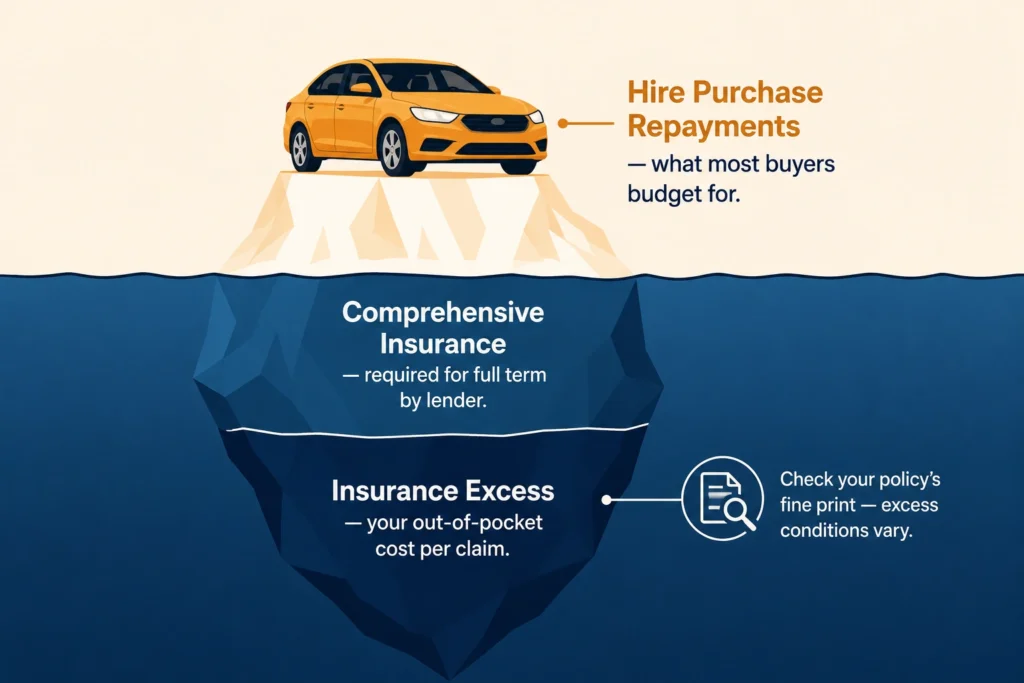
The agreement covers the car’s purchase price, but there are ongoing costs that sit outside it entirely. The most immediate is insurance. Most hire purchase agreements require fully comprehensive cover for the full term, since the lender needs the vehicle protected against accident, theft, or damage.
Don’t overlook your insurance excess, either. It’s the fixed amount you pay when you make a claim before your insurer covers the rest. That amount can vary depending on your policy and the nature of the incident. You’ll find it listed in your policy’s fine print, usually under excess liability or excess conditions.
These costs won’t appear in your hire purchase repayments, but they can still affect how much the vehicle costs to own. That’s why a realistic budget should account for both your insurance premiums and the excess you’d need to pay if you ever make a claim.
Is Hire Purchase Right for Your Next Car?
Hire purchase could be the right fit if you want to own the vehicle outright at the end and prefer a fixed repayment structure over the full term. Those prioritising lower monthly repayments or more flexibility may find a personal contract purchase agreement a better fit.
If you have questions about car finance or want to know how to hire a car in Brisbane, reach out to the GLAPacked team through our website. We’ll walk you through what’s available and help you find an agreement that works for your budget.
Frequently Asked Questions
Hire purchase agreements come with a few moving parts, and it’s normal to have questions after going through the details. Here are the ones we get asked most often.
Can hire purchase insurance be confused with car hire insurance?
Yes, hire purchase insurance is often confused with rental car insurance, but they are completely different. Many drivers ask, “Does travel insurance cover car hire?” or “Is car hire excess insurance worth it?” when researching rental vehicles. Both questions relate to short-term vehicle rentals rather than hire purchase agreements. With hire purchase, the focus is usually on meeting the lender’s insurance requirements until the vehicle is fully paid off.
Can you pay off a hire purchase agreement early?
Yes, in most cases. Paying off your hire purchase agreement early can reduce the total interest you pay. However, some lenders charge an early termination fee, so check your contract before making any extra repayments.
What happens if you miss a hire purchase payment?
Missing a payment puts you in breach of the agreement, and the lender may charge a late payment fee as a result. If payments are missed repeatedly, the lender can apply to repossess the vehicle. Before it reaches that point, contact your lender early to discuss your options.
Related Posts

What Does Car Hire Excess Insurance Cover During A Rental
Car hire excess insurance covers the cost of damage or…

A Complete Guide to Rental Car Insurance in Australia
Thinking about hiring a car in Brisbane, but confused about…
A Complete Guide to Car Hire Adelaide for First-Time Visitors
Hiring a car in Adelaide lets you drive to South…